


Is your tithing an act of faith or a lotto ticket?

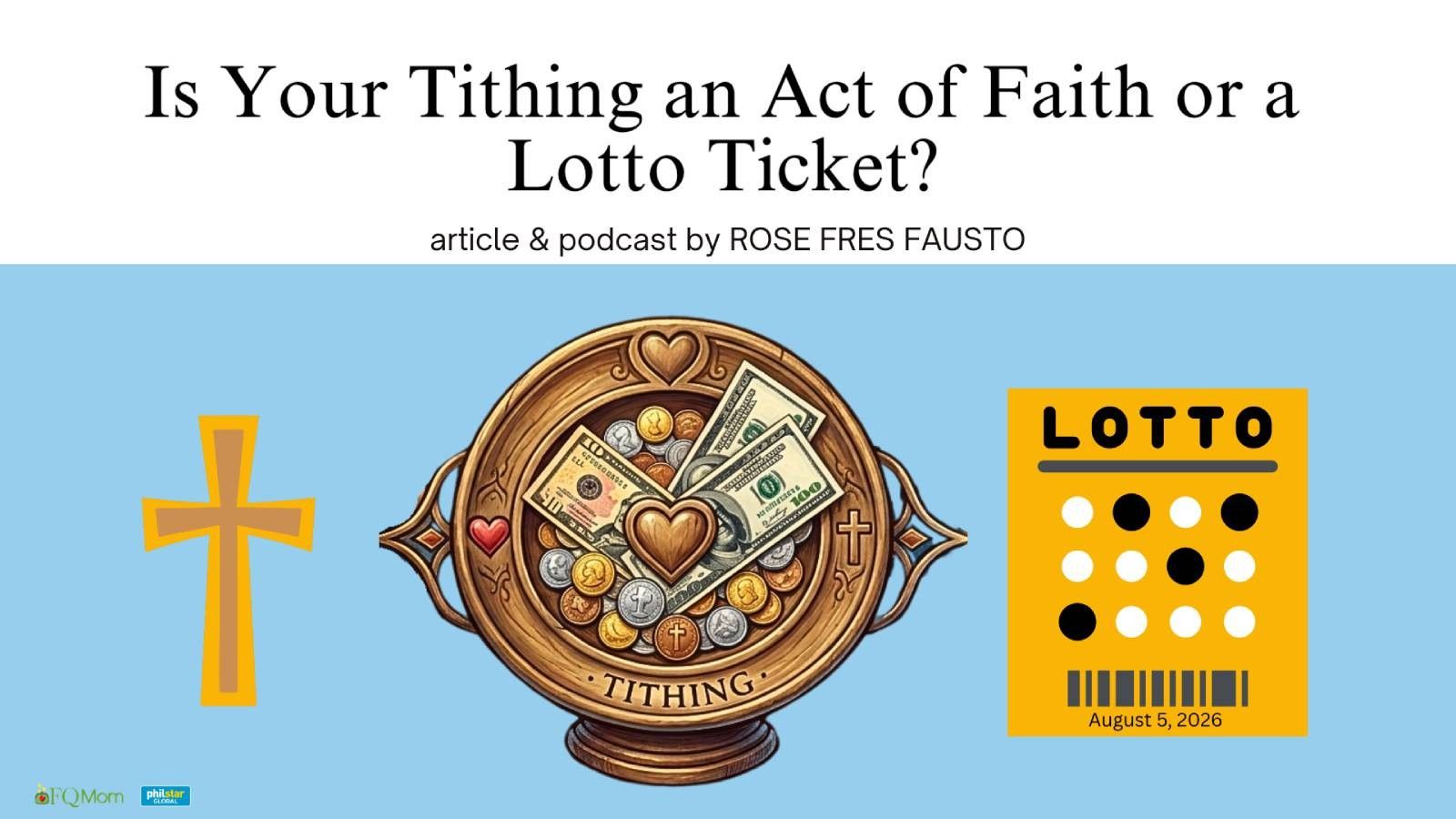
We’ve heard many evangelists share their stories of giving their last few pesos in their wallet to the church because they knew God would provide. And they routinely quote the Bible story of the Widow’s Mite.
The standard interpretation from the pulpit and sharing sessions paints this scene as a beautiful, heartwarming example of unconditional, voluntary giving. Believers are told to emulate this woman by giving away their last resource to the church, trusting that God will reward their radical faith.
However, this traditional reading is built upon a highly problematic foundation: the intentional omission of the verses immediately preceding the widow’s arrival. When the full literary and historical context is restored, the story transforms from an idealized template for giving into a devastating divine critique of institutional religious exploitation.
Restoring the omitted context
Let’s bring back the omitted context to understand the true meaning of the event. In the Gospel of Mark, the account flows seamlessly from a scathing public sermon into the observation at the temple treasury:
"As he taught, Jesus said, 'Watch out for the teachers of the law. They like to walk around in flowing robes and be greeted with respect in the marketplaces, and have the most important seats in the synagogues and the places of honor at banquets. They devour widows’ houses and for a show make lengthy prayers. These men will be punished most severely.'
Jesus sat down opposite the place where the offerings were put and watched the crowd putting their money into the temple treasury. Many rich people threw in large amounts. But a poor widow came and put in two very small copper coins, worth only a few cents.
Calling his disciples to him, Jesus said, 'Truly I tell you, this poor widow has put more into the treasury than all the others. They all gave out of their wealth; but she, out of her poverty, put in everything—all she had to live on.'" — Mark 12:38–44
The great confusion due to omission
When read in isolation, the story appears to be an endorsement of a transactional formula. It gives rise to modern “prosperity gospel” testimonies, where individuals share stories such as, “I was down to my last few hundred pesos, but I gave it all to the church anyway, and then God magically rewarded me with fortune!”
This modern narrative promotes what can only be described as a “Lotto Mindset” toward faith. It frames giving not as an act of pure worship or structured love, but as a high-stakes financial gamble. It subtly teaches believers that if they desperately throw their last vital provisions into the church basket, God is structurally obligated to pay them back in a massive return on investment. This turns Christian generosity into a transactional lottery ticket disguised as piety, appealing insidiously to human desperation or even greed.
What the context actually reveals
When the context is properly restored, it becomes clear that the poor widow was not acting out of spontaneous, joyful generosity. She was operating under a heavy, oppressive social and religious expectation.
According to ancient Old Testament law, the institutional temple was mandated to act as a social welfare system designed to protect and feed the most vulnerable citizens—specifically widows, orphans, and foreigners.
However, by the time of Jesus, the religious elite had completely corrupted the system. The scribes and Pharisees taught that a person’s spiritual standing and acceptance before God were directly tied to their financial contributions toward maintaining the magnificent, gold-plated Temple structure. They imposed immense social guilt and spiritual pressure on the poorest members of society to hand over their meager resources.
When Jesus points to the widow and says, "She, out of her poverty, put in everything—all she had to live on," He is not cheering or congratulating her. He is issuing a heavy, sorrowful lament.
The widow is literally “Exhibit A” of the exact corruption Jesus had condemned just one verse prior: she is a victim whose house and livelihood have been completely depleted by the spiritual manipulation of the religious leaders. She has been guilted into bankrupting her own household to fund an institutional treasury that was already overflowing with the surplus wealth of the rich.
Conclusion: True faith, financial IQ require prudence
The story of the Widow’s Mite is a profound warning against religious systems that manipulate the faithful into abandoning their common sense and household responsibilities. The Bible explicitly declares that failing to provide for one's immediate family is a severe moral failure:
"Anyone who does not provide for their relatives, and especially for their own household, has denied the faith and is worse than an unbeliever." — 1 Timothy 5:8
God gave human beings the virtue of prudence, intellect for critical thinking and the ability to develop a high Financial Quotient (FQ) to manage the world responsibly. Faith does not mean suspending your analytical brain or making reckless financial decisions based on emotional sermons.
A mature Christian understanding of stewardship completely rejects the manipulative "lotto mindset." True, healthy giving is planned, proportionate, and flows out of an individual's managed abundance—ensuring that the household remains protected, stable, and fully capable of continuing to do good in the world over the long term.
ANNOUNCEMENT
1. True faith requires financial prudence—take the FQ test now to build a smart, healthy approach to managing your money and your future!
2. Learn how to build real financial intelligence while staying rooted in healthy faith with the FQ trilogy. Grab your copy today!