


Saints, heroes, and fathers
“There are no saints that are fathers,” chuckles collector Renato L. Santos, at the opening of his exhibition, “Arte Sacra (The Art of the Sacred),” at Leon Gallery this week.
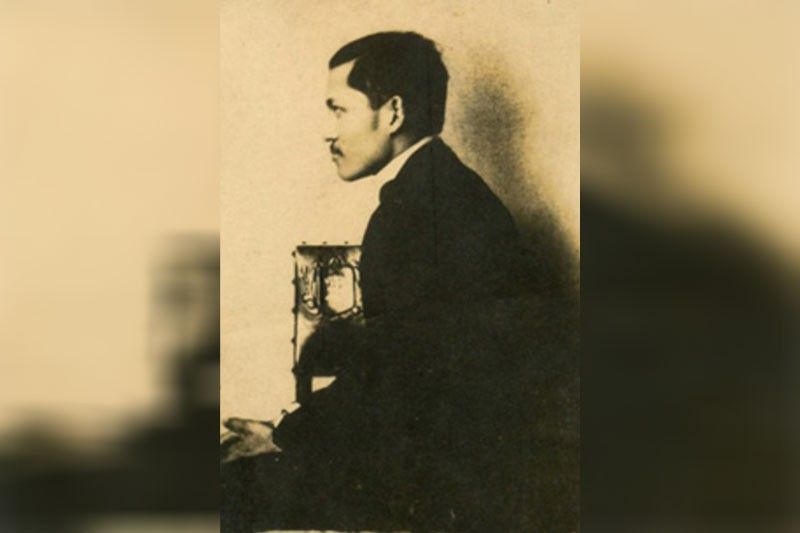
He may have a point: Looking at the pantheon of Filipino heroes, neither Jose Rizal nor Andres Bonifacio spent very much time being fathers. Rizal’s ill-fated son (named after his father, incidentally, Francisco) is variously reported as having been stillborn or survived just a few hours. Andres Bonifacio’s son, too, was taken away by illness as a tot.
Gen. Antonio Luna, despite a trail of gossip that has followed him since his demise in Cabanatuan, never had a son on record. His brother Juan Luna, lost one child, whose loss is said to have driven him to despair — and possibly to the famous end of his marriage in a hail of bullets in Paris. His surviving son, Andres Luna de San Pedro, would live a gilded life that would, however, end in controversy.
These were men who preferred to father nations and not ordinary sons. They are remembered and honored but, Renato Santos believes, it is the mothers that the Filipino truly loves and venerates.

There is one exception and that is St. Joseph.
Santos looks downright conspiratorial as he surveys a roomful of astonishing religious paintings from the 18th century to the present. St. Joseph, although the patron saint of fathers, was not technically the father of Jesus Christ, born was He by the power of the Holy Spirit.
It’s a meditation of sorts on the nature of fatherhood.
Santos’ exhibition features a selection of household saints, the earliest depictions of what the Filipino holds sacred to this day. They were the precursors of the ivory statues and bas-reliefs that today decorate our churches. He says these were to be found in ordinary homes, the intermediaries to a new world inhabited by angels and cherubs, lost souls and demons in the shape of dragons and, of course, the Holy Trinity.

Santos confides that in the dawn of the age of collecting — in the 1960s — dealers would appear, carrying big boxes of these rudimentary icons, so many of them were they, gathered from the four corners of the archipelago. These religious paintings did not have any of the candy-box appeal or moviestar looks later associated with Hollywood-style iconography; they were considered crude and overly raw. Many of them were thrown away, unwanted and undervalued.
Very few collectors like Santos saw the value in these works, despite the fact that their faces are Filipino and have a profound resonance. He writes about his adventures in acquiring these works in an accompanying book to the exhibit, correctly titled Roots of Identity. It is these works of Filipino St Josephs that have a special, almost magnetic quality.
There is a San Jose, measuring just 13 and 8 inches, holding a flowering staff, standing on a scarlet pediment and a plumed headdress. Santos says that the friars and churchmen replaced the datus that once ruled our islands; this San Jose is swathed in rajah’s robes that could have come straight out of the Boxer Codex, the collection of drawings of 16th-century Tagalogs.
Another St. Joseph forms a part of a “Sto. Niño” triptych. Santos points out how he is barefoot, with a garment hanging above his ankles, the better, says Santos, to walk through mud and rain. (Not so are the saints belonging to more prosperous households, whose silk clothes, dotted with embroidery and gems, cover the feet.)

Contrast this to an ilustrado’s “The Death of San Jose” which depicts him slipping into another world with Jesus and Mary at his bedside — what Catholics believe is the epitome of the happy death. For Santos, this further demonstrates the “rise of the Filipino elite,” now in command not only of political power as cabezas de barangay but also hefty economic influence. Painted in 1860, unsigned but attributed to the era’s marvel, Simon Flores, it exhibits all the allure of “miniaturismo,” extremely detailed painting that could have been created with the single-strand brushes.
Santos’ thesis may be a 17th-century version of the pop bestseller Rich Dad, Poor Dad: There is perhaps the proletariat Bonifacio figure depicted, as in all his statues, barefoot and in red; while Rizal, in contrast, wears a top hat and coat, covered in the finery as he lies at death’s door.
In the end, however, are not all men both heroes and fathers?