Of plastics and sea creatures: 6 artworks to see at Yuchengco Museum
MANILA, Philippines — Six artworks made from or inspired by plastic waste challenge viewers to reconsider their relationship with the material in “The Plastocene,” a contemporary art exhibition on view at the Yuchengco Museum until October 30.
The featured works encourage visitors to look beyond the material’s everyday uses and consider its lasting impact on the environment.
Here are six artworks to look out for at the exhibition.
Dennis Atienza’s ‘The Ocean Creatures’
Dennis Atienza transforms single-use plastics into fish-like forms in “The Ocean Creatures.”
The black-and-white piece highlights how plastic waste can remain in the environment long after it has been thrown away, reminding viewers that what disappears from sight does not necessarily disappear from the ecosystem.
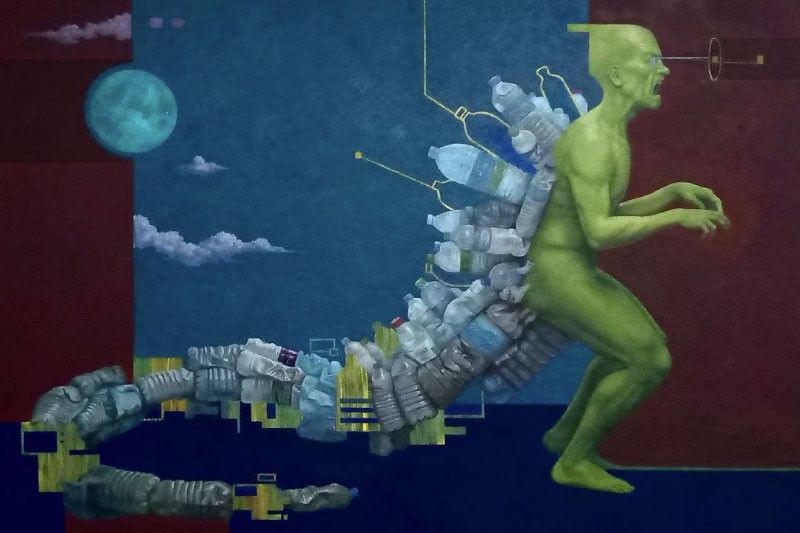
Benedicto Modesto’s ‘Mutation of Negligence: Petzilla (Filipinus walapakealamus)’
A monstrous form takes shape in Benedicto Modesto's “Mutation of Negligence: Petzilla (Filipinus walapakealamus).”
It is a social satire that challenges viewers to consider how habitual wastefulness and a lack of accountability can turn people into the very threats they should be fighting.
Melvin Culaba’s ‘Si Supreme El Niño sa Paligid ng mga Plastic Toys’
El Niño and plastic toys are the inspiration behind Melvin Culaba's “Si Supreme El Niño sa Paligid ng mga Plastic Toys.”
Culaba's handiwork draws on the Filipino expression “pagiging plastik,” which can refer to artificiality, insincerity or hypocrisy.
Eghai Roxas’ ‘Toxic Life Submerged in Materials’
In “Toxic Life Submerged in Materials,” Eghai Roxas uses disposable plastic materials and single-use bags to create an intricate composition against a white background.
Roxas, who also serves as curator of “The Plastocene,” uses the composition to explore excess, toxicity and the contradictions surrounding disposable products.
Henri Cainglet’s ‘Octopussy #69’
The artistic possibilities of discarded materials arise in Cainglet's “Octopussy #69,” a soft sculpture incorporating hand-sewn textiles, found objects and single-use plastics.
The artist's playful title and presentation contrast with the more serious concerns surrounding its materials, highlighting how objects commonly treated as waste can be transformed into works that encourage reflection on consumption and disposal.
Raul Jorolan’s ‘Dedma Manhid and Pasaway’
Filipino humor and familiar expressions work to deliver an timely environmental message in “Dedma Manhid and Pasaway.”
Jorolan made use of disposable plastic, and incorporates the line “Hoy! Wag kang Plastic!” as a play on the material itself and the Filipino expression associated with insincerity or hypocrisy.
Other works
“The Plastocene” also features artworks that examine plastic pollution and environmental disruption through different artistic approaches.
Visitors can explore Roxas’ other large-scale works, Chrisanto Aquino’s diptych “Human Trash” and “Pong Pagong,” and Rara Carillo’s four-part sequence “Crude Imprint,” “Red Tide,” “Anthropocene Corals” and “Mangrove.”
Beck Dollisen’s “Salamat sa Payong ni Denden” also offers another perspective on the exhibition’s themes through humor and unexpected associations.
“The Plastocene” is on view at the ground-floor lobby of the Yuchengco Museum until October 30.
RELATED: John Lapus' play among 12 finalists of 1st Teatro Panalo