Iloilo, a foodie’s heaven
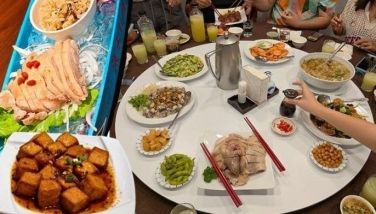
As soon as you land at the Iloilo International Airport, waste no time and head to an institution – Tatoy’s Manokan and Seafoods. It is the season for diwal or angel wings, a shellfish native to Western Visayas waters. It is also only in Iloilo (and Negros) that I get to taste managat, or mangrove snapper. Though now farmed, it is a high value marine fish that has a milky, sweet and moist texture – you might skip bangus (milkfish) after tasting this.
At another table in Tatoy’s I saw tanigue (Spanish mackerel), grilled and sort of brushed with atchuete (annatto) oil to give it that golden color. But the staple at every table is Tatoy’s native chicken – a bit of a struggle to slice and best eaten with your hands, as the meat is tougher but tastier than commercial grades. It is served whole (literally with head included) and each chicken must be below a kilo in size. Definitely this weight class is not for commercial fast food joints, as I learned from someone who processes dressed chickens. Bigger is better for commercial demand. But not at Tatoy’s. They only serve the small “native” ones. They truly have more flavor as they eat grub and not commercial feeds.
After just a short break to attend a meeting and stopping by our hotel, we prepared for an early dinner at the Boat Club of Iloilo for yet another version of inasal at Jo’s Inato but the restaurant is named Sabya for this location. I was on a chicken tasting spree so I ordered the quarter leg (paa) drizzled this time with patis (fish sauce) and calamansi. There is a lot of seafood here so we had a platter showing off Iloilo’s catch – scallops in shell, mussels, squid and shrimps. I met a new dish called linagpang, a grilled chicken (or sometimes fish), and grilled vegetables that are put in a soup with some evaporated milk (Alpine brand preferred). The killer dish was a tortang talong (eggplant omelet) that had crab fat, green mangoes, tomatoes and salted egg. Go try it next time you visit, and order a platter of rice.
Though La Paz Batchoy and Pancit Molo are Iloilo’s flagship “must try” dishes, I learned that in smaller faraway towns, they have standard family fare like pinamalhan, a staple similar to a paksiw tagalog but drier or with less liquid. I was told the fish is cooked with vinegar and spices and its sour broth allowed to reduce to almost dry, the better to preserve it I guess. It can stay in the cupboard without refrigeration. Every home has their version of this everyday fare. In our house, our mother cooked fish in vinegar or paksiw, but would then fry it for a different flavor of fried fish (marinated, stewed then fried). It probably was her version of pinamalhan.
Another must try are the buttered toasts or biscocho, galletas and many baked goods from heirloom recipes like that of Biscocho Haus. It goes well with Iloilo’s many coffee origins – many are Robusta varieties from Barotac, Janiuay and Leon. The coffee craze has come to this province and you will notice many cafés, coffee kiosks and now an Iloilo Coffee Festival (ICF) which we attended along with farmers and café owners. The provincial government is serious about helping the coffee farmers but are concerned about the aging producers. Thus programs involving youth are now being pushed to plant coffee and take over the lands started by their ancestors. Former rebels who are now returnees are also looking into coffee as a livelihood. Thanks to the Provincial Agriculture Office OIC Geron Magbanua and the provincial administrator Dr. Raul Banias who listened to our pitch to plant more coffee in Iloilo.
Back to food, there is a famous Roberto’s siopao brand, too. We used to line up for the Queen and King versions of this popular siopao. Did you know that it was in Iloilo where famous brands like the franchise Ted’s La Paz batchoy and national brand Mang Inasal (chicken inasal) were born? No wonder Iloilo was named UNESCO Creative City of Gastronomy on Oct. 31, 2023. There is so much food to discover, especially in the public markets.
You may also check out Breakthrough and other places near the water for seafood that the city is famous for. But when you have more time and get the chance, drive to Bingawan, Lambunao and Miag-ao – as these are places where Slow Food has formed communities to preserve its food culture. I met many of them, including the famous tultul salt maker from Guimaras who made us try his new product – a caramel ice cream with tultul salt. These young food advocates are now preserving their local ingredients and making banana vinegar, batuan paste and batuan dulce de leche (caramel). Batuan is the souring ingredient that has seen a new resurgence after being listed in Slow Food’s Ark of Taste and is now being used by many chefs (even from Manila). The Negrenses realized batuan was aplenty only in their island and in Panay, but not in Luzon. Slow Food was instrumental in making it more prized and more popular after it was displayed in food shows and used by Manila chefs.
Kudos to Slow Food for creating communities in Iloilo and keeping the younger generation interested in food culture preservation.
If you want to eat fresh, fly to Iloilo and try all the home cooking or their local restaurants’ versions of managat, diwal and whatever fresh catch they offer. That is how Tatoy’s started, because he is a fisherman. He only offers the freshest catch of the day, and you can see his formula work because his restaurants are now iconic and are revered institutions for fresh food.
If you are a foodie, you must visit Iloilo and enjoy the bounty it offers.



- Latest
- Trending