Giving diplomacy a heart
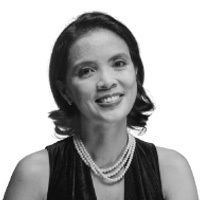
Foreign Secretary Theresa Lazaro addressed the Manila Overseas Press Club April 30 (Thursday). She articulated eloquently the Philippines’ foreign policy. Excerpts from her speech:
Diplomats and journalists are two sides of the same coin. We both live out of suitcases, we both thrive on caffeine and we both spend our lives trying to make sense of a world that – quite frankly – often refuses to make sense.
In the world of diplomacy, information is our primary currency. It is the bedrock of trust, the catalyst for negotiation and our only shield against miscalculation.
For the journalist, it is the raw material of truth that keeps power accountable. For the businessman, information is market intelligence. For the OFW in a conflict zone, it is the difference between safety and peril. And for the ordinary Filipino, it is the clarity of knowing that their government is awake while they sleep, safeguarding their future.
In an era of deep fakes and “fragmented truths,” your work as the press is essential. You are the bridge. You translate the cold, complex language of geostrategy into a language that resonates at the Filipino dinner table. You help our people understand that foreign policy isn’t just about handshakes in Geneva or New York; it is, at its heart, about their security and their prosperity.
2026 is not a “business as usual” year for the Philippines. We are living through a decade defined by what I call the Three U’s: Upheaval, Uncertainty, Unpredictability.
We emerged from a global pandemic only to face a world where conflict has become a constant presence. From the fields of Ukraine to the destabilizing hostilities in the Middle East, the 2020s are challenging the global order in profound ways.
When energy markets are disrupted, the effects travel quickly through prices, trade flows, supply chains and eventually into growth and household welfare. What begins as a geopolitical event quickly translates into higher transport costs, more expensive food and greater pressure on the daily lives of ordinary Filipinos.
A crisis in the Middle East is not a “foreign” problem – it is a crisis for 10 million Filipino families. When our seafarers navigate high-risk waters, that is a national imperative.
In 2026, no island is truly an island. The “polycrisis” is real. Economic, environmental and geopolitical shocks are colliding.
Our response must be a foreign policy that is as agile as it is principled.
Under President Ferdinand R. Marcos Jr., Philippine foreign policy has evolved. While we hold fast to our enduring principles – independence, sovereignty and democracy – we have sharpened our compass.
The national interest is our ballast. It is what steadies our ship as we navigate these uncertain waters.
As the Philippines assumes the ASEAN chairship under the theme, “Navigating our Future, Together,” we are focusing on three key pillars: Peace and Security Anchors. Prosperity Corridors. People Empowerment.
Hosting the 48th ASEAN Summit, our agenda is unashamedly practical, moving beyond the rhetoric to fortify energy security, stabilize food supplies and – most importantly – guarantee the safety of ASEAN nationals across the globe.
In a world that is increasingly polarized, ASEAN’s greatest strength is our “convening power.” We are the ones who can bring everyone to the table. The Philippines is committed to steering ASEAN in a manner that is principled, pragmatic and responsive to the realities of our time.
We are also looking beyond our immediate neighborhood. We are operationalizing what I call “Strategic Agency.” Simply put: we are making sure our eggs are not all in one basket.
We are de-risking our future through Strategic Partnerships with Japan, Vietnam, South Korea, Australia and India. These are “force multipliers” for technology transfer, defense cooperation and economic resilience.
With China – our largest trading partner – we continue to seek cooperation where possible. But let me be very clear: we remain firm and uncompromising in protecting our sovereignty. We will never be the aggressor, but we will not surrender a single square inch of what is ours.
Simultaneously, our alliance with the United States remains an ironclad pillar, evolving into an economic alliance focused on supply chain resilience and critical sectors like semiconductors.
From negotiating Free Trade Agreements with the EU to expanding our footprint in Africa and seeking sovereign wealth investments in the Middle East, the message is clear: the Philippines is a friend to all, yet strategic and discerning.
We are deepening coordination with regional and global partners as we weather this volatile period together. The strength of our bilateral, regional and multilateral engagements is itself a core component of our national resilience.
Finally, we are taking our seat at the world’s highest table. This June, the Philippines stands for election to a non-permanent seat on the United Nations Security Council for the 2027-2028 term. Why does this matter to the average Filipino?
It matters because a seat on the Council gives us a direct voice in global decision-making. It allows us to advocate for the peaceful resolution of disputes and to amplify the interests of the Global South, including on climate change and migration. It is an opportunity for a maritime nation like ours to champion the rules-based order that keeps us all safe.
I am both deeply proud and profoundly humbled to be at the helm of the Department of Foreign Affairs during these pivotal times. I am only the second woman to serve as secretary of Foreign Affairs in our department’s long 128-year history.
The weight of our foreign policy is carried by many. I am sustained by the silent, dedicated and often heroic work of the men and women of the DFA – the frontliners you rarely see: the ones processing repatriations in the middle of the night, the ones negotiating complex treaties in distant capitals and the ones standing watch over our interests in every corner of the world.
Behind the scenes, our Philippine embassies are working with urgency to help secure energy supplies, expand options and diversify partnerships. It is their commitment that gives our diplomacy its heart.
* * *
Email: [email protected]





- Latest
- Trending