Retired and reinvented

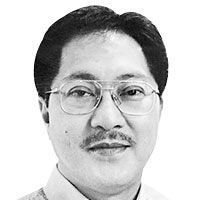
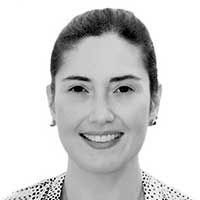
They just wanted to quit the urban jungle and, being sailors, they chose an island to settle in, so they could sail while thinking of what the next chapter might be. They had an empty nest; with their two daughters now done with school, what is the next chapter of their lives? Twelve years ago, Raul Bulaong was a corporate tech executive while Ichay was a corporate exec in advertising. They were both in their late 40s, and started what would be their second chapter – that of being the complete opposite of how they used to live.
Toll fees for each of them was P20,000 a month (12 years ago), stress was at its highest, maintenance medications were de rigueur – something had to change. They made the leap of faith and moved their home to Coron, Palawan.
While settling in Palawan, driving their four-wheel drive pick-up to carry their gear and climb up their steep driveway, Raul opened a little ice cream kiosk to keep busy. Ichay found a job teaching at Palawan State University, something she has always wanted to do. I met them both at a “Bird Friendly” seminar maybe in 2018 when Ichay had started an organic vegetable farm as well. They invited me to their hilltop home to have some drinks but could not feed me as Ichay had just bought two fish for lunch, and I was the third plate. So we went out to eat instead. They could go to market everyday for what they would eat, just like how it used to be in our grandparents’ time and did not even need a refrigerator, as everything was bought fresh for the day’s meals.
They do not call themselves retirees, maybe just reinvented versions of themselves. Soon after, Raul got into an advocacy that would also be a thriving business. While Ichay teaches and grows calamansi, Raul gets into building a social enterprise trying to give the cashew industry in Palawan a boost. I learned more about cashews during our interview for my podcast, with Raul mouthing statistics that we are the fifth largest cashew producer in the world. A true blue entrepreneur, he soon rolled up his sleeves to get deeper into the cashew value chain but this time with a different lens – “giver’s gain,” he calls it.
An advocacy turned sustainable enterprise, Raul can now tell you how much cashew we get from Palawan, what happens to the fruit, the kernel and the nut and why cashews cost so much in Antipolo (where it does not come from apparently) and in retail shops in the city.
Ichay, meanwhile, during Covid had a bumper crop of calamansi and had no market for the harvest. She experimented on making an alcoholic drink she now calls “calamancello,” a take from the Italian limoncello. Because truly, when life gives you calamansi, you make “calamansi-ade” with a twist of alcohol. We will soon sell this once her stocks are back to normal levels.
I asked them their secrets or tips for those wanting to try island life.
Get a consultant. You cannot be experimenting at everything. Get the advice of an expert to shorten your learning curve, whether its ice cream, farming or another industry you are trying for the first time.
Change your mindset. Change your lifestyle and adapt. From eating gourmet food and many processed specialties, learn to adapt to what is locally available. Gourmet or specialty will have a new meaning to you.
Never regret your move. Adapt, evolve and be open to new ideas, new opportunities.
Keep your hobbies but find a sustainable source of other income, no matter how small the income may be at the start. Never think of money but think of what you are learning in the process.
Try new jobs at your new place – teaching, sharing and training others. Start a small business. Find an advocacy you can adopt.
As I write this, messages abound about how to adapt to the energy crisis, with people just starting to think it through. Meantime, Raul and Ichay were way ahead of the curve – they did it 12 years ago and are thriving in a new way of living, not by circumstance but by choice.
And though it may be a later realization for many, we can still start adopting a new lifestyle and maybe even moving out of the city and finding a new home in one of our 7,000 islands.
If Raul and Ichay did it way before Covid, and some of us did it during the lockdowns of 2020, we can always be resilient and do something similar today. That of going back to basics, and trying a simple lifestyle – no frills, no malls, no processed food – just going natural.
Do you think you can do it? Let us not make circumstances do it for us. We should proactively start the process and simplify our life. What we have been advocating for many years is suddenly practical – grow your own food, start a garden, buy local and eat simply what Nature provides.
Raul and Ichay are today’s models for island living while having a hobby turn into a small business. They are busy but not stressed. Raul embraced an advocacy and turned it into a sustainable enterprise. Ichay found a new calling – teaching in school and being a farmer of calamansi.
Corporate executives should start looking for a way out of the urban jungle and become digital nomads or digital island dwellers. We can then decongest the city and still carry on with business, but with less stress and traffic.
Start today to pick up a hobby (theirs was sailing) like hiking which costs nothing. Going back to Nature, whether wind or sea, mountains or forests may give us new ideas and refresh and revitalize us.
You do not have to be old to retire. The idea is to start proactively rather than be forced to do it, which causes added stress. Plan to retire or relocate while you are younger and you can try several ideas before settling down. It may be the smartest option to follow in their footsteps. And live, more than just survive.




- Latest
- Trending