Our planet’s biodiversity needs protection: Germany and the Philippines are close partners
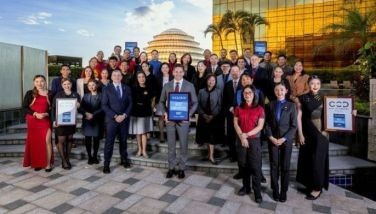
At the end of October, the Convention on Biological Diversity (CBD COP 17) brought together delegates from all over the world in Yerevan, Armenia, for the 17th Conference of the Parties (COP) to discuss and make decisions on important policy issues related to biodiversity.
Government and civil society representatives from Germany and the Philippines were part of these important discussions. As one of the most biologically-rich countries in the world, this topic is of vital interest to the Philippines. The Philippines ranks fifth in the world in the number of plant species, maintains five percent of the world’s flora and ranks fourth in bird endemism. An intact ecosystem and flourishing biodiversity supports the livelihoods and food for millions of people.
Fisherfolk need fishstocks to be sustainably used, not depleted. Farmers need their farmgrounds protected. Moreover, healthy ecosystems are the foundation of the place many people call home and are deeply intertwined with cultural identity. Thriving ecosystems like mangroves can protect against the destructive force of typhoons, while intact forests play an integral role in watershed management, acting as natural buffer systems. A rich biodiversity is not only a natural treasure of a country or an argument for tourism promotion, but a key asset to ensure the future of a society. We therefore need to protect the biodiversity around us for this generation and the generations to come.
Germany attended COP 17 in Yerevan with concrete contributions: through Germany’s International Climate Initiative (IKI), 50-million euros were freshly allocated to the Global Biodiversity Framework Fund and 15-million euros to unlock private investments in biodiversity protection measures, including in Asia.
This reaffirms Germany’s support for global biodiversity conservation efforts. Germany remains a reliable partner and a key player in biodiversity finance – in the Philippines and worldwide. The ASEAN Center for Biodiversity (ACB) in Los Baños, Laguna has been a longtime cooperation partner of Germany. Having recognized the importance of this topic very early, Germany has supported the work of the center since its start of operations. These days, the Philippine executive director of the ACB, Jerome Montemayor, is in Berlin at the invitation of my colleague, Maria Teresa Almojuela, Philippine ambassador to Germany, to attend the Science Week in Berlin and for talks on Indo-Pacific biodiversity and community-rooted climate resilience. I am very grateful for this initiative!
Since the International Climate Initiative was launched in 2008, Germany has supported projects in the Philippines through IKI, with many of the projects implemented by GIZ together with Philippine partners. Transformative Actions for Climate and Ecological Protection and Development (TRANSCEND), with 32.7-million euros, brings climate and biodiversity policy together in three areas: protecting key biodiversity, restoring natural carbon sinks and mobilizing private investment for a low-carbon transition. Through the new “Solutions for Marine and Coastal Resilience in the Coral Triangle” or SOMACORE project, with close to 20-million euros of IKI funding in partnership with the Department of Environment and Natural Resources and the Department of Agriculture, marine and coastal ecosystems are strengthened across the Coral Triangle, including the Sulu-Sulawesi seascape that the Philippines shares with Indonesia and Malaysia.
This year, a Super El Niño is expected to bring below-normal rainfall and prolonged dry spells well into next year, with water supplies, harvests and food security at risk. In such a year, the importance of biodiversity protection becomes particularly evident: healthy forests that hold water and healthy mangroves and reefs that shield our coasts from heavy storms are essential means of subsistence which can reduce the impact of a Super El Niño and climate change, and strengthen resiliency.
El Niño resilience also depends on stronger institutions and sustained investment for the people working closest to biodiversity loss. Frontline communities, Indigenous peoples, local leaders, conservation organizations and protected-area agencies need resources before extreme conditions escalate into disasters. Long-term partnerships can help protect vulnerable species and ecosystems before losses become harder to reverse.
Reducing the pressures that make biodiversity vulnerable is just as important as preparing for El Niño itself. Ecosystems are better able to survive droughts, floods, fires and marine heatwaves when species have enough food, clean water, breeding sites, shelter and space to move before extreme conditions arrive.
For countries like the Philippines, concrete measures to protect biodiversity are a crucial investment in resilience. The beauty of this is that well managed and protected ecosystems can actually increase resilience over time as they stabilize and mature.
Climate action requires a concerted effort by different sectors to be truly effective. Germany’s answer is partnership: finance that reaches the ground, projects built in close coordination with our Philippine partners and local communities at the center.
Nature does not wait for negotiations to end. Nature does not wait for budgets to be approved. Nature does not wait for the rains to return. Germany stands ready to keep working with our Philippine partners on this task.
* * *
Andreas Michael Pfaffernoschke is the German ambassador to the Philippines.







- Latest
- Trending