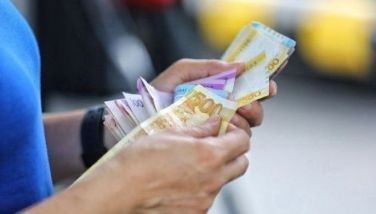
Moody’s cuts Philippine 2026 growth forecast to 3.3 percent
Due to high energy prices, weak investment
MANILA, Philippines — Moody’s Ratings has further trimmed its Philippine growth forecast for 2026 to 3.3 percent from 3.6 percent previously as elevated energy prices and weak investment continue to weigh on economic activity.
In a report, the debt watcher said real gross domestic product (GDP), the broadest measure of economic output, is expected to grow by 3.3 percent this year before recovering to 5.1 percent in 2027 as confidence improves and investment strengthens.
The new forecasts are lower than Moody’s August projections of 3.6 percent for 2026 and 5.3 percent for 2027.
Moody’s attributed the weaker near-term outlook to higher energy prices amid the conflict in the Middle East and “still-subdued investment activity.”
Still, it said Philippine growth dynamics remain stronger than those of similarly rated economies, supported by infrastructure spending, remittance inflows and reforms aimed at attracting greater private and foreign investment.
Remittances from overseas Filipino workers, equivalent to around eight percent of GDP, continue to support household consumption and provide a stable source of external financing.
Moody’s said progress in project execution, investment liberalization and public-private partnership reforms should help lift investment and productivity over the medium term.
However, “implementation delays or weaker-than-expected investment could weigh on confidence, constrain private investment and slow medium-term growth potential,” it said.
The rating agency also flagged lingering governance weaknesses that could hamper public investment.
It said recent reviews of infrastructure planning, budgeting and procurement “exposed governance weaknesses that led to significant project delays and weighed on investor confidence.”
The Philippines also ranked below the 30th percentile globally in both rule of law and control of corruption based on the World Bank’s Worldwide Governance Indicators, according to Moody’s.
Despite these challenges, Moody’s said the government has maintained broad policy continuity and continued to pursue structural, fiscal and business environment reforms.
On the fiscal side, Moody’s expects consolidation to remain broadly on track despite weaker growth and uncertainty surrounding proposed revenue measures.
The general government deficit is projected to narrow to around four percent of GDP this year from 4.1 percent in 2025 as economic activity recovers, revenue administration improves and spending efficiency gains materialize.
However, Moody’s said weaker revenue growth, implementation challenges and pre-election spending pressures could slow the pace of deficit reduction.
It also noted that recent fiscal consolidation has partly reflected restrained capital spending, while improvements in revenue mobilization have remained gradual.
Government debt is expected to stabilize at around 58 percent of GDP over the next two years before declining gradually.
Debt affordability, however, remains the key constraint to fiscal strength, with interest payments projected to stay above 14 percent of government revenue compared with the roughly nine-percent median among similarly rated sovereigns.





- Latest
- Trending