Project Airbag
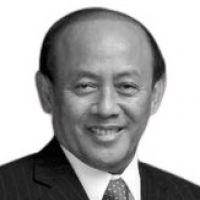
Taipan Henry “Big Boy” Sy Jr. hosted a rare impromptu Chinese lunch for senior business journalists at upscale China Blue restaurant in the family’s five-star Conrad Hotel Thursday. He seemed to convey two distinct messages:
One, he is fed up with the National Grid Corporation of the Philippines (NGCP), the transmission monopoly, being made the punching bag whenever there is a power shortage in major areas or nationwide. Like in the Visayas where there is an electricity shortage despite the fact NGCP has surplus transmission capacity in the region. So the electricity shortages in the Visayas is inadequate power generating capacity, not a failure of NGCP transmission system.
Two, the current electricity shortage nationwide can be solved in two or three years with an aggressive rollout of solar power and other renewable energy sources. NGCP guarantees to buy the solar electricity, store it in its BESS (Battery Energy Storage System) for delivery to electricity users using NGCP’s transmission lines.
Resort to solar and other RE in tandem with BESS has become more urgent after the Iran War raised 62 percent the price of oil from $73 for Brent (to above $118 per barrel) and refined petroleum products and byproducts. The head of the International Energy Agency (IEA) has described the situation caused by the war as the “greatest global energy security challenge in history.” Also, the coming El Niño drought could be severe, resulting in higher than usual demand for electricity.
Big Boy Sy is vice chair of NGCP and chair of NGCP parent company, Synergy Grid & Development Philippines, Inc.
Big Boy’s answer to electricity shortages and unreliable energy is what he calls Project Airbag, NGCP’s rapid BESS rollout, initially with 850 megawatts and reaching up to 10,000 megawatts in five years – additional power capacity that covers electricity shortages. BESS cost is high, up to P700 billion, quadrupling NGCP’s current capex per year of P25 billion.
This initiative to deploy battery energy storage systems that can provide fast-response storage and greater operating flexibility across the Philippine grid, says Big Boy in a briefing paper given to his luncheon guests. Here is the NGCP brief:
The project is intended to help address immediate system pressures, prepare the grid for tighter supply conditions associated with the 2027 El Niño and provide longer-term flexibility as the country’s generation mix continues to evolve.
The current supply problem in the Visayas is driven by tight supply conditions and simultaneous generator outages.
Battery storage can respond much faster than new generation can be built. It gives NGCP an additional transmission-side tool to support the system during short-duration shortages and disturbances by storing available electricity and releasing it when the system is under greater pressure.
Project Airbag is a practical intervention that NGCP can pursue within its own sphere while longer-term supply solutions are still being developed.
The battery rollout is not limited to the Visayas.
El Niño creates a foreseeable risk of reduced hydroelectric output, particularly in areas where generation depends heavily on rainfall and reservoir levels. The risk is national, which supports the deployment of storage in other parts of the grid as well.
Batteries can capture available electricity during periods of surplus, including daytime solar output, and release that stored energy during evening peaks, periods of reduced hydro output or other tight system conditions.
Early deployment is therefore intended as a proactive resilience measure rather than a reaction after supply conditions have already deteriorated.
Batteries do not create electricity and cannot substitute for adequate generation over prolonged periods. The underlying structural requirement remains sufficient dependable generation capacity.
New generation projects take significantly longer to develop, finance, approve, construct and commission. Airbag can provide a bridge during that development period by reducing immediate system vulnerability.
The proper framing is therefore short-term transmission relief supporting – not replacing – long-term generation investment.
The value of battery storage is not limited to the current Visayas situation or to one El Niño cycle.
The Philippine grid will continue to need greater flexibility as demand grows and the generation mix becomes more diverse and variable. Strategically located storage can provide fast-response support during disturbances, improve the use of existing transmission assets and strengthen overall grid resilience.
As more solar and other variable renewable generation enters the system, storage can also help shift available energy from periods of high production to periods of higher demand.
Properly regulated battery storage can therefore form part of the country’s long-term transmission infrastructure and flexibility toolkit.
The current supply challenge is acute and pervasive. Additional supply must therefore come from as many viable sources as possible, including those made possible by technological advances.
The objective is not to concentrate or monopolize participation in the energy sector, but to disperse the burden of addressing the country’s supply requirements by enabling more participants and more sources to contribute.
A more flexible transmission system can accommodate energy from a wider range of sources regardless of scale, location or configuration, including large-scale generation, embedded generation, distributed energy resources, net-metered facilities, rooftop solar and other emerging sources.
Households, businesses, distribution utilities, communities, agricultural users and other qualified participants can increasingly contribute to the country’s energy supply where technically and commercially feasible.
Project Airbag can help provide the storage and system flexibility needed to integrate these diverse and dispersed sources into the grid more effectively and reliably.
Over the longer term, enabling greater use of domestic and renewable energy resources can help reduce the country’s exposure to price-volatile imported fuels and strengthen national energy security.
Meanwhile, all aspects of the Sy businesses are doing well, Big Boy told me. SM’s current inventory of condo units will be sold out within three years, he says.
In the meantime, the SM group is going on a land buying spree and reclamation in preparation for an economic boom expected after two years.
* * *
Email: [email protected]







- Latest
- Trending