Trade gap widens to $5.15 billion in September
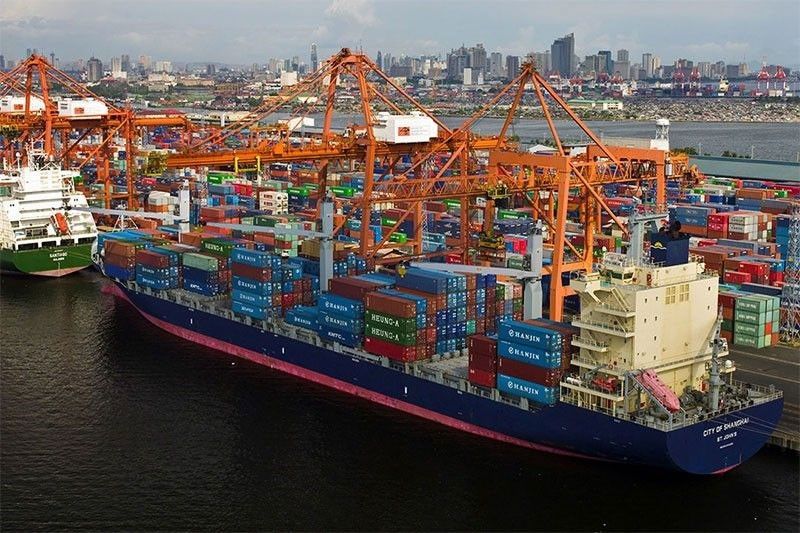
MANILA, Philippines — The country’s trade deficit widened in September despite record exports earnings and fastest growth in over five years, according to data from the Philippine Statistics Authority (PSA).
The balance of trade in goods – the difference between exports and imports – booked a deficit of $5.15 billion in September, 10.3 percent higher than the $4.67-billion shortfall in the same month last year.
This despite the 35.6-percent jump in exports to $9.87 billion in September from $7.28 billion in the same month last year.
National Statistician Dennis Mapa said in a Viber message that the September export growth was the “highest since April 2021 with 74.2-percent growth in export.”
The September export figure is also the highest since the government started to track performance in 1991.
Electronic products remained the country’s top exported commodity with total earnings of $6.92 billion or 70 percent of the country’s total outbound shipments in September.
The United States remained the country’s top export market, accounting for $2.63 billion or 27 percent of the total in September.
Meanwhile, the country’s imported goods surged by 26 percent to $15.03 billion in September from $11.95 billion in the same month last year.
“The September 2026 import value was the highest recorded since the series began in 1991,” the PSA said.
Similar to exports, electronics also had the highest import value in September at $5.8 billion or 39 percent of the total imports.
South Korea became the biggest source of the Philippines’ imports in September, toppling China. Imports from South Korea amounted to $3.92 billion or 26 percent of the total in September.
From January to September, the trade deficit widened by 26 percent to $47.16 billion from $37.57 billion in the same period last year.
Exports in the nine-month period climbed by 17 percent to $73.95 billion from $63.08 billion a year ago.
The PSA said the export figure as of end-September was the highest recorded since tracking started in 1991.
Meanwhile, imports from January to September grew by 20 percent to $121.11 billion from $100.65 billion in the previous year.
The total import value as of end-September was also the highest level since 1991.
Philippine Exporters Confederation Inc. president Sergio Ortiz-Luis Jr. said in a telephone interview that while the peso’s depreciation has helped make the country’s exports become more competitive, it is not the main driver of growth.
“We still have an advantage in terms of electronics, our top export. There is no tariff imposed by the US on this,” Ortiz-Luis told The STAR.
Like electronic products, he said Philippine exports of agricultural products are also exempt from the US tariff.
Barring unexpected developments, he said that Philippine exports are expected to continue posting growth for the coming months.
While exports continue to grow, he said that the Philippines is still lagging behind in the region.
“The reality is our exports are still small compared to our neighbors,” he said.
He said there is a need to diversify exports and take advantage of trade pacts to continue to grow.








- Latest
- Trending