More flak on the GE reform, HEIs must lead consensus-building
The opposition to the CHED Reframed General Education Curriculum (RGEC) refuses to die down.
More than a month after CHED issued its PSG for the RGEC, reducing the mandated GE curriculum to 18 units, and a month after CHED backtracked and announced it was postponing the implementation to 2028, critics are emerging even from unlikely places.
Several days ago, National Artist Kidlat Tahimik renounced his National Artist status and returned his medallion to the NCCA to protest against the CHED RGEC, which he said pushed courses to make graduates more employable at the expense of the humanities and social sciences.
Speaking to student leaders in Baguio, he asserted that education policies increasingly prioritize measurable skills and workforce competitiveness while devoting less attention to cultural identity, ethical formation, history and community values.
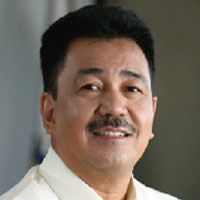
Kidlat Tahimik (Eric Oteyza de Guia), a UP alumnus with an MBA from Wharton School of the University of Pennsylvania, wrote a letter to CHED Chairman Agrupis criticizing the commission’s actions and ended it with a “Call to Action: Sugod mga Kapatid! Bawi-in ang liwanag ng ating kultura’t kasaysayan sa curricula!”
His opposition carries significant weight not just because he is a National Artist but because his life has been devoted to preserving the very values that critics of RGEC say will be lost.
The criticisms continue to come from all directions and all political persuasions.
To date, no major university or respected academician has come out in support of the CHED initiative.
Given the spirited criticisms from our National Artist, I renew my call for CHED to leave GE reform to the next administration.
At the latest UP GE Forum centered on Arts, Ethics and Humanities, some previously overlooked aspects of GE emerged. Dr. Wendel Capili, a distinguished Palanca awardee and former UP vice president for public affairs, highlighted GE as a crucial resource for survival for students from impoverished and remote communities.
The humanities, he argued, are neither an intellectual luxury nor a decorative exercise. They are tools of survival. When a student from a marginalized background learns to write cohesively, they are doing far more than satisfying a university requirement. They are organizing reality, asserting identity and claiming authority over their experience. Mastering them equips a student from a distant province with the cognitive ability to navigate unfamiliar, often intimidating, power structures at all levels of governance.
Many students from far-flung communities who arrive at university less prepared than their peers from science schools and private schools also use GE courses to develop their language, writing, research and personal skills.
Capili adds that “an educational system that trains individuals exclusively for functional slots produces an isolated workforce, illiterate in civic cohesion. The humanities preserve shared history, teach us to debate without destroying our institutions and force us to tolerate intellectual friction.”
This warning from Capili deserves our pause. Free higher education has provided access to millions of “first-generation” students and graduates, the first in their families to attend university and earn a degree. They are the graduates who will ensure that poverty ends in their generation and make their children’s lives better than their own.
By permitting GE’s dismemberment, are we neglecting our responsibility to help them comprehend their history and cultural identity, promote ethical growth and nurture democratic values, as Capili and Tahimik suggest?
I am happy that UP, as the national university, has taken a leadership role in the GE debate. Beyond these discipline-specific discussions at UP, it is now partnering with leading universities to bring the discussion nationwide. This July, UP Visayas and West Visayas State University are collaborating to bring the discussions to Region 6 and the Negros Island Region. I call on all administrators, faculty, students and education stakeholders to attend this important event.
Let us all ensure that the GE reform is a university-led effort that incorporates the views, interests and concerns of our educational stakeholders.
* * *
Congratulations to the administrators, staff, students and alumni of Camarines Norte State College (CNSC) on its conversion into the University of Camarines Norte (UCN).
The filing of the conversion bill was spearheaded by Rep. Renato Unico Jr. in 2016, and I supported it through the committee hearings and in the Senate, under the committee on higher education, chaired by Chiz Escudero.
The law (RA 11399) converting CNSC into a state university was enacted in 2019, but compliance with CHED requirements proved challenging. As with many other converted state colleges, the evaluation revealed weaknesses in research, graduate studies, facilities and qualified faculty. The law was in place, but compliance was nearly impossible.
What was the missing ingredient? Former UNIFAST executive director Ryan Estevez became CNSC president on Nov. 27, 2025. With his technical expertise and linkages in Congress and CHED, he vowed to achieve compliance in six months. He almost hit his target.
However, compliance and conversion are only the initial steps. The real challenge lies in gaining nationwide respect for the university by enhancing facilities, faculty credentials, curriculum development, licensure performance, university linkages and internationalization.
I am sure president Estevez and the UCN community will be up to the challenge.
* * *
Email: [email protected]


- Latest
- Trending