‘Sisa’ and the sad fruit of empire


It is La Koronel and her gaze that remind us how cinema can be a force of nature, not that a simple movie can change the world, but because we can never walk into a movie house the same way again when they’ve all turned into multiplexes. Funny that it takes a madwoman, or one pretending to be mad, to tell the invader to better mind his own business, or else there will be hell to pay.
It’s the first time we’re seeing Hilda Koronel (Susan Reid during her Maryknoll days before the school was renamed Miriam College) on the big screen in more than 10 years, and she has lost none of her luster since she lit up the corners of standalone movie houses decades past in Mike de Leon’s “Kung Mangarap Ka’t Magising,” still among the best films set in Baguio City, and Lino Brocka’s “Maynila sa Kuko ng Liwanag” and “Insiang,” which brought the Filipino social realist worldview to Cannes and beyond.
She plays the lead role in Jun Robles Lana’s “Sisa,” an almost stage like rendition of life and hard times during the American war in these islands, if not for the lambent cinematography of Carlo Mendoza, who provides a backdrop of a seemingly perpetual magic hour. Koronel and Lana reinforce each other’s strengths, the belle dame sans mercy pairing up with one of the more brilliantly low-key directors who departs from recent comedies, instead opting to return to a style reminiscent of that nod to noir, “Anino sa Likod ng Buwan,” and another featuring an avenging heroine, “Barber’s Tales.”
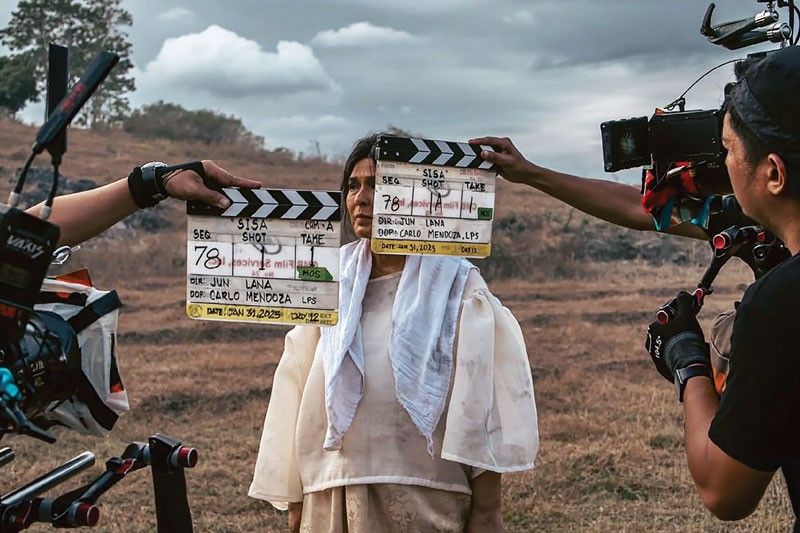
Granted, much has been said about the wooden portrayal of the colonizing force, but this is easily offset by Koronel’s support in the cast, including Eugene Domingo, Jennica Garcia and Nico Antonio, parlaying the existential dangers in a concentration camp and how no one can be trusted in a spy versus spy setup.
The film is not about the madwoman in the Rizal novel, though allusions and inferences cannot but be intentional, any resemblance to the fictional character automatically renders this “Sisa” a double fiction and thus, perhaps closer to the truth.

“Sisa” also reminds the viewer of the follies of expanding empire, and the colonizer can never really understand the travails of the colonized, as mentioned in the exchange between Domingo as shellshocked mom and the American headmistress named Warren, the shoe sadly can never be worn on the other foot.
The Ateneo professor Tony La Vina remarked that he never expected the ending, indeed an observation likely to be repeated, because how else can the fruits of war resolve but in the compost heap, although no one really wins there will be enough fertilizer for the next unrest and uprising.
It is Lana’s almost single-minded storytelling that delivers the narrative through with hardly any embellishments, no need for special effects at the start of the millennium, effectively turned into a cautionary tale of the dynamic between colonizer and colonized.
Not much has been said about the feminist gaze in the film, which academics and critics might well feast on, nor the theater background of Lana which genre landed him in the Palanca Hall of Fame, in fact the youngest ever, so this particular “Sisa” is not one for slouches, though the wing of madness passes over the reconcentrado there is no time to be cynical during a revolution or as the empire would describe it, an insurrection.
After playing the elder sister and single mom in “Sunshine,” Jenica Garcia proves yet again that she is quite the actress of her generation, full of nuances as the mistress of the American camp commander, her name Leonor also a worthy reference to Rizal.
Uge Domingo reprises her serious mien from “Barber’s Tales,” no small feat for the natural comedienne best known for the “Septic Tank” franchise.
It is, however, La Koronel and her gaze that remind us how cinema can be a force of nature, not that a simple movie can change the world, but because we can never walk into a movie house the same way again when they’ve all turned into multiplexes. Funny that it takes a madwoman, or one pretending to be mad, to tell the invader to better mind his own business, or else there will be hell to pay.
And Lana, kudos to him and his Idea First Company for a filmography as rich and varied as ever, with “Sisa” he is as close as anyone to understanding the dire straits we’re in. When one truly understands anything, as a Rolling Stone writer once said decades ago, there can only be compassion, only pity.





- Latest
- Trending