When ‘singing tycoon’ George Yang lost and found his voice again
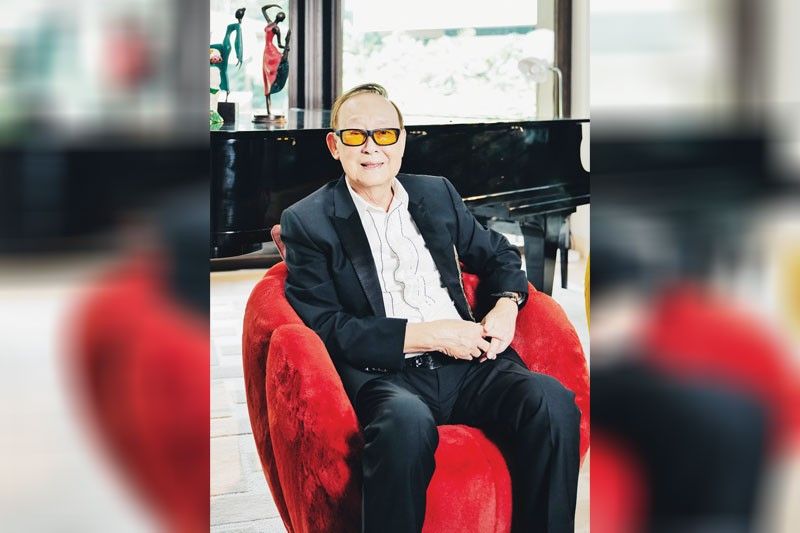
MANILA, Philippines — “Singing tycoon” George T. Yang faced serious health challenges in recent years, including an operation that he once feared had taken his voice away forever.
“I had some medical issues. I had a kidney transplant,” the 86-year-old told The STAR and another news outlet during an intimate interview at his home.
“So, I stopped singing for a few years and then the pandemic also… My concentration was on my health.”
Yang assured that “everything is OK now” and that the medical procedure was successful.
Still, it was a difficult period in his life in which he experienced months of isolation. And it was music that kept him company.
“I had to be ‘locked up’ upstairs (after the operation), I couldn’t see anyone for six months because (I was immunocompromised),” he said.
“I was just listening to music but I lost my voice. Because during the operation — a five-hour operation — may tubo na pinasok, tapos nawala yung voice ko… I didn’t sing na, I just listened.”
To his surprise and joy, his “natural light tenor voice” — as the music pundits described it — eventually returned. Last Christmas, he performed before a public audience again after quite a while.
“Lately, for maybe a year now, I’ve tried to get back mainly because music is good for your health,” he said.
“Just for fun, I got my pianist, I tried to sing again and I found out I could do it again and it came back quite well.
“I’m starting to sing again because it’s good for me. I don’t care whether I’m performing (on stage) again or not. I’m singing again for myself, to enjoy the music.”
He firmly believes in the healing power of music.
“Music is a good diversion. It’s kind of a problem-solver, like you’re taking some medicine. Music will focus your mind on pleasant things…
“For people who are sick, listen to Mozart, your recovery is faster,” he shared.
“It keeps me young.”
Yang represents a rare breed of business success and artistic passion. Though widely known in business circles as the man behind the master franchise of McDonald’s in the Philippines, he earned the moniker “singing tycoon” or “singing billionaire” after releasing albums “Yang at Heart,” “Forever Yang,” “The Night is Yang” and “Always Yang,” and staging a major concert at the Cultural Center of the Philippines.
What many may not know is that Yang was actually a late bloomer in music, discovering his singing talent only in his 60s.
Growing up in a traditional Chinese family, music was never part of his plans.
“You know, I learned to sing by myself,” he said of being self-taught. “I got interested in music from karaoke (laughs). I was already over 60 at that time when I started singing because my business associates, for pastime, wanted to go to the karaoke.”
His go-to music was opera, classical, standards, artists like Mario Lanza, and Broadway.
“And after a while, I said, I think I can sing ha (laughs), I can hit the notes… That’s how I started. I would sing at home. I put up the equipment, the karaoke. Everybody (at home) said, OK.”
Then, Yang met the hit-making businessman Jose Mari Chan.
“One time, I happened to be in Las Vegas and I knew he was performing, so after the show, (I approached him and told him) Jo, I can sing. ‘You know, let’s talk about it when I get back,’ he said.”

Not too long after, Chan produced his first-ever album, “Yang at Heart,” in 2002.
“He gave me so many of the old music… He gave me a list of songs and I chose like How Deep Is The Ocean — you don’t hear those things anymore but beautiful music — also Love Song and Once Upon A Time. It’s the most beautiful song that I like that has meaning. When you listen to it, you think of what happens to yourself when you’re young. (Once Upon A Time) is my favorite, which I just passed on to all my other CDs.”
There is an amusing story behind his first album.
“I went to this Roces Avenue Studio, I was told that I was recording the wrong way. ‘What you’re doing is you can do it at home.’ (He said) you need a supervisor kasi tuloy-tuloy yung kanta ko, me with the pianist. ‘The recording artists, you know, they only do one song a day.’ Ako, I did so many songs because I was just doing it for fun. But I made a CD and gave it to friends. That was the start,” he recalled with a laugh.
“I decided to make a record with Universal Records but mostly I sold to different corporations for their gifts (laughs)... That was fun. (The CDs were a) mix of songs, from classical, Broadway to old standards. I like them all.”
Meanwhile, Yang still goes to the office and remains active in business.
“Although I’m just like a consultant, I’m involved in several things, one of which is McDonald’s, of course. It’s going quite nicely. And I’m developing real estate and some other stuff,” he said.
When asked what he would listen to at his office, he said, “At work, I don’t listen to music.”
But at home, music is ever-present. He listens to Spotify and plays his CDs and vinyl records. During The STAR’s visit, classical music filled his living space.
At this stage of his life, music is more about emotional well-being and comfort.
“Music is a good distraction. It’s a good way of taking away your stress, your worries. You know, as you grow older, you have comorbidities, and you don’t want to dwell on that. Especially if you’re not feeling well… and you start to realize your limitations,” he reflected.
“And business is very stressful. When you listen to music, you don’t think of your problems.”
While he has no concrete plans to release a new album, Yang remains committed to nurturing and supporting young music talent through his Klassikal Music Foundation.
There are plans to resume the full scholarship grants that were halted during the pandemic. To date, he has funded the education of around 60 artists, who took up voice and instruments in college.
One of his most established scholars is celebrity vocal coach and RMA Studio Academy founder Jade Riccio.
“She was able to give back by hiring some of our scholars, giving them extra income,” he shared.
Yang is also seriously considering reviving the foundation’s annual concert and gathering its alumni once again.
On a more personal note, he is also very proud that his apos are taking after his love for music.
He is happy that things are more open and changing.
“You know, the Chinese people don’t sing, they only know how to make money. Work hard, make money, do business,” Yang quipped.
“I liked to sing when I was young but it was far from our minds, as we were trained to work and do business. Everything came later, but now things have changed.
“Now, my apos are learning piano, are learning violin, iba na ngayon,” he proudly beamed.





- Latest
- Trending