


Jose Mari Chan on turning down politics, refusing to quit lifelong ‘hobby’
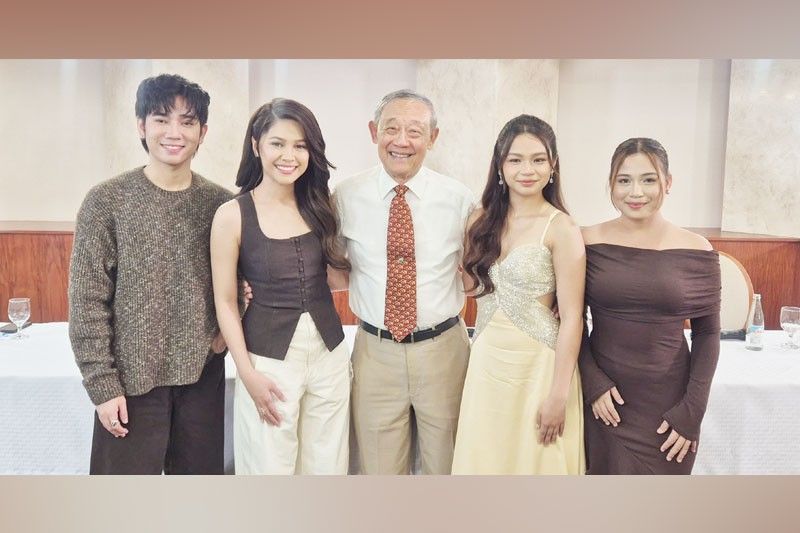
MANILA, Philippines — Jose Mari Chan could have taken a very different path during the time of former President Corazon Aquino.
The veteran singer-songwriter revealed on the sidelines of his presscon for his upcoming tribute concert, “Afterglow: Seasons of the Heart,” that he was once asked during the Cory administration to run for the Senate.
“This was the time of President Cory Aquino. She asked me if we could run for the Senate,” Jose Mari recalled.
He, however, declined because he was helping out in the family business. “I had to respectfully decline because I said that I’m helping my dad in the business and so he needs me,” he said.
Even as he became one of the country’s most beloved OPM icons, Jose Mari has always balanced music with business.
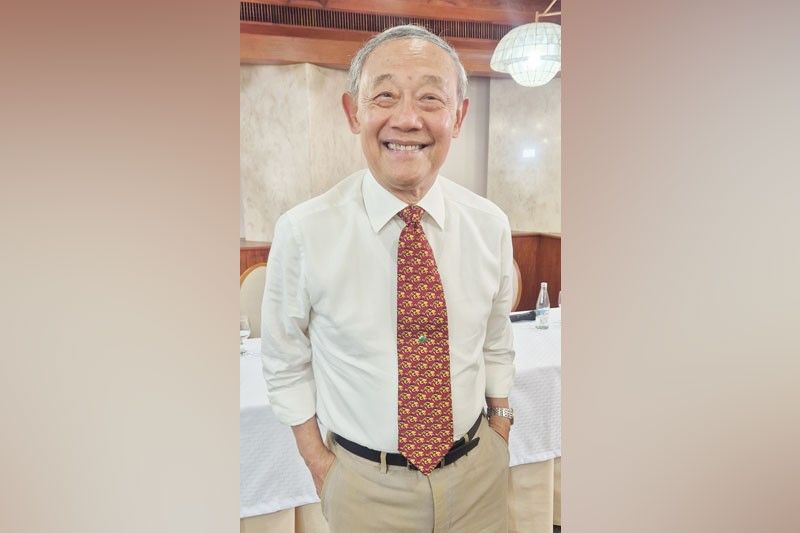
“I’m still active in my sugar business. That’s my bread and butter,” he said. “I still hold office. I came from the office kanina… I still enjoy my work.”
Asked if he would also encourage aspiring musicians to have another (day) job, he admitted that it was a matter of being practical given the current state of the music industry.
“Well, yes, because of the situation, nobody buys records anymore. Nobody buys CDs anymore,” he said. “You can get maybe a job, you know, work for a company, work in the office and compose at night, compose on the side. Be practical.”
He candidly shared that when he was just starting out, his father encouraged him to treat music as a hobby.
“My father always told me that... music could only be a hobby. It cannot support a family,” Jose Mari said.
One time, his father attended his concert at no less than the Carnegie Hall in New York. After the show, he went backstage and congratulated his son for filling up the famed venue, but he also had some advice.
“Congratulations, napuno ang Carnegie Hall. But my advice to you is now that you’ve made Carnegie Hall, it’s time for you to retire,” Jose Mari recalled his father telling him.
It was because his father wanted him to retire while he was on top. “Don’t retire on the way down. You made it to the top, (it’s time to) retire.”
But Jose Mari reasoned, “I said, ‘But this is only a hobby. You never retire from a hobby.’”
Of course, that “hobby” has since turned into a lifetime of music, which began with early recordings in the late ‘60s like Afterglow, to Deep in My Heart, Can We Just Stop and Talk Awhile, Refrain, to his most enduring to date such as the Pinoy Christmas anthem Christmas In Our Hearts.
Now 81, the veteran hitmaker firmly said he has no plans of retiring from music. He also continues to write songs, especially commercial jingles.
“For as long as the audience is there, I’m happy to sing for them. You know, God willing… because music is God’s gift to me… And expressing my songs and giving joy to people, that’s my gift back to God.”
He was also queried about artificial intelligence and whether he was afraid of it being used on his songs. “Actually, to me, it’s very complimentary that they’re making my songs better,” he replied. “Songs are written to be shared, to be sung by people.”
Despite all these changes in the industry, brought out by the digital-first era and now AI, Jose Mari remains grateful that his songs continue to be heard by the younger generations.
His concert, “Afterglow: Seasons of the Heart,” set on July 11 at the Philippine International Convention Center, will feature him alongside emerging Filipino talents.
“I’m deeply honored to be spotlighted on this concert and after being a singer-songwriter for more than 60 years, this is a glorious event for me. And also to be singing with our young talents — you know, the Filipino talent will never disappear on this planet.
“The Filipinos are really known for their love and talent for music. So, I’m very proud to see the next generation coming up and I wish them a great future ahead in their journey.”
Meanwhile, the interview returned to his earlier response during the presscon proper when asked if he was still receiving royalties for his songs and from which recording companies.
He said, “Vicor, for example, is one, and then Universal Records is another. You know, Dyna Records, Alpha…”
He continued, “Unfortunately, since record sales are almost zero now — nobody buys records, nobody buys CDs anymore, they download — and so, it’s hard to quantify kasi those… So, I have not been receiving my checks from those recording companies.”
In a separate statement sent to The Philippine STAR “aimed to address any misunderstanding” surrounding such comments, Universal Records managing director Kathleen Dy-Go wished to clarify that Jose Mari was referring specifically to royalties from physical music formats such as CDs, cassettes and vinyl records, and not to all forms of music royalties.
“We would like to clarify that Mr. Jose Mari Chan was referring specifically to royalties from CDs, cassettes, and vinyl records. As physical music formats have gradually declined over the years, so have the royalties associated with those sales. His statement should not be construed to mean that he no longer receives royalties from his music altogether,” she explained.
She added that while physical record sales are no longer the primary source of music consumption, artists have various revenue streams with “digital streaming services, publishing rights, licensing and other royalty collection mechanisms.”
Nevertheless, even during the followup interview following such remarks, Jose Mari appeared to focus on the positive side of the situation.
He said, “It’s okay. It’s okay because the joy comes from people liking my songs and making my songs a part of their lives. That’s more than any check that I can receive,” he said.
“Of course, because music is God’s gift to me, the joy that I now give to people, that’s more than any amount of check or right compensation.”


- Latest
- Trending


 Exclusive


