The Ivatan fisher who kept rowing
Among the nation’s basic sectors, the fisherfolk are the poorest of the poor. They produce our food, but despite being food producers, they cannot afford enough food to remain economically and socially productive.
Most fisherfolk are poor and lack education. They depend on the sea for their livelihood, a livelihood that is risky, uncertain and unpredictable.
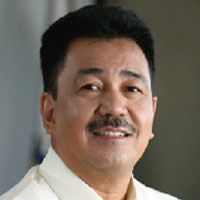
But the story of El Andro Aguada Obar shows that grit, determination and free higher education can achieve miracles even among the poorest of the poor.
And giving back becomes automatic for those who achieve their dreams.
Obar is an Ivatan and a member of the Ivatan Indigenous Peoples. He grew up in Ivana, Batanes province, a place we in Metro Manila only associate with typhoons and tourism.
But to Ivatans, Batanes is where the sea is more than water surrounding the islands. It is their playground, livelihood and their earliest teachers.
Obar recalls that on weekends, his father and older siblings spent hours navigating tidal reefs and exploring pools exposed at low tide. As he grew older, he began fishing with spearguns, gillnets, cast nets held on a pole and handlines.
He was often scolded after returning home with a basket of juvenile rabbitfish (getgetan) and wrasse called chikdi. He caught them with a dip net and carried them home with pride, unaware that his mother had spent the afternoon worried because he had gone without telling her where he was.
He continued fishing through high school, and his dream of attending college, along with the CHED scholarship, enabled him to enroll in the BS in Fisheries program at Cagayan State University. Obar remembers saying, “I already know how to fish. This should be as easy as catching fish in tidal pools.”
It was not.
He soon realized that fisheries was far more than fishing. It involved biology, ecology, chemistry, economics, mathematics, statistics, entrepreneurship, policy governance and the relationships among people, communities and aquatic ecosystems.
He returned to Batanes to write his undergraduate thesis on Uyugan’s seaweed resources. The shores he once visited as a young boy became sites of scientific inquiry and responsibility. With a CHED scholarship, support from SANTEH Corporation, the National Commission on Indigenous Peoples’ scholarship program and significant family support, he completed his undergraduate degree in 2016.
El Andro Aguada Obar continued his lifelong learning journey by moving to UP Visayas to pursue a Master of Science in Fisheries, supported by a DOST-ASTHRDP scholarship. He kept his focus on his home province, particularly the subsistence fisheries of Batanes. He returned to the communities where he once lived to document their local ecological knowledge, fishing livelihoods and roles in local food security.
In 2022, he took another leap into uncharted waters by pursuing his PhD in Fisheries at UP Visayas.
He continued working with coastal communities in Antique, drawing on his doctoral research to gain direct insights into local issues. He observed conflicts between municipal and commercial fisheries over fishing zones, resources, livelihoods and law enforcement. It became clear that fisheries science is broader than fish, gear and boats; it also includes people, food security, survival and the difficult choices required to equitably manage and sustain shared resources.
On July 10, 2026, as he prepared to complete his PhD, he was hired as a faculty member at the Institute of Fisheries Policy and Development Studies at UP Visayas.
His life has now come full circle. From a young boy crossing tidal reefs and searching pools exposed at low tide, testing his skills by fishing with spearguns, gillnets and handlines, he is now entrusted with guiding the next generation of fisheries students.
In his own words, the Iskolar ng Bayan narrates his journey of giving back:
For years, I dreamed of returning to Batanes. Yet this opportunity taught me that serving my province does not always require living there. Through UP’s mandates in instruction, research, public service and national development, I can continue working with Ivatan communities, supporting fisheries and coastal governance and bringing knowledge and opportunities closer to the islands.
The journey was never easy. From Batanes to Aparri for my undergraduate studies and from Batanes to Iloilo for my master’s and PhD, I crossed vast seas, endured rough waters, faced uncertainty, and spent years away from home and family.
But the sea had already taught me what I needed to know: rough waters do not always mean the journey must end. Sometimes, they remind us to hold the paddle more firmly, trust the direction and keep rowing.
Today, I carry the dreams of that young fisher, the sacrifices of my family, the encouragement of all the families who supported and welcomed me, the guidance of my mentors, the strength of the communities that raised me and the grace of God that sustained me.
Becoming the first Ivatan to earn a PhD in Fisheries is a milestone I accept with humility and gratitude. This achievement is not mine alone. I carry the hopes of young Ivatans and fellow fishers who continue to dream beyond the boundaries of our islands.
The seas were rough, but they never stopped me. They gave me every reason to keep rowing.
This is El Andro Aguada Obar, a fisher – a fisher of hope, knowledge and fish.


- Latest
- Trending