The farmer educator
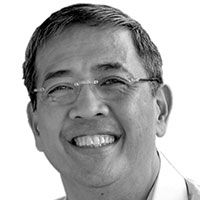
Harold could plant and grow eggplants and other vegetables even when he was just in second grade. Being the son of a teacher and a farmer and a grandson of still another farmer, he grew up surrounded by rice fields, vegetable plots and the typical Amorsolo scene of rice fields and people. His mother wanted him to be a teacher just like her. But his father thought of him as an agriculture graduate, though not as a farmer. The universe unfolded a better plan for him – a teacher while still dabbling in farming. And he became not just a teacher, but is now the dean of the Institute for Tourism and Hospitality Management, at a relatively young age. His mother must be the proudest mom.
But how will he impart his farm ideas to his students? How will he empower and arm them with experience in sustainability while being in school? He turned to his other love – the sport of hiking. While hiking with younger Gen Zs, the millennial discovered foraging with local tour guides as he joined mountain hikes with strangers who have the same passion – being alone but being safe throughout the hike. You assemble at 10 p.m. and start the hike at 3 a.m. through dark mountain passes, but safely done with local tour guides. They do get you from Point A to Point B and back and along the way, you discover herbs and plants that the guides can determine if they are safe to eat. That is what local guides know from experience and knowledge of local culture – but they do not know it is a talent appreciated by others like Dean Harold. Because foraging for food is actually a life skill and a means to survival. These survival tactics are not taught in school and are highly localized, because of local knowledge of food cultures. The guides know what is safe to eat, what is poisonous that no app can match (there are apps to identify flowers and plants but they may not cover indigenous flora).
Dean Harold Bueno assumed the highest academic position at a young age, but he knows he has a big job of making education and the curriculum relevant to the times. As a dean, he is able to effect change by bringing up reforms in his field of expertise. He would like to suggest changes on how the Department of Tourism (DOT) collaborates with the private sector and local government in training the youth as tour guides. There are indeed gaps that need to be addressed and being a tourist himself is the start of getting the actual experience before one suggests changes in how we train local guides and influence local communities in tourist destinations.
I met Harold at Slow Food Manila as he has been very active in asking the youth to be part of our movement for good, clean and fair food (www.slowfood.com). At our recent Terra Madre festival in Negros Occidental, Dean Harold rounded up his contacts to cook at our food stands and influenced his co-teachers to join the Slow Food event. Our cook assistants were assistant deans and academics, but they embraced Slow Food along with their young students. I did not realize that Slow Food and sustainability are now the key drivers of students when they look for jobs. They choose companies that have an advocacy and have sustainability goals when they apply for a job. So for employers to attract and retain talent, Dean Harold suggests that companies get familiar with and practice the Sustainable Development Goals (SDG) for their own human resource targets. Attracting talent is a challenge if you are just offering the regular entry level salary and if the applicants do not see sustainability in your company mission, they move on. That is an insight Harold shared with me in our podcast Good and Green, when I interviewed him to know more about his role as a farmer educator.
Today, he is in the process of writing essays (he has over a hundred already compiled) about his reflections as an educator and how he can influence the young to love food culture and sustainable food systems. And he does not stop at just teaching. He goes around walking the talk when he travels to different places in the country as a hiking tourist. If he can learn food cultures through his hikes, so can our youth and our students.
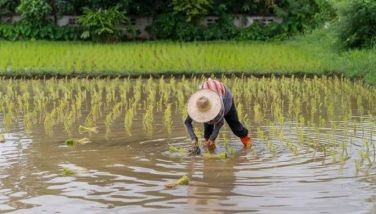
Harold shared the first book he read in grade school – a book on “medicinal plants” entitled “Mga Halaman Kahangahangang Pampagaling” by Herminia de Guzman-Ladion. He was amazed by the power of herbs and medicinal plants and would grow them himself. He planted despite the negative “immersion” he got from some relatives – they made him dip chest-high (literally immersed) in mud in the rice fields, so he would probably change his mind about being a farmer. That made him stronger in his belief and conviction that there is a better life being both – farmer and educator. And we salute Harold for not giving up on planting, despite the odds.
Harold understands that as an educator he can influence the youth of today to embrace sustainability not just in words but in action. He understands that his life mission is to use his experience as young farmer to educate others, to inspire them to love plants and put them to good use.
Slow Food, the academe and farming all rolled into Harold’s vision for a better society – that as a humble educator, a lover of Nature and as a farmer, there is a chance for our youth to be stewards of the environment and be responsible changemakers in whatever path they choose after university. Deans are not meant to hide behind old wooden desks but to hike and go out to learn life skills. Lifelong learning is his dictum.
He encourages our students to now have high touch, high tech and high trust. And high trust is attained with transparency, governance and sustainability. High tech could be AI but high touch is the human spirit no machine or technology can replicate.





- Latest
- Trending