Who will teach our children? The cost of neglecting teachers
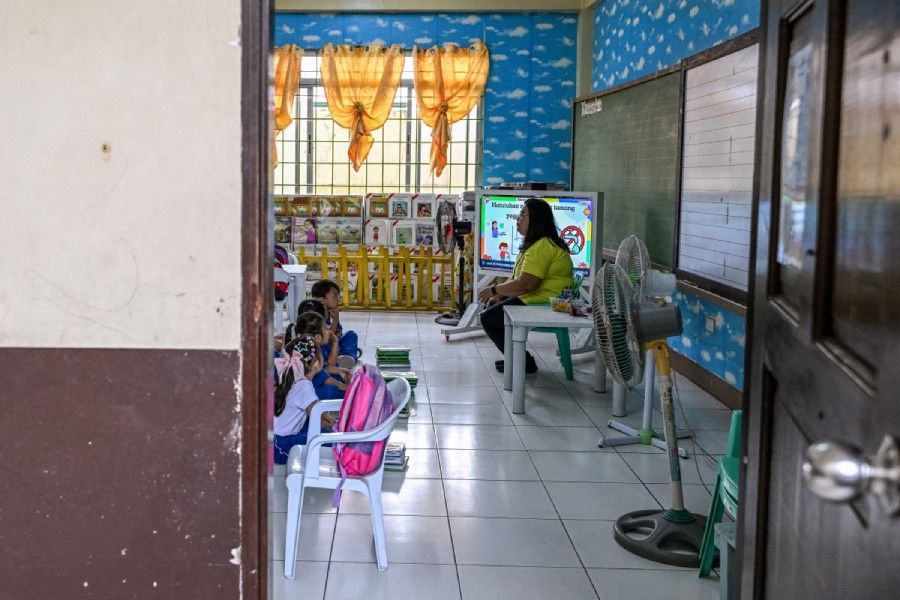
Each year, approximately 1,500 Filipino teachers leave for better-paying jobs abroad. Some go to the Middle East, where they earn around US$2,000–5,000 per month; others go to Europe and America, where international schools and public systems offer US$3,000–6,000.
Many more head to Southeast Asian neighbors, who pay about US$1,000–2,500 per month. All are seeking pay that better reflects their skills and experience than what they receive at home.
This steady stream of departures is often described as a story of economic opportunity and labor migration, but it is equally a manifestation of an education emergency.
When teachers leave, they do not simply vacate classrooms. They take with them the nation’s ability to nurture citizens, sustain democracy and prepare the next generation.
The loss of teachers is not just a staffing issue but a matter of national security. Teachers are frontliners of nation-building, as essential to intellectual and civic survival as soldiers and doctors are to physical survival.
They develop literacies, foster critical thinking and instill civic values. They are the first line of defense against ignorance, misinformation and disengagement. When too many of them depart, the very foundations of national life are shaken. A nation that cannot keep its teachers cannot hope to produce citizens capable of defending its sovereignty or sustaining its democracy.
The economic irony is equally cruel. By keeping teacher salaries among the lowest in Asia, the government saves on payroll in the short term.
But what it saves today, it pays for tomorrow in weak human capital, underprepared graduates and a workforce that lags behind regional peers.
The country ends up exporting teachers to uplift the students of wealthier nations while leaving its own children undereducated. This is a quiet but devastating transfer of intellectual capital, one that will haunt the economy for generations.
Successive administrations have made grand promises about improving teachers’ lives, but these have largely remained rhetoric.
The Magna Carta for Public School Teachers, signed into law in 1966, is riddled with provisions that are outdated or poorly enforced. Salary increments have been granted, but inflation erodes their value.
Many teachers remain burdened by excessive paperwork, numerous ancillary tasks, large class sizes and out-of-pocket expenses for materials. Professional development, which should be a tool for growth, has often become an additional cost through mandatory Continuing Professional Development programs that are expensive and inconvenient. The result is a profession where survival, rather than fulfillment, has become the daily goal.
The teacher exodus must also be understood as part of a vicious cycle. Poor pay and heavy workloads push teachers to migrate.
Migration then creates shortages in classrooms, which increases class sizes and workloads for those left behind. Overburdened teachers experience burnout and mental health struggles, and many of them eventually leave as well.
The cycle perpetuates itself, creating a system where education quality continuously erodes. The crisis is not merely about the choices of individual teachers but about a systemic failure to value and sustain the profession.
The solutions are not a mystery. What is missing is the political will to act. First, salaries must be raised to competitive levels. This is not about making teaching the highest-paid profession, but about ensuring it is respectable and sustainable compared to other fields in the country and in the region. Teachers should not have to leave simply to provide their families with a decent life.
Second, career progression must be clear and meaningful. Recent reforms (through the recently enacted Republic Act 12288, Institutionalizing the Career Progression System for Public School Teachers and School Leaders now allow teachers to climb within classroom-teaching ranks—Teacher IV to VII and Master Teacher V—or pursue administrative leadership.
This is a positive step, but its implementation remains to be seen. In the past, career advancement strips classrooms of their best talent and discourages teachers who wish to stay in teaching but also seek professional growth. A parallel career track that rewards mastery of teaching, without forcing educators out of the classroom, is urgently needed.
Third, professional development must be reformed. Instead of costly seminars that teachers scramble to pay for, there should be accessible, well-designed and state-funded programs that genuinely enhance teaching skills. Continuing Professional Development should not be reduced to a money-making scheme but treated as a genuine investment in education quality.
Fourth, retention schemes must be targeted. Beyond traditional incentives like loan forgiveness, housing benefits and research opportunities, the government could adapt models such as the Balik Scientist Program or Malaysia’s Returning Expert Programme.
These offer tax breaks, relocation support, and professional growth opportunities—measures that could help retain and even bring back highly sought-after science, mathematics, and special education teachers.
This is not just about paychecks or perks. It is about recognizing teachers as nation-builders whose departure signals the weakening of the Republic itself.
Teachers are not leaving because they lack patriotism or commitment. They are leaving because the system makes it nearly impossible for them to live with dignity while practicing their calling. It is a betrayal to expect sacrifice while providing little support in return.
The Philippines cannot continue to export its teachers and expect to build a strong nation. Every teacher lost is a blow to the future.
The government must treat this as an urgent crisis, not as an inevitable feature of global labor markets. Migration will always be part of the Filipino story, but it should not be forced by neglect. Teachers should have the choice to stay, not because they have no options abroad, but because staying makes sense for their families and their future.
As more teachers line up at airports, the question grows louder: Who will be left to teach our children? Unless we act, the silence in our classrooms may be the most deafening consequence of all.
---
Allen A. Espinosa ([email protected]) is a professor at the College of Advanced Studies and a fellow at the Educational Policy Research and Development Office; Ma. Arsenia C. Gomez ([email protected]) is an associate professor at the Faculty of Behavioral and Social Sciences and director of the Research Management Office; and Praksis A Miranda ([email protected]) is an associate professor at the Faculty of Behavioral and Social Sciences and a fellow at the Research Management Office. The views expressed here are those of the authors and do not necessarily reflect the official position of the Philippine Normal University.





- Latest