Happy (Island’s) independence from blackouts
Notes on the beat
CATANDUANES — Tourists arriving here are often greeted by posters welcoming them to “Happy Island,” a nickname that has now become closely associated with the province.
From vibrant cultural festivals and centuries-old heritage sites to pristine beaches, world-class surfing spots and rich biodiversity, Catanduanes truly lives up to its “Happy Island” image.
But for weeks, that sense of “happy” has been tested as residents and tourists grapple with prolonged power interruptions.
At its worst, electricity could be out for as long as 12 hours, effectively leaving households and communities without power for half a day.
Twelve hours without electricity in the middle of an unforgiving dry season, when much of the Philippines is already reeling under extreme heat.
It is not just an inconvenience. It is 12 hours that cripples homes, stalls government services and disrupts businesses.
But this month, just in time for the country’s 128th Independence Day celebration, hopes are rising that residents of Catanduanes may finally be freed from rotational blackouts.
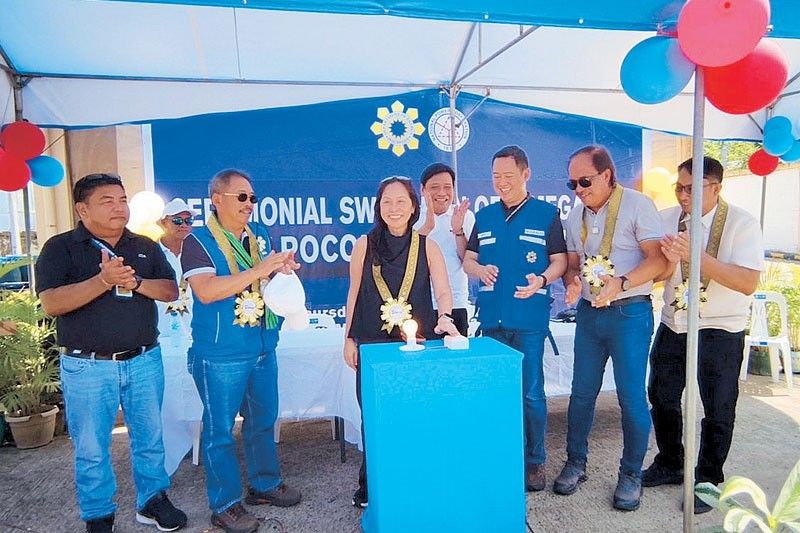
On Thursday, Energy Secretary Sharon Garin and National Power Corp. president Jericho Jonas Nograles switched on the five-megawatt (MW) diesel generator units, which Napocor rented to help reinforce the province’s electricity supply.
The government has stepped in amid ongoing operational challenges faced by the province’s power supplier, Sunwest Water and Electric Co. (Suweco), a company linked to fugitive former lawmaker Zaldy Co.
“The directive of the President (Marcos) is to restore power in Catanduanes as soon as possible,” Garin said, noting that the government rolled out the solution in just a little over a week.
Power woes in Catanduanes stem from a mix of contractual constraints and supply shortfalls. Suweco’s supply deals rely heavily on hydroelectric power, which is limited during the dry season.
The situation worsened when the five-MW backup supply under emergency power supply agreement (EPSA) 1 expired on May 15, further tightening the island’s already constrained electricity supply.
Nograles said the activation of new generator sets (gensets) is only a temporary measure, stressing that what the province needs is a more permanent solution.
“Until a permanent solution is in place, Napocor will continue to support Catanduanes,” he vowed.
Alongside the newly activated gensets, Catanduanes can expect an additional eight MW of capacity from Vivant Energy unit Isla Dagyab Energy Corp. under EPSA 2 with First Catanduanes Electric Cooperative Inc.
Testing and commissioning are scheduled to be completed this week, ahead of the targeted start of commercial operations on June 15.
EPSA 2 has a maximum term of one year. During this period, the Department of Energy is hoping that a competitive selection process will finally be conducted, leading to a long-term supply agreement.
“Beyond that, the possibility of connecting Catanduanes to the main grid is part of our long-term program,” Energy Undersecretary Mario Marasigan said.
At the end of the day, “Happy Island” should not only be defined by its festivals and tourist spots but also by the simple assurance that the lights here stay on without interruption.


- Latest
- Trending