Foreign debt eases to $147.35 billion in Q1
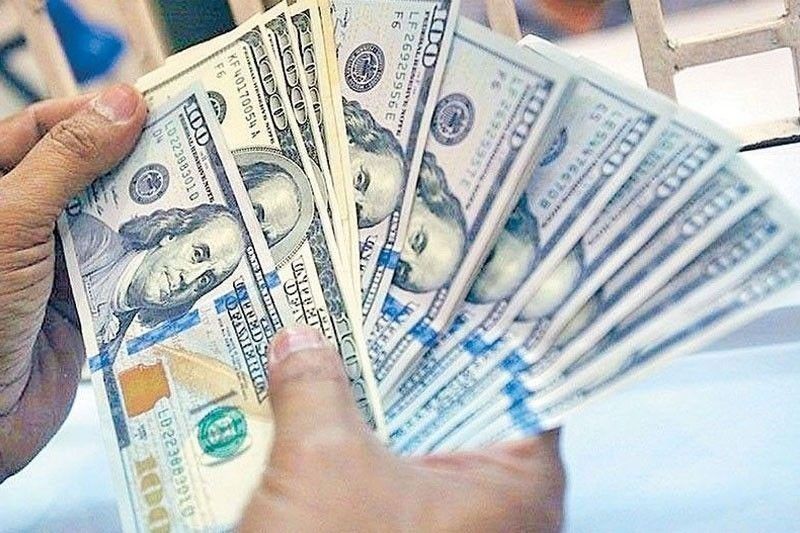
MANILA, Philippines — The country’s external debt declined slightly in the first quarter as foreign investors trimmed their holdings of Philippine debt securities amid cautious market sentiment and tighter financing conditions, the Bangko Sentral ng Pilipinas said.
Data from the BSP showed outstanding external debt slipped by $300 million, or 0.2 percent, to $147.35 billion as of end-March from $147.65 billion a quarter earlier.
The central bank said the country’s external debt “remained manageable,” with key indicators still showing the economy’s capacity to meet its foreign obligations.
“The slight quarter-on-quarter decline in external debt was driven by lower non-resident holdings of Philippine debt securities, reflecting more cautious investor sentiment and tighter financing conditions for emerging markets during the quarter,” the BSP said.
The external debt-to-gross domestic product ratio improved to 30 percent in the first quarter from 30.3 percent in the previous quarter, even as economic growth slowed. This means the debt stock accounted for a slightly smaller share of the economy.
Year on year, however, external debt was still higher than the $146.74 billion recorded as of end-March 2025.
The BSP said the increase was driven mainly by new borrowings by the national government and the private sector, “reflecting ongoing financing for development priorities and continued support for trade and business activity.”
Public sector external debt inched up by 0.8 percent to $95.66 billion as of end-March from $94.87 billion a quarter earlier, accounting for 64.9 percent of the total debt stock.
Bulk of public sector obligations came from non-bank borrowers, largely the national government and others, whose external debt increased to $89.87 billion from $89.03 billion.
Private sector external debt, meanwhile, declined by two percent to $51.7 billion from $52.78 billion, equivalent to 35.1 percent of total external debt.
Private banks’ external obligations fell by 10.2 percent to $20.79 billion from $23.14 billion, while private non-bank debt rose by 4.2 percent to $30.90 billion from $29.65 billion.
By maturity, medium- and long-term borrowings continued to make up the bulk of the country’s external debt. These rose to $129.27 billion from $127.42 billion, accounting for 87.7 percent of the total.
Short-term external debt based on original maturity declined to $18.09 billion from $20.23 billion.
The BSP said liquidity conditions also improved during the quarter. Short-term external debt based on the remaining maturity concept, which includes borrowings due within one year and amortizations on longer-term accounts falling due within the next 12 months, declined to $25.50 billion.
Gross international reserves stood at $106.64 billion as of end-March, equivalent to 4.18 times short-term external debt based on remaining maturity.
The BSP said this indicated “a strong capacity to meet near-term external commitments and a robust reserve adequacy position relative to emerging economy peers.”
The debt service ratio, which measures principal and interest payments against export receipts from goods and services and primary income, stood at 9.5 percent. This was higher than the 8.5 percent recorded a year earlier due to increased principal payments, but the BSP said the ratio remained moderate.
A lower debt service ratio is considered favorable as it means a smaller portion of the country’s foreign exchange earnings is used to settle maturing obligations.
By creditor type, bondholders and noteholders remained the largest source of external financing at $47.53 billion, followed by multilateral lenders at $42.63 billion and banks and other financial institutions at $31.58 billion.
Among multilateral lenders, obligations to the Asian Development Bank reached $18.86 billion, while those to the International Bank for Reconstruction and Development stood at $16.23 billion.
By country, Japan remained the largest bilateral source of external debt at $16.27 billion, followed by the United Kingdom at $4.87 billion and China at $4.55 billion.
Dollar-denominated obligations continued to dominate the country’s debt profile at $106.74 billion, or 72.4 percent of total external debt. Yen-denominated borrowings amounted to $12.63 billion, while obligations in other currencies stood at $24.14 billion.
The BSP said the country’s external debt position remained stable despite market adjustments during the quarter.
“Overall, the external debt profile remains resilient, with developments primarily reflecting market-driven adjustments and financing requirements,” the central bank said.


- Latest
- Trending