SC: Disproportionate wealth of officials, even if registered under others, is ill-gotten
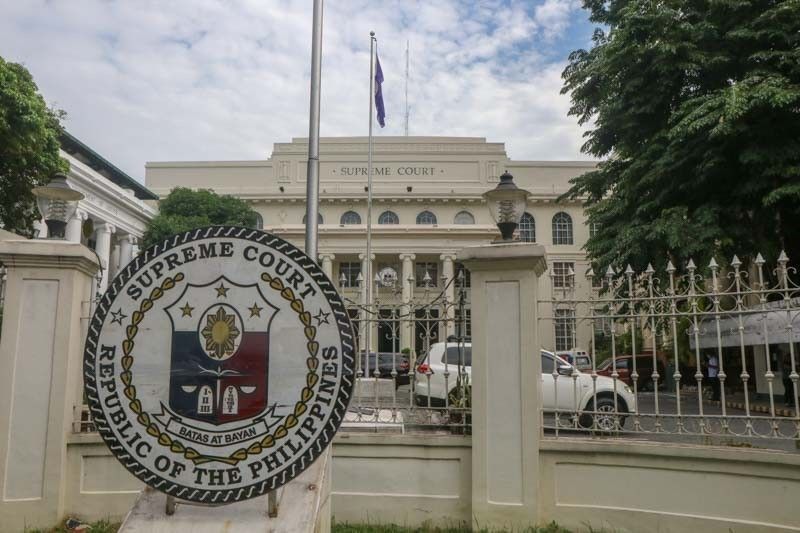
MANILA, Philippines — The Supreme Court has ruled that wealth acquired by a public officer that is disproportionate to their lawful income is presumed ill-gotten and is subject to forfeiture, even if legally registered under the names of other individuals.
In a 27-page ruling promulgated on March 5, 2025, the high court’s third division upheld the forfeiture of properties and accounts belonging to retired Lieutenant General Jacinto Ligot and his family, which collectively amounted to approximately P155 million.
According to the high court, Ligot — who served in the Armed Forces of the Philippines (AFP) from 1970 to 2004 and was commissioned as a comptroller — became the subject of a lifestyle investigation by the Ombudsman after his Statements of Assets, Liabilities, and Net Worth (SALNs) from 1982 to 2003 failed to reflect the actual wealth accumulated by his family.
The Sandiganbayan found several undeclared properties, including assets registered directly under Ligot’s name and/or his wife’s, as well as properties listed under their children's names.
The Sandiganbayan also traced several condominium units to Ligot:
- Units in Makati City were registered under his sister's name, but evidence showed that most amortization payments were made by Ligot and his wife.
- A unit in Taguig City, though registered under his brother-in-law, was originally purchased by Ligot’s wife.
Following this, a second petition for forfeiture was filed, alleging that bank deposits and investment accounts held by the family were manifestly out of proportion to Ligot’s lawful income.
The Sandiganbayan found that the properties, which were worth P102 million and deposits and investment funds amounting to P53 million, were unlawfully acquired and ordered their forfeiture.
Ligot and his family, along with his sister and brother-in-law, filed petitions before the Supreme Court, arguing that the condominiums were legitimately purchased by relatives and that the family's assets were not disproportionate to their combined income.
Ligot passed away while the petition was pending, but his family continued to pursue the case.
Ruling. The high court rejected the appeals and upheld the Sandiganbayan’s ruling.
The Court pointed out that under Republic Act 1379 (RA 1379) or the law on forfeiture of properties unlawfully acquired by public officers and employees, properties of public officers are presumed to be illegally acquired when they are manifestly out of proportion to their lawful income.
“Again, for the presumption under Section 2 of Republic Act No. 1379 to apply, three requisites must be established: (1) the offender is a public officer or employee; (2) they must have acquired a considerable amount of money or property during their incumbency; and (3) the said amount is manifestly out of proportion to their salary as such public officer or employee, and to their other lawful income and the income from legitimately acquired property.”
The high court noted that Ligot’s wife and children did not have independent income sources, yet held significant bank accounts and properties.
Regarding the condominiums, the Supreme Court held that the pattern of payments and the initial purchase by Ligot’s wife indicated that the general was the true owner, even if the legal titles were in the names of his relatives.
The high court clarified that this presumption applies not only to assets directly under the public officer’s name but also to those concealed through third parties, stating that the law cannot be circumvented by mere titling schemes.
“To conclude otherwise would be to render Republic Act No. 1379 nugatory if the registration of properties in the name of third persons would suffice to forestall the presumption under Section 2 of the law from arising,” the court said.
The registration under another person's name does not prevent forfeiture when true ownership can be traced back to the public officer, according to the high court.
Furthermore, the Court reiterated that proceedings involving unexplained wealth are exempt from bank secrecy laws when bank deposits are the subject of the forfeiture case.
“In the fairly recent case of Republic of the Philippines v. Lt. Col. Rabusa, the Court clarified that proceedings on unexplained wealth are now encompassed within the exceptions of Republic Act No. 1405, particularly when the bank deposits themselves are the subject of forfeiture, as in this case,” the high court said.





- Latest
- Trending