Supreme Court upholds marriage valid despite officiant’s lack of authority
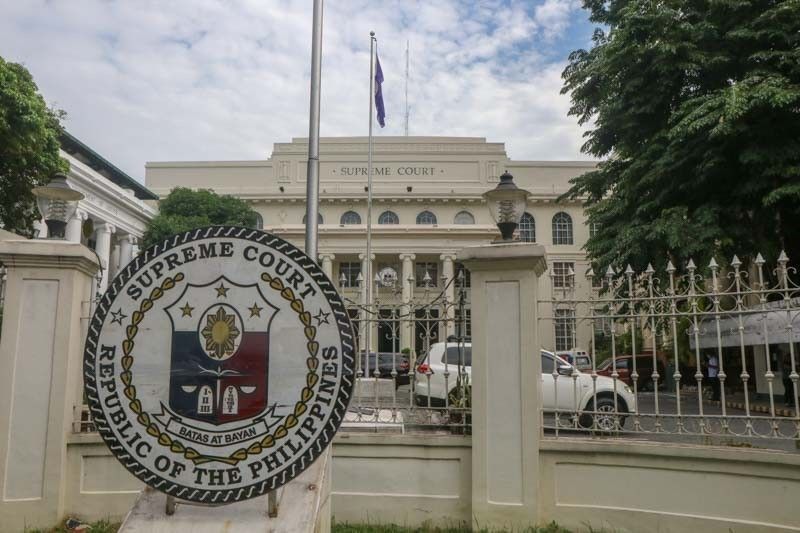
MANILA, Philippines — The Supreme Court has affirmed the principle that a marriage remains valid even if the solemnizing officer lacks legal authority, provided at least one of the spouses genuinely believed the officiant was authorized at the time of the ceremony.
In a 20-page decision penned by retired Associate Justice Mario V. Lopez dated April 23, 2025, the high court’s Second Division dismissed a plea filed by a wife seeking to nullify her marriage, which had taken place more than 20 years earlier.
The couple was married at the Municipal Hall of Tarlac City, with the marriage contract listing Judge Conrado De Gracia as the solemnizing officer.
Decades later, however, the wife’s lawyer alleged that the person who officiated the wedding was not Judge De Gracia but a non-judge named Rosalio Florendo, a fellow member of the Tarlac City Rotary Club.
The wife filed a petition with the Regional Trial Court (RTC) to nullify the marriage based on the officiant’s lack of authority.
The RTC and the Court of Appeals (CA) both denied the petition, noting that the wife herself had admitted she believed the officiant was Judge De Gracia during the ceremony.
Furthermore, the CA emphasized that the marriage contract, as a public document, serves as proof of the marriage’s validity, which the wife failed to challenge with clear and convincing evidence.
Ruling. The high court upheld the lower courts' rulings, grounding its decision in the Family Code.
According to the high court, while Article 35(2) states that a marriage is void if the officiant lacks authority, it provides a critical exception: the marriage remains valid if “one or both parties believed in good faith that the solemnizing officer had the legal authority” to officiate.
The court also said that the wife failed to present any evidence, beyond mere allegations, to definitively prove that the officiant was not Judge De Gracia.
It added that the marriage certificate correctly listed the judge, who was an incumbent judge within Tarlac City’s jurisdiction, and therefore had legal authority under the Family Code.
Furthermore, the wife’s own admission that she believed the officiant was Judge De Gracia at the time of the wedding placed the marriage squarely under the exception clause of Article 35(2), noting that it was her lawyer who raised doubts nearly three decades later without concrete proof.
“Here, the records show that petitioner had always believed in good faith, since the inception of her marriage in the year 1990, that the solemnizing officer was Judge De Gracia, a person who had the legal authority to solemnize the marriage. She had never doubted the authority of the solemnizing officer,” the court said.
“It was only in 2017 that she sought legal advice on how to be legally separated from her husband, wherein she was notified by her lawyer that Judge De Gracia was not the actual person who officiated the marriage,” it added.
Leonen’s dissent. In a Dissenting Opinion, Senior Associate Justice Marvic M.V.F. Leonen argued that while the good faith exception might cover the officiant's authority, the absence of a personal declaration by the spouses during the ceremony—where they publicly take each other as husband and wife—should still render the marriage void.
He stressed that irregularities concerning the ceremony and the officiant's authority raise reasonable doubt about the marriage’s legal validity.
“Here, petitioner and Quilana merely relied on the honest belief that the solemnizing officer was Judge De Gracia and not Florendo, as identified by Atty. Cunanan. Hence, the exception in Article 35(2) of the Family Code applies to uphold the validity of the marriage,” Leonen said.
“However, another formal requisite remains absent: a proper marriage ceremony. Without petitioner and private respondent’s personal declarations taking each other as husband and wife before the solemnizing officer and the witnesses, their marriage should be declared void ab initio,” he added.


- Latest
- Trending