‘Resident Evil’: Horror worth putting your phone down for
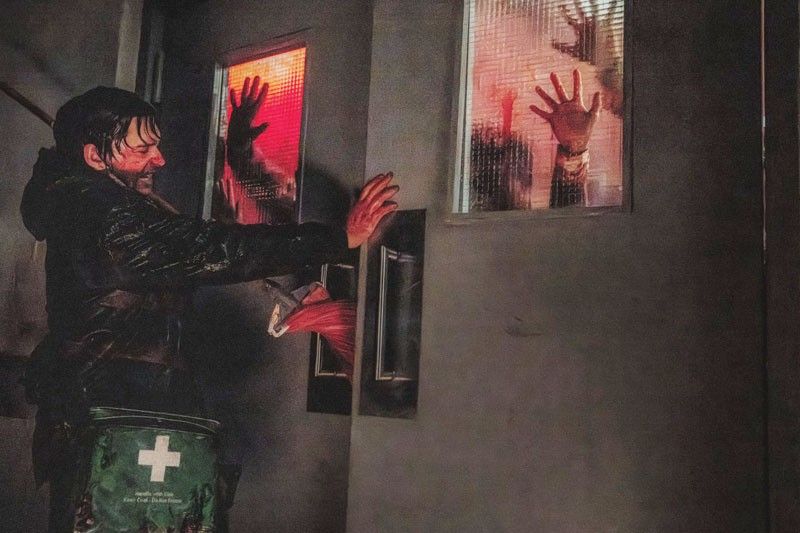
One of the toughest things to do these days is probably not surviving a zombie apocalypse but actually putting your phone down and leaving it there for a couple of hours, especially when your work and practically your entire daily routine revolve around being connected.
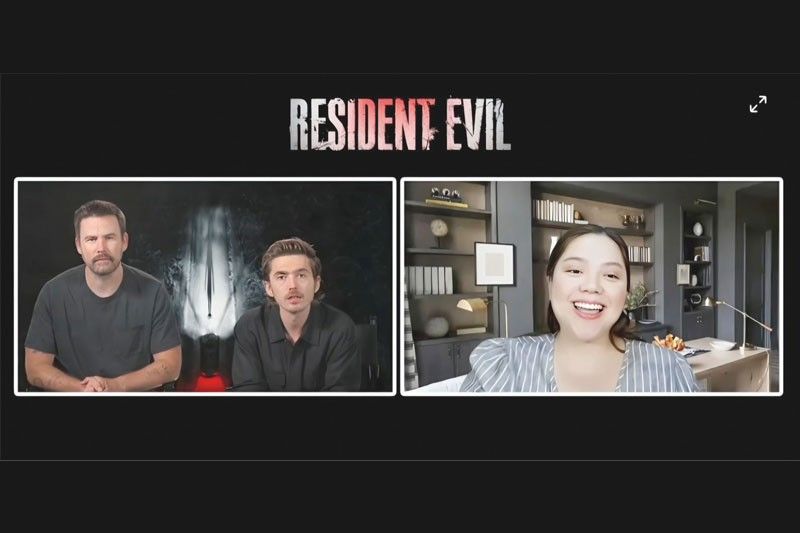
We have become so used to checking a notification in the middle of a conversation, opening an app while watching TV or instinctively reaching for our phones whenever there is even the slightest lull, which is why I found Zach Cregger’s approach to “Resident Evil” particularly interesting when I chatted with him and his star in the film, Austin Abrams.
The director behind “Barbarian” and the recently released “Weapons” was very deliberate about creating a theatrical experience that would make audiences forget everything else for a while, and that includes the device that is almost always sitting in our hands.
“When horror is done well, it commands all of your attention,” Cregger told us. “It is completely immersive. If you’re in a theater and the story is done correctly, you’re not thinking about your phone, you’re not thinking about the bills you’ve gotta pay.”
That really stayed with me because, honestly, how many movies can make that promise in 2026? And that can even be a benchmark for success in future films to come.
We have more entertainment choices than ever, but at the same time our attention has become one of the hardest things to keep. We can watch a movie and still find ourselves checking messages, scrolling through social media or wondering what else is happening online, which makes the cinema experience increasingly dependent on whether a film can actually pull us into its world.
Of course, cinema etiquette is important in not using one’s phone, but let’s get real, many moviegoers nowadays can’t wait to open their devices again or the thought of checking their phones is popping up while watching something.
“Resident Evil” seems to understand that challenge very well.
Since opening in local cinemas last Sept. 16, Cregger’s reinvention of the iconic survival-horror franchise has already made a huge impact locally, earning P10,427,530 nationwide on its first day, which makes it the biggest opening day for a “Resident Evil” film in the Philippines.
The movie also dethroned “Insidious: Out of the Further,” ending the horror film’s four-week streak as the biggest film in the country.
Those numbers are impressive, but what I found more interesting while watching the movie was exactly what Cregger told me that he wanted to achieve: he wanted audiences to feel less like they were watching another action movie and more like they were actually experiencing the survival aspect of the game.
“The ‘Resident Evil’ before feels a little detached and felt like an action movie,” he explained. “So, I wanted to make a movie that was honoring the spirit of ‘Resident Evil.’”
If you have played the original games, you will recognize the feeling almost immediately. The movie does not simply depend on monsters appearing out of nowhere to create fear; instead, it builds that feeling of uncertainty where you are never completely sure what is waiting for the characters around the next corner, and that is very much the kind of tension that made the games so engaging in the first place.
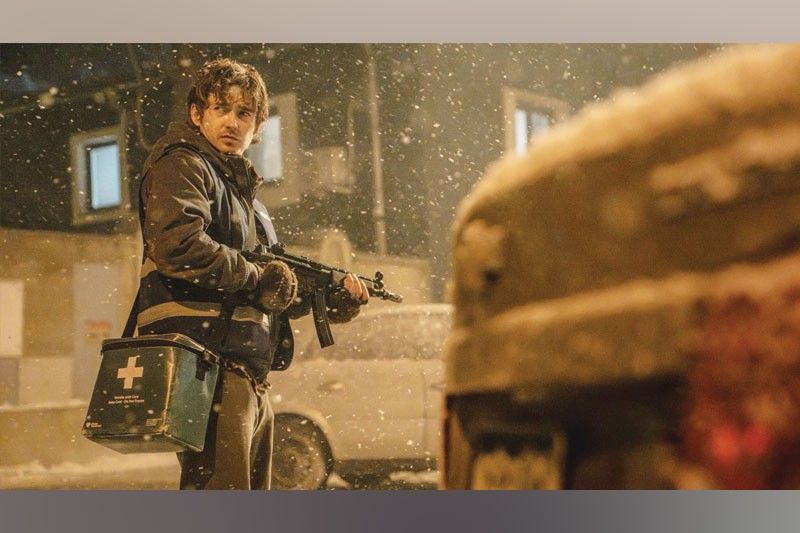
There are moments when you watch the characters running through the snow, and you almost feel as if you are holding a controller yourself, especially because the action has that unmistakable video-game quality where survival becomes the objective and every movement seems to matter.
During the Philippine premiere in Mandaluyong, Columbia Pictures Philippines shared that reaction played out in real time, with the audience screaming, laughing nervously and reacting almost simultaneously to what was happening on screen. That communal response is something you simply cannot recreate in quite the same way when you are watching alone on your phone or laptop, and I think that is part of the reason the theatrical experience continues to matter even when almost everything else can now be streamed.
At the center of this new story is Abrams, whom many viewers know from the hit “Weapons,” playing Bryan, a medical courier who unexpectedly finds himself caught in a terrifying fight for survival as one horrifying night spirals into chaos.
What makes his character particularly interesting is that Bryan is not simply another familiar character taken directly from the games.
“From the games, we wanted to do a new character,” he said.
For longtime fans, there are elements of the “Resident Evil” world that feel familiar, while for people who are coming into the franchise without having played the games, Bryan provides a character whose experience can be followed without requiring complete knowledge of the franchise.
And perhaps that is where Cregger’s approach becomes most effective. He is not simply trying to recreate the game on film. He is trying to recreate the feeling of playing it.
That distinction is important because a video game has something a movie does not: you are physically controlling what happens next. You decide whether to move forward, whether to investigate something suspicious and, sometimes, whether to run for your life.
A movie cannot give you that control, but Cregger finds other ways to make you feel involved by keeping the environment, pacing, sound and movement constantly engaging.
It becomes less about simply waiting for the next scare and more about wondering what the characters will encounter next.
And when you are genuinely invested in that question, you stop thinking about everything else, including your phone. That was probably my biggest takeaway from our conversation.
We often talk about attention spans as though audiences simply no longer want to concentrate, but I think it is more accurate to say that audiences now have an almost endless number of things competing for their attention. They are competing against the phone sitting in your hand.
When the theater screams, you become part of the reaction. When everyone suddenly goes quiet, you feel that too. There is something wonderfully old-school about being surrounded by strangers who are all experiencing the same moment at exactly the same time.
Perhaps that explains why “Resident Evil” has connected so strongly with Filipino moviegoers right out of the gate.
A P10.4-million opening day is certainly a box-office milestone for the franchise here, but beyond the figure is a reminder that audiences are still willing to leave the comfort of their homes, enter a dark theater and give a movie their full attention when the experience is worth it.
For me, that is what makes the new “Resident Evil” particularly timely. It is a movie about survival, but it is also, unintentionally perhaps, a movie about attention. In a world where we are constantly being encouraged to look at something else, Cregger is asking us to stay exactly where we are and see what happens next.
So, if you are planning to watch “Resident Evil,” I have one very simple suggestion: put the phone away. Not because you have to but because you might actually find yourself forgetting about it.
And considering how difficult that has become for all of us, perhaps that is one of the most immersive things a movie can accomplish today.
“Resident Evil” is now showing in cinemas, and judging by its record-breaking opening day, Filipino audiences are clearly ready to enter the game and preferably with their phones safely tucked away.





- Latest
- Trending