The sound that made Manila sing
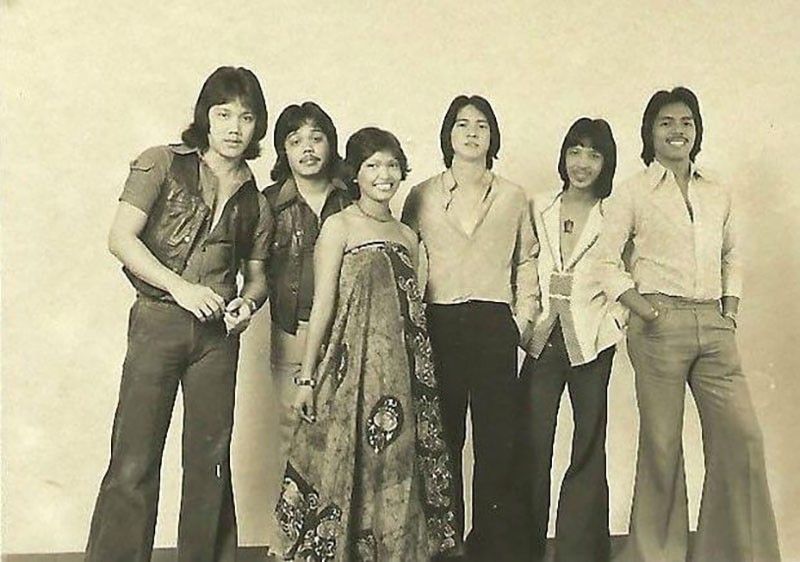
MANILA, Philippines — The members of HOTDOG never set out to create a movement — they simply wanted to make music they themselves would enjoy playing.
Nearly five decades later, that music has become part of the Filipino vocabulary.
Songs like Manila, Annie Batungbakal, Bongga Ka ‘Day, Ikaw ang Miss Universe ng Buhay Ko and Pers Lab have long outgrown the radio charts that first introduced them. Today, they serve as cultural shorthand that can transport generations of Filipinos back to moments of joy, youth, and everyday life.
For original members Jess Garcia, Ella del Rosario and Mon Toralba, however, those songs began much more simply: inside rehearsal rooms, recording studios and long conversations among friends who never imagined they were helping shape the future of Filipino music — or create what would later be known as Manila Sound.

Why HOTDOG?
Before the music came the name.
As fondly remembered by Ella del Rosario, the band’s first female vocalist, HOTDOG was always meant to be written in all caps, with no “s, just the way founding member and principal songwriter, the late Dennis Garcia, originally conceptualized.
The inspiration came after Dennis and his brother Rene returned from a musical stint with the Red Fox band in Hawaii during the early 1970s. But the expression itself wasn’t uniquely Hawaiian.
“Hot dog!” was already a widely used American slang exclamation throughout much of the 20th century, expressing excitement, delight, or celebration, like another way of saying “Awesome!”, “Cool!” or “Yippee!” whenever something exciting happened.
Dennis loved the expression and adopted it as the band’s name. He simply saw in it the same youthful energy he wanted the band to embody.
That spirit — playful spontaneous, and unmistakably contemporary — would eventually define both HOTDOG and the sound that forever changed Filipino popular music.

Before Manila Sound had a name
Long before they became icons of Original Pilipino Music, the members of HOTDOG were simply students from some of Manila’s biggest schools.
Jess Garcia was an Atenean drummer. Ella del Rosario was an Assumptionista who laughs that she barely spoke Tagalog at the time. Mon Toralba had just entered De La Salle as part of its first co-educational batch when he joined the group at only 18 years old.
“We were just kids who wanted to have fun,” Ella recalled to The STAR.
That youthful perspective would become one of HOTDOG’s greatest strengths.
While much of Filipino popular music remained rooted in kundiman traditions or Western covers, the band began writing songs that sounded like the way Filipinos actually talked — playful Taglish, everyday humor and stories lifted straight from ordinary life.
“I didn’t even know what tagyawat or dumudungaw meant,” Ella laughed, recalling her first encounters with Dennis Garcia’s lyrics.
Yet that very mix of English and Filipino became revolutionary.
“When we sang in Taglish, we connected the gap,” she said. “It was like there was no divide anymore.”

The songs nobody wanted
Ironically, HOTDOG’s breakthrough almost never happened. According to Mon Toralba, record companies initially had little interest in the band’s original compositions.
“No one wanted to take us,” he recalled.
Their first recording, Ikaw ang Miss Universe ng Buhay Ko, struggled to find a label until Villar Records decided to take a chance on the group — a decision that would ultimately help change the course of Filipino popular music.
Once the song found its way onto radio however, everything changed.
Television guestings became a regular fixture. Albums followed almost yearly. Concert invitations arrived from around the country and overseas. The band even starred in its own feature film, “Hotdog: Unang Kagat.”
“We never imagined people would embrace our original songs,” Mon said.
Looking back, he spoke not with nostalgia, but gratitude.
More than a band
Ask the former members what HOTDOG meant to them, and none of them begin by talking about fame.
“It was really all for fun,” said Jess, the band’s drummer. “We just enjoyed ourselves to the max.”
He fondly remembered the band’s spontaneity, where no two live performances were exactly alike. Songs evolved onstage, driven by improvisation and the chemistry between musicians.
Mon, however, sees HOTDOG’s legacy through a wider lens.
“We introduced Manila Sound,” he said.
“We weren’t the seed of OPM because OPM already existed. But we became one of its roots.”
Today, he believes those roots have branched into every corner of Filipino popular music — from rock and alternative to pop, indie and everything in between.

The creative force behind the songs
Behind many of HOTDOG’s biggest hits were brothers Dennis and Rene Garcia, whose contrasting personalities became one of the band’s greatest creative strengths.
Dennis, a copywriter by profession, was the quiet observer. Friends remember him as someone constantly searching for the perfect hook: a memorable phrase, a clever twist or an everyday conversation that could become a song.
“He was always looking for the hook,” Ella said.
His advertising background sharpened his instinct for concise, conversational storytelling, giving HOTDOG lyrics that sounded witty, relatable and unmistakably Filipino.
For Mon, Dennis’s greatest gift wasn’t simply writing songs — it was encouraging others to discover they could write, too.
“He challenged me to create songs. He made me discover my own creativity.”
That encouragement eventually led Mon to compose Pers Lab, and later pursue successful careers in advertising and jingle writing. “I’ll always be indebted to him for opening me up to all that I can create.”
Rene, by contrast, was the band’s natural motivator.
“Maski minsan akala mo binobola ka na,” Jess laughed, “he always had a way of making you feel good.”
Together, the late great Garcia brothers created more than hit records.
They created an environment where creativity could flourish, which has led them to create more music, and even a movement and a genre of music such as Manila Sound.
Why Manila Sound still matters
The members believe the music has endured because it captured something timeless.
“Our songs were light and happy,” Ella explained. “They connected everyone — from the bougie to the balut vendor.”
But more than catchy melodies, the songs became snapshots of Filipino life during the 1970s and 1980s.
It reflected what fashion, disco, teenage crushes, city life and everyday conversations were like during that time, owned the experience and defined it for the Filipino gaze.
Rather than imitate Western music, HOTDOG localized pop music into something unmistakably Filipino.
Looking back, Jess believes part of the appeal came from the songs’ simplicity.
“The melodies were simple and the lyrics were simple, but they were relatable.”
Mon added another reason. “If you’re the first,” he said, “you’ll always be remembered.”
Advice to the next generation
When asked what today’s artists can learn from HOTDOG’s journey, none of the answers focused on fame.
Ella encouraged young performers to understand the soul behind Manila Sound. “Do your research,” she said. “Capture the mood and the magic.”
Jess offered something even simpler. “Sing your Sing your heart out in the way you’re comfortable with. Be your own version of who you aspire to be!”
Mon’s advice is perhaps the most enduring. “Never think you’re the best. Be humble. You’ve got wings, so believe you can fly, but don’t clip them,” he said. And above all, he added, never forget to thank the people and the higher power that helped you get there.
Because if HOTDOG’s story proves anything, it’s that history isn’t always made by people trying to become legends.
Sometimes, it’s simply made by friends who got together to have fun and accidentally gave a nation its soundtrack.





- Latest
- Trending


 Exclusive