JMFyang’s ‘Almost Us’ makes a case for ruining the friendship
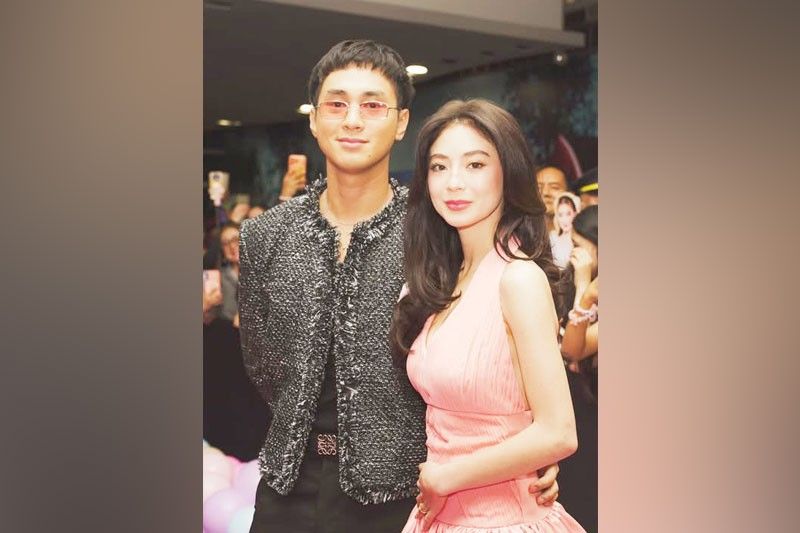
MANILA, Philippines — From the “Pinoy Big Brother” house to the silver screen, rising stars JM Ibarra and Fyang Smith, also known as the onscreen tandem “JMFyang,” officially made their film debut together in “Almost Us.
Directed by Dan Villegas and produced by Regal Entertainment with Project 8 Projects, the romantic comedy film explores friendship, heartbreak and young love. The plot also delves into the complicated dynamics between two longtime best friends whose relationship slowly blurs into something deeper — timing, emotional hesitation and the terrifying possibility of risking a friendship for feelings that may never be returned.
The story begins with RR, played by JM, who is the type of person willing to show up for someone, no matter how emotionally exhausting it becomes.
Whether through small favors or constant reassurance, RR continuously gives pieces of himself to his best friend Janine, portrayed by Fyang. However, behind his unwavering loyalty lies a secret: RR has always been in love with Janine in the most one-sided way possible.
Janine, meanwhile, is playful, loud, slightly chaotic and delivers corny jokes with an almost childlike confidence that somehow works in her favor.
A hopeless fangirl deeply infatuated with Kenzo, played by Dustin Yu, Janine spends much of the film chasing the fantasy of someone she believes represents everything missing in her life. To her, Kenzo is dependable, admired and almost untouchable — the type of person who feels larger than reality itself.
What Janine fails to notice though is that what has been missing in her life already exists beside her.
Unknown to her, RR has long chosen friendship over confession, valuing her happiness more than the possibility of being loved back. It is this emotional torture that becomes the heart of the film.
“Almost Us” thrives in quieter moments — in lingering glances, pauses between conversations and the silent pain of thinking this could be more than what friendship already is.
It screams the concept of the idea of “more than friends, but less than lovers” and that is how you would describe their dynamic in the film from the audience’s perspective.
One of the film’s greatest strengths lies in the chemistry between JM and Fyang. Their performances feel remarkably natural. There is a rawness to the way they portray their characters that makes their interactions feel less like scripted scenes and more like genuine moments between two people who have known each other forever.
JM delivers a restrained yet emotionally effective performance, allowing audiences to sympathize with someone constantly trapped between contentment and the possibility of rejection and heartbreak. Meanwhile, Fyang brings warmth and charisma to Janine, balancing her playful energy with moments of vulnerability and emotional immaturity.
Janine is not intentionally selfish. She is simply someone afraid of change and unaware of how much she relies on RR as her emotional comfort zone.
The film further complicates their relationship with the arrival of Sue (Yukii Takahashi), whose presence creates emotional tension between the two leads. As RR slowly begins considering a future beyond Janine, the latter finds herself becoming increasingly attached to him. She is forced to confront the possibility of losing the one person who has always stayed.
That emotional uncertainty is perfectly encapsulated through the theme song Bahala Na by Kenaniah. It captures the reckless vulnerability of choosing to gamble your heart, whether the love you want will choose you or not, and of finally surrendering to your feelings despite not knowing the outcome.
In many ways, it reflects RR’s emotional journey throughout the film: loving someone despite uncertainty, because some feelings eventually become too heavy to keep hidden.
As the story reaches its climax through misunderstandings, disagreements and personal struggles, the film begins exploring growth beyond romance. One particularly moving scene features Janine’s mother, who reminds her daughter that life is far from perfect and that people are not defined by mistakes, but by learning how to move forward from them.
In the end, Janine learns to understand that growth comes not from holding onto comfort, but from accepting change and being able to grow from her fears and realize the things and people she should not take for granted.
While “Almost Us” does not completely escape familiar romantic-comedy tropes, its sincerity permits it to stand out. The film succeeds because it understands the emotional reality of modern relationships — the uncertainty, the timing, the fear of ruining what already exists, and the heartbreak of almost-love.
For a film carried by two relatively fresh faces in the industry, JMFyang has surprised audiences with how they managed to make the entire film duration feel real. It tells what young love looks like today — it can be messy, undefined, emotionally restrained, yet deeply felt.
“Almost Us” is now showing in cinemas nationwide.




- Latest
- Trending