How to turn waste into power sources
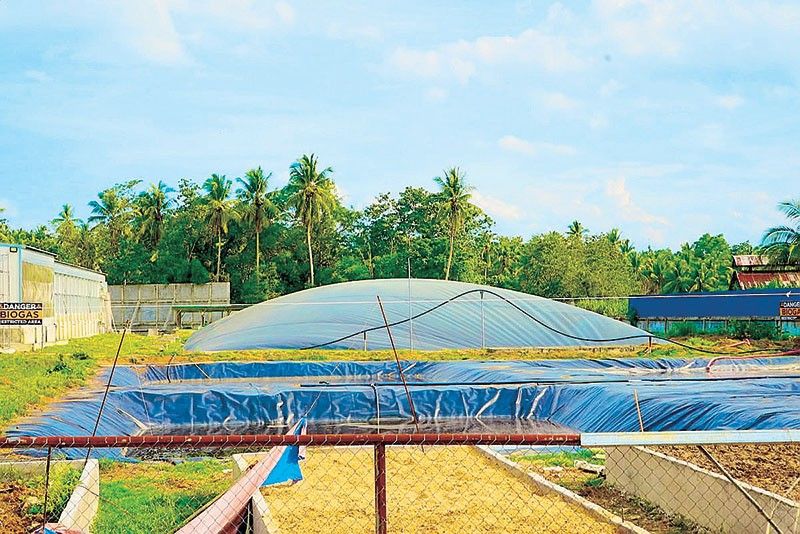
DIPOLOG CITY, Philippines — Rockefeller Farm has dedicated a portion of its seven-hectare land for a dome-like structure.
Lester and Haidee Ong have a poultry and livestock business, and they’re looking for a waste management system to prevent flies from swarming their place.
They got more of what their money’s worth: That dome-like structure processes animal manure and now powers the entire farm.
The Ongs tapped the Department of Science and Technology for a P5-million loan to fund the biogas digester, an airtight chamber that breaks down organic waste and collects the methane gas it produces.
The biogas digester, with a depth equal to a three-story building, can process the manure of up to 50,000 chickens, according to Lester.
The couple then invested in a biogas generator to burn the methane gas — traveling through pipes — and convert it into electricity. The generator has a capacity of 300 kilovolt-ampere and can run continuously for 24 hours.
“If we hadn’t had this biogas digester and generator, our electricity bill would run up to P800,000 to P900,000,” Lester told reporters during a site visit with DOST officials. “Now, we only spend around P40,000 to P50,000 to maintain the machines.”
The couple chooses not to exhaust the 24-hour capacity of the biogas generator to prevent any damage, but they’re looking into buying a backup unit by taking advantage of the DOST’s most recent partnership with Land Bank of the Philippines, where micro, small and medium enterprises can apply for loans of up to P50 million.
Investments like this show how technologies can convert the mundane, such as manure, into precious resources that, in turn, help Filipinos cope with higher power costs.
And the biogas digester also serves a dual purpose: It produces organic fertilizer that some of the farm’s employees use for the vegetables they eat every day.
That’s because leftover manure, called digestate, retains essential plant nutrients like nitrogen, phosphorus and potassium, producing organic fertilizer.
“This is the future of farming because first, our electricity bills go down, which helps us farmers, and second, there are a lot of environmental benefits: the gas doesn’t reach the ozone layer and the farm is not smelly and swarmed by flies,” Haidee said.
Waste-to-energy
Lester believes biogas digesters not only have the power to transform farms but also landfills, where methane gas is also ubiquitous due to the presence of food and other organic waste.
“We can make landfills into modern ones and light up five to 10 barangays because of the high level of gas present there,” he said. “If that is executed properly, this can help communities surrounding landfills.”
Energy Secretary Sharon Garin recently touched on the subject of biomass as a power source in a TV interview. For her, it may not contribute much to the country’s power needs.
“The problem is that it’s small,” Garin told One News’ “The Big Story.” “There are existing ones, though. In fact, on a smaller scale, here in Iloilo, my father used to have a methane production for his farm.”
The DOE is focusing on burning the considerable amount of garbage in Metro Manila through thermal combustion technology.








- Latest
- Trending