Preloved book industry flipping through market volatilities
Special report
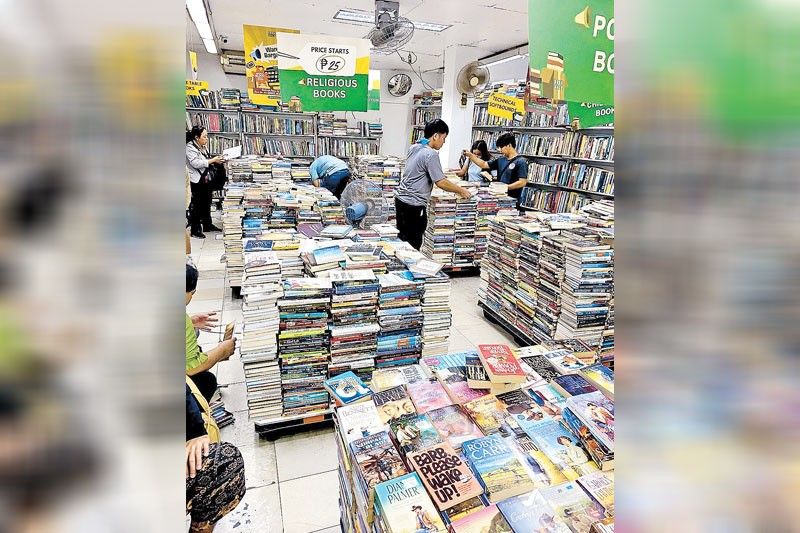
MANILA, Philippines — Alex Grace has been saving up for a foreign book she saw at a local bargain book store in Manila in March. That book, a fiction novel, cost P165. She went back to the store after three weeks, P165 in hand.
She picked up the book, one of the missing pieces in her Hardy Boys collection. But the grin on her face was immediately wiped out by astonishment.
“It was P185 already,” she told The STAR. “So I backed out.”
For bibliophiles like Alex, the P20 difference means a lot. She began collecting Hardy Boys mystery novels in high school. As a 22-year-old working Gen Z, her book preferences have turned to rarer editions of the fictional series.
“I have always wondered how they price the books. Is it based on quality? Because some of the preloved books are also almost the same price as brand new,” Alex said.
The global preloved or second-hand book market industry has been caught by surprise with higher shipping fees and more expensive printing costs – a consequence of world market volatilities, from the US reciprocal tariffs to wars.
The situation has forced preloved book importers and sellers in the country to cope by either absorbing the additional costs or raising prices minimally.
Ripple economic effects
When US President Donald Trump announced on April 1 that he would impose reciprocal tariffs on US trade partners, Joshua Emmanuel Sison found himself in a bind. He knew that the higher tariffs would create ripple effects in the global market. He did not know just yet how his book business would be affected.
With the goal of trying to save on costs, Sison started frontloading orders to get the books at their current prices before any spikes happened. This, he said, was also to avoid delays in logistics. But what happened next surprised him more.
“Everyone started frontloading and the costs of shipping increased, so it kind of defeated the purpose of the whole frontloading thing,” Sison told The STAR.
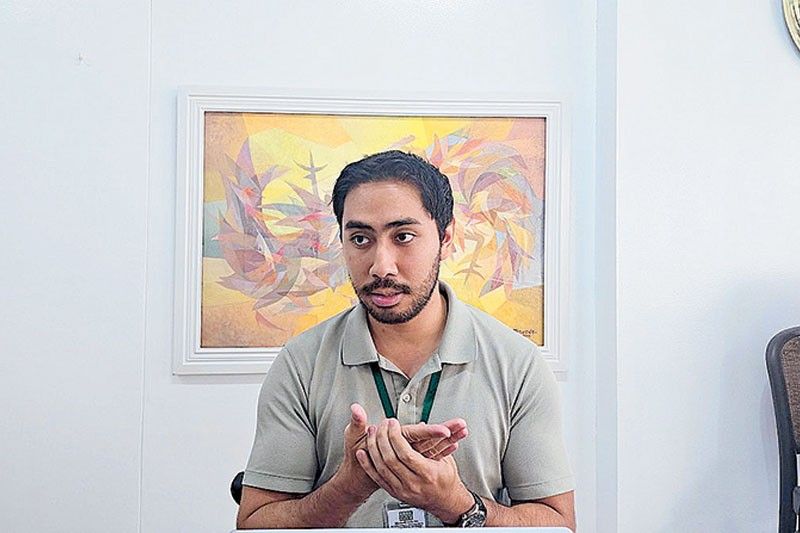
Sison is president of Visual Mix Inc., which runs all Booksale stores nationwide.
The US tariffs exacerbated existing pressures on global trade, particularly on the oil market that has been facing volatilities due to wars. The relative weakness of the peso against the dollar also persisted, making the costs of logistics pricier than last year, Sison said.
“Prices started to go up in the second quarter – I would say by about three to five percent,” he said.
Books imported from the US remain tax and tariff-exempt despite the reciprocal tariff regime. But the raw materials that are used to maintain printing machines and to print books including papers and inks were not spared in the tariff war, according to an NBC News report.
Erasing tax benefits
Importing and selling books are exempt from taxes, duties and tariffs under existing laws and international agreement. Book importation and selling are free from value added tax under the government’s National Internal Revenue Code and the Book Publishing Industry Development Act.
Furthermore, imported books are not slapped with any duties or tariffs under the Customs Modernization and Tariff Act and pursuant to the Florence Agreement, which the country is a signatory to.
Under the Florence Agreement, a 1950 United Nations treaty, signatory-states must not impose customs duties on the importation of certain educational, scientific and cultural materials, including books.
But since bargain book stores like Booksale depend on imports for its stocks, their pricing is significantly affected by global market volatilities. Weaker peso would mean pricier imported books since they are charged by the dollar. Higher shipping fees add to the costs as well. And then there are the shipping delays that result in unquantifiable costs for businesses that sell imported goods.
“All those tax incentives get erased because of all the increases that’s happening globally. A two-peso difference in the exchange rate is an absolute increase,” Sison said, noting that peso:dollar exchange rate reached P59 earlier this year before returning to P57.
“We want to control the price increases since our vision is affordable reading but it is getting harder by the month because of all the economic uncertainties,” he added.
Booksale imports most if stocks from the US and the UK, with most of the supplies being remaindered books as well as preloved ones. Shipments from the US generally take two months while those from the UK take three months.
American books on top
The country has imported an average of $35.6 million of books, excluding children’s coloring books, from 2020 until 2024, according to the Philippine Statistics Authority (PSA).
Book imports have been growing constantly since the COVID-19 pandemic, reaching a five-year high of $45.7 million last year, an indication that demand for foreign printed materials is returning to normalcy.
Last year, the country’s top book suppliers were the US ($15.5 million), UK ($5.9 million), India ($5.4 million), Singapore ($5.1 million) and China ($4.4 million), according to the PSA.
Book imports this year are on track to eclipse the full-year import value in 2024. Book imports from January to August have already reached $39.3 million, more than a third higher than the $28.8 million recorded in the same period last year.
The sources of imported books have also changed post-pandemic, with India rising as one of the country’s top suppliers. For the first time since 2006, India became the third biggest supplier of books to the Philippines last year, edging out Singapore and China.
Last year, the Philippines imported $5.37 million worth of books from India, more than double than the $2.55 million recorded value in 2023.
The South Asian nation continues to exert its dominance in the local book market as it is now the second biggest supplier, surpassing the UK. The country has already imported $6.3 million worth of books from India from January to August, more than double the $2.7 million in the same period of last year.
Industry sources attribute the surge in imports from India to aggressive marketing and partnerships by Indian booksellers and publishers.
To be continued...







- Latest
- Trending