


Government seeks P9 billion funding for new LRT-2 trains
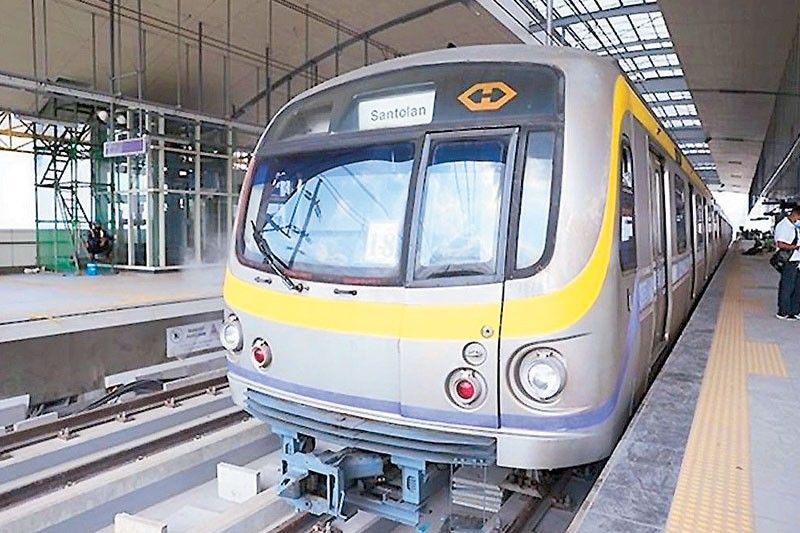
MANILA, Philippines — Commuters may see their waiting time at the Light Rail Transit Line 2 (LRT-2) cut to under six minutes, that is, if the government finds P9 billion to fund the purchase of new train sets.
The Light Rail Transit Authority (LRTA) is reviving efforts to secure additional train sets for the LRT-2 to enhance service efficiency and reduce wait times for commuters.
LRTA administrator Hernando Cabrera said the agency has secured support from the Department of Transportation (DOTr) in finding close to P9 billion for the procurement of 10 train sets.
“(We plan to procure) 10 train sets, but the DOTr is working on the budget. It will cost almost P9 billion for 10 train sets,” Cabrera told The STAR.
The LRTA is currently limited to deploying a maximum of 10 train sets on the LRT-2 during peak hours. This is particularly hurting movement of people between the eastern and western corridors of Metro Manila, as the railway requires more rolling stocks to meet passenger demand.
LRT-2’s passenger traffic has jumped by 15 percent to 31.75 million as of June, from 27.53 million a year ago – on track to hit the LRTA’s forecast of 60.62 million for 2026.
Commuters wait between 12 and 14 minutes to board a train in the LRT-2, far from the under-four minutes headway at the Light Rail Transit Line 1 and Metro Rail Transit Line 3.
The LRTA wants to add 10 train sets so that wait times at the LRT-2 can be brought down to just four to six minutes.
Originally, the LRT-2 ran with as many as 18 train sets, but eight of them have been taken out of service after exceeding their economic life. Train manufacturer Hyundai Rotem Co. had told the LRTA that rehabilitating the eight train sets is no longer feasible.
The LRTA embarked on several efforts to convince the government to purchase new train sets. In 2021, the agency outlined an P11.03-billion proposal to buy 14 train sets to support the additional demand coming from the opening of Marikina-Pasig and Antipolo Stations.
Eventually, the project never gained speed, as the government allocated the funds instead to plug the LRTA’s budget deficit.
Cabrera said the LRTA would purchase new train sets for the LRT-2 even though it has set out to privatize the operations and maintenance of the railway through public-private partnership (PPP).
“It will be a parallel thing, as the PPP might result in failure, or that the budget we requested may not be given and PPP turns successful,” Cabrera said.
Based on information from the PPP Center, the DOTr will solicit proposals to manage the LRT-2 through a P41.9-billion deal. The project will also cover the rehabilitation and expansion of the 17.6-kilometer line that spans between Recto and Antipolo.
For 2026, the LRTA is seeking a budget of P944.55 million. The amount will largely pay for the inventory buildup and maintenance support of the LRT-2.
The LRTA, as a state-owned firm, is expected to have the capacity to support its own operations, but it is heavily dependent on subsidies from the government.


- Latest
- Trending


