When dreams refuse to age: CPSU’s unusual agriculturists
Encouraging more students to pursue a career in agriculture has been extremely challenging. In the late 1990s, the Congressional Commission on Agricultural Modernization (AGRICOM) reported that the typical Filipino farmer was already in his mid-50s. The cultural bias against farming (remember when we chanted “planting rice is never fun” during our youth?) is also widespread and has worried our policymakers about the future of Philippine agriculture.
Every year, agriculture graduates flock to examination centers to take the Licensure Examination for Agriculturists (LEA). The passing rate often fluctuates, with some years being tougher (in the 30-40 percent range), while the last one was higher at 68.55 percent.
But many of our LEA passers don’t go into farming, and those who do are often criticized for lacking the necessary skills for farm management or for using mechanized agriculture.
How do we produce more skilled agriculturists who will go back to the farm? And how do we provide skills to farmers who are already tilling the land?
Here is an unusual story of perseverance and unique circumstances that should make us believe there is hope in agriculture.
Nestled high in the hills of Candoni, far away from the bright city lights of Negros Occidental, perseverance thrives in extraordinary ways. In this remote, agriculture-based town, rugged terrain, poverty and insurgency cast shadows. Yet, hope persists, fostered and reinforced by Central Philippines State University (CPSU) – the only accessible pathway to higher education in this isolated community.
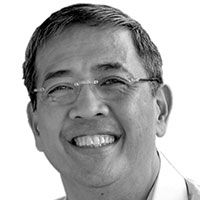
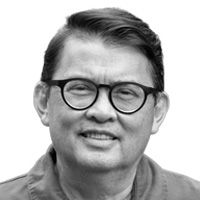
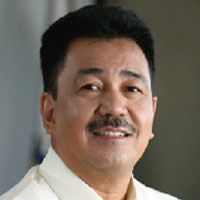
Among the many inspiring stories from this remote campus are those of Diosdado Evangelista and Ismael Gadudo, both CPSU-Candoni campus graduates who passed the most recent LEA.
Born on Sept. 18, 1953, Tatay Diosdado dedicated decades to cultivating his 10-hectare farm in Barangay West, Candoni, Negros Occidental. A true farmer-entrepreneur, he financed his four children’s education through crops such as gabi, ginger, palay and sugarcane, giving them opportunities he had only dreamed of.
When his children all became professionals, a long-postponed dream resurfaced. In 2018, at 65, he defied what others considered impossible for his age and enrolled in the Bachelor of Science in Agribusiness program at the CPSU-Candoni campus. This time, his hands held notebooks instead of a bolo, and he walked into classrooms instead of muddy puddles.
When he met Negros Occidental Rep. Chedeng Alvarez on campus, Tatay Diosdado said, “Tapos na ang mga anak ko, ako naman” (My children have finished their studies, it’s now my time.)
The campus was filled with students young enough to be his grandchildren. Very few senior citizens return to school because they feel uncomfortable attending classes with younger classmates. Others feel intimidated by the technology used in learning and give up their dreams.
But for Tatay Diosdado, age was never a barrier; it was a testament to resilience and hope. With the Free Higher Education law in full swing, he did not have to worry about paying for tuition and miscellaneous fees. He funded his studies with his produce, met all requirements and graduated in 2023 at age 69.
However, his journey was challenging. He failed the Civil Service Exam and did not pass the LEA on his first attempt in 2024. Yet neither setback nor age dampened his enthusiasm. At 72, Tatay became one of the newest licensed agriculturists in 2025, a victory widely celebrated on campus, in the municipality and within the CPSU community.
Alongside this triumph is the equally inspiring story of Ismael Gadudo. Born on April 25, 1969, in Barangay Banga, he left school after Grade 6 due to poverty and the difficulty of walking several kilometers to attend classes. He worked in lumber yards and on fishing boats. Like many rural poor, he left his town to work in Manila as a family driver for 23 years. Yet the dream of education never left him.
In 2018, at age 50, he enrolled in ALS, passed and bravely entered college the following year. Supported by his family and fueled by determination, he endured discrimination and financial hardship, completing his degree in 2024 at age 55. With grim determination and perseverance, he self-studied for the exam, watched online reviews and took the November 2024 LEA. Today, like Tatay Diosdado, he stands as a licensed agriculturist, proving that age is no barrier to lifelong learning.
Like so many Filipinos before the Free Higher Education law, Tatay Diosdado and Tatay Ismael saw education as a distant, even an impossible, dream. Stuck in poverty, with few nearby schools and a prolonged period of conflict on Negros Island, learning became secondary to survival. Opportunities were scarce, finances were tight and life demanded labor over literacy. Yet their dreams never died; they only waited and yearned for a chance to study.
When CPSU opened its doors and provided free higher education in Candoni, hope returned. Education became reachable, attainable and alive again. What once seemed impossible for two farmers in a remote town slowly unfolded into reality, proving that no dream is ever too late to pursue.
This is the real legacy of free higher education that will go beyond our generation.
Candoni celebrates. CPSU celebrates. The Negros Island celebrates. We should all celebrate. Here, two farmers stood tall and demonstrated to the world that when opportunity is provided and perseverance endures, success grows in its own season.


- Latest
- Trending