There goes ASEAN
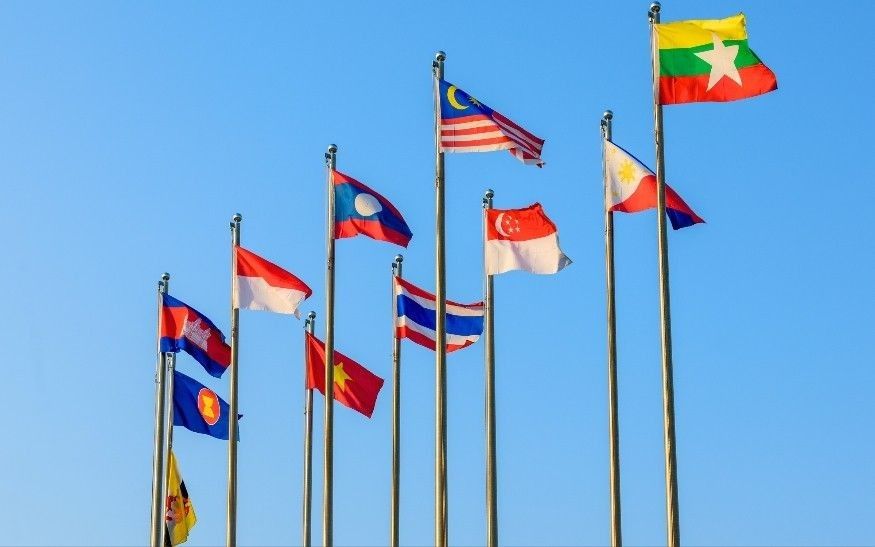
The ASEAN Summit meeting we are hosting next month should be very interesting. As of now, it promises to be rather chilly. Two heads of state may give each other the cold shoulder.
Three of ASEAN’s original members are having a highly publicized international spat. Singapore called out Indonesia over the annual scourge of suffocating haze drifting across its borders.
The recurring environmental emergency caused by massive, deliberate forest and peatland fires in Indonesia, primarily on the islands of Sumatra and Kalimantan (Borneo), is breaking ASEAN unity.
Smallholder farmers and large commercial corporations use the “slash-and-burn” method to clear large swaths of natural forest in Indonesia. This involves cutting down vegetation and setting it on fire because it is the cheapest, easiest and fastest way to clear land for lucrative palm oil and pulpwood plantations.
Much of the burning happens on peatlands — wetlands composed of thick layers of partially decayed organic matter. To build plantations, companies dig extensive canals to drain the water, which dries out the peat and makes it highly flammable.
Once a peat fire starts, it is incredibly difficult to extinguish. The fire can burn deep underground for weeks or months, generating up to three times as much smoke as a regular forest fire.
We also experienced this same haze from Indonesia this year. Palawan and Panay were among the first areas blanketed by the haze. The Habagat winds carried dense smoke plumes straight into Western MIMAROPA and the Visayas, prompting regional offices of the Environmental Management Bureau to issue air pollution warnings.
As the monsoon winds intensified, the smoke was pulled further north across mainland Luzon. The crisis peaked between late August and early September, choking Metro Manila with a dense, visible layer of smog.
A Malaysian news site described the problem:
“It is an environmental crisis that transforms the crisp morning air into a hazardous soup, irritating throats, filling pediatric clinics with wheezing children and forcing millions indoors. Yet, beyond the immediate health hazards and the stinging eyes lies a deeper, chronic institutional frustration: the cyclical helplessness of enduring environmental devastation originating across international borders.”
While Peninsular Malaysia (Kuala Lumpur) gets heavily choked, the Malaysian states on Borneo (like Sarawak) are directly downwind from Kalimantan’s fires, leading to canceled public events and overloaded local hospitals.
Singapore’s compact, highly urbanized nature means that when the wind blows the smoke over the city-state, the entire population is instantly affected. Air quality in Singapore can quickly deteriorate into the “Very unhealthy” tier, with PM2.5 concentrations peaking at dangerous levels (such as reaching 284 µg/m³ during intense spells).
For decades, the issue has strained relations within ASEAN.
Diplomatic handling of the haze follows what is known as the “ASEAN Way”—a code of conduct prioritizing non-interference and consensus over public call-outs. But when toxic smoke levels rise, this non-confrontational approach gives way to angry rhetoric.
This year’s diplomatic spat began with a statement by former Indonesian vice president Jusuf Kalla. Responding to complaints from Malaysia and Singapore during a severe haze season, Kalla stated that neighbors should be grateful for the 11 months of clean air and oxygen that Indonesia’s vast rainforests provide them for free, rather than complaining about one month of smoke.
Jakarta defends its reputation by arguing that foreign-owned companies are largely responsible. Indonesian officials frequently point out that many of the palm oil and timber concessions where fires burn are owned or funded by parent companies headquartered in Malaysia and Singapore.
But frustration has boiled over. Malaysian parliamentarian Syed Saddiq bin Syed Abdul Rahman proposed that Malaysia and fellow ASEAN nations formally lodge diplomatic protests against Indonesia regarding the recurring forest and land fires.
Indonesia responded to complaints by cutting its piped natural gas exports to Singapore. Jakarta insists the move is purely a technical measure to address domestic shortages. But the timing and aggressive political rhetoric from Indonesian officials clearly make it a direct retaliatory message over the escalating haze dispute.
The cut represents less than two percent of Singapore’s total daily gas requirement. It is too small to cripple Singapore, and also too small to help solve Indonesia’s domestic power shortages. It is obviously a highly visible political message aimed at a domestic audience to showcase resource nationalism and push back against foreign finger-pointing.
Days before the cuts, Indonesian Energy Minister Bahlil Lahadalia issued a warning that Indonesia would review or halt energy exports to countries “that are not cooperative and do not treat Indonesia with mutual respect.” President Prabowo Subianto also publicly criticized “countries that like to insult” Indonesia over the air pollution.
Singapore relies on natural gas to generate about 95 percent of its electricity. Singapore being Singapore, it has built an extensive network of contingency defenses—including importing more liquefied natural gas (LNG) from countries like Australia. Local electricity prices and power stability remain unaffected by Jakarta’s symbolic pipeline restrictions.
There is an important lesson for the Philippines in this intra-Asean spat. Unlike Singapore, we cannot afford to antagonize the Indonesians in any way. Indonesia supplies about 99 percent of the coal we import for our power plants.
ASEAN brotherhood or not, this is a very unhealthy dependence which our government shouldn’t have allowed. During our time at the Ministry of Energy, our ties with Indonesia were impeccable. We worked closely with Pertamina, their national oil company for oil supply and geothermal technology cooperation.
But it seems the ASEAN brotherhood is no longer what it was before.
For now, our main concern is to make sure that the ASEAN spirit of cooperation is not lost in a toxic haze of recriminations. As host, our best diplomatic skills are needed to keep the summit conference not only pleasant but productive.
Boo Chanco’s email address is [email protected]. Follow him X @boochanco





- Latest
- Trending