EU and the Philippines: Up against child labor
Every child deserves a childhood. This is what the International Day Against Child Labor, celebrated each year on June 12, calls the world to remember.
The challenge ahead is real – 138 million children, including 54 million in hazardous work, still need our action – but the momentum is there: a joint ILO-UNICEF report released last year shows that the number of affected children has been cut nearly in half since year 2000, a testament to what sustained global commitment can achieve. Today, with renewed ambition and accelerated effort, eliminating child labor in all its forms by the global target date can be within reach.
For the European Union, child labor is not merely a labor issue; it is an assault on the rights, dignity and future of a child. Article 32 of the EU Charter of Fundamental Rights explicitly prohibits it. The EU’s commitment is therefore not political convenience, but a constitutional obligation and a moral imperative.
Over the past several years, the European Union has assembled one of the most comprehensive policy frameworks in the world for combating child labor, both within its borders and beyond. The EU Strategy on the Rights of the Child takes a zero-tolerance approach to child labor and includes a commitment to working towards supply chains of EU companies that are free of child labor, notably through a legislative initiative on sustainable corporate governance; The Action Plan on Human Rights and Democracy 2020-2027 placed the eradication of forced labor and all forms of child labor among the EU’s central global priorities.
The EU has translated these important policies into legislation, with an EU-wide law that prohibits the placing on the EU market, or export from it, any product made in whole or in part using forced labor, including forced child labor. It applies to every sector, every product type, every company size and every stage of the supply chain, from extraction and harvest to manufacture and processing. Online sales are included. It is a transformative instrument that turns the purchasing power of the European market into a lever for child protection worldwide.
Complementing this is the Corporate Sustainability Due Diligence Directive (CSDDD), which entered into force in July 2024 and requires companies to identify and address adverse human rights impacts, including child labor, in their global operations. Together, these laws hold companies accountable not just for what happens inside the EU, but for what their supply chains touch anywhere in the world.
The European Union is proud to walk alongside the Philippines in pursuit of the goal to oppose child labor, not only through declarations, but also through concrete, programmatic action. The Philippines is an important partner of the EU. We work together also across the country, where EU-funded projects are tackling child labor at its roots: the CLEAR CAR Project with World Vision in the Cordillera, combating and preventing child labor by addressing the root causes of exploitation and supporting vulnerable children and families; initiatives with Terre des Hommes Netherlands, Bidlisiw Foundation and Children’s Legal Bureau in the Visayas, strengthening community-based protection systems to eliminate the worst forms of child labor; the Asian Partnership for the Development of Human Resources in Rural Areas (AsiaDHRRA) multi-stakeholder agri-entrepreneurship program in Bukidnon, Davao and Maguindanao, harnessing civil society capacities and agricultural livelihoods to drive child labor reduction and Project SPEAK with ChildFund Philippines and the Kaanib Foundation in Mindanao, working directly with parents and communities in the recognition that poverty is often the engine of child labor, and that families need support structures, not just prohibitions.
At the national policy level, the EU Delegation is engaged with the Philippine government on budgeting initiatives with a specific focus on children’s well-being. Under the EU-UNICEF Public Finance Facility, a tool to track budgeting and spending for children was developed which enables the systematic identification, classification and monitoring of public expenditures for children within local budget frameworks.
Among the challenges for which EU and the Philippines work together, one that requires urgent international cooperation is Online Sexual Abuse and Exploitation of Children, or OSAEC. Recognized internationally as one of the worst forms of child labor, OSAEC involves the live-streaming and recording of sexual abuse of children, often directed by paying foreign or local demand. The Philippines, with its high internet penetration, widespread English literacy and persistent poverty, has been identified as one of the world’s most affected countries.
Together with our international likeminded partners, we take this issue with the utmost seriousness. Last year, a European Parliament delegation led by MEP Caterina Chinnici visited the Philippines specifically to deepen cooperation with national authorities on OSAEC and Child Sexual Abuse and Exploitation Materials (CSAEM). Meetings with officials from the Department of Justice focused on sharing expertise, aligning legislative approaches and building joint operational frameworks. “We have the same objective and the same goal,” Chinnici said, “to protect the children against child sexual abuse online and offline.” Later in 2025, a Philippine delegation composed of officials of the Department of Justice and IACAT visited Brussels to further build on our cooperation in this crucial matter.
Efforts to combat OSAEC and CSAEM are also part of our ongoing cooperation with the Philippine justice sector. The EU’s Governance in Justice program (EU GOJUST) is supporting initiatives by IACAT’s National Coordination Center against OSAEC and CSAEM to address this issue with an inter-agency perspective. The implementation of these initiatives at the local level is also supported by our program. EU GOJUST is for example supporting the joint work of Cagayan de Oro City, Iligan City and Ozamiz City justice sector institutions and LGUs to combat OSAEC and CSAEM justice needs.
Through legislation that reaches supply chains, development programs that reach communities, political dialogue that reaches governments and operational cooperation that reaches the children themselves, the EU is committed to work towards eliminating child labor globally. On this International Day Against Child Labor, the EU Delegation reaffirms its commitment to the Philippines as a partner in this effort. We are united in our belief that every child, everywhere, deserves the chance to be simply that: a child.
* * *
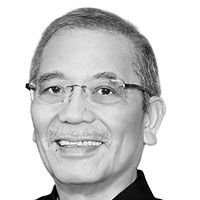
Massimo Santoro is the Ambassador of the European Union to the Philippines.


- Latest
- Trending