A roadmap to ACHIEVE reform

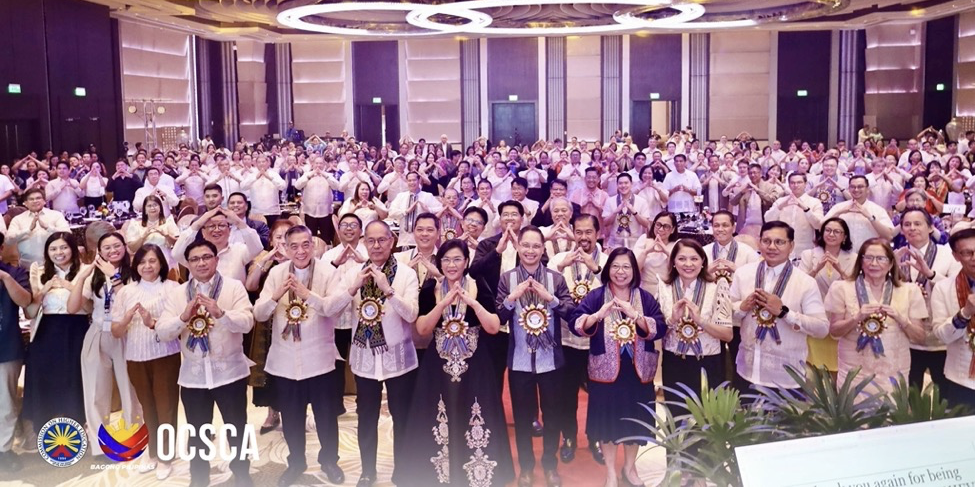
A few days ago, the Commission on Higher Education (CHED) gathered educators, government officials and private sector partners at the Manila Hotel for the “Converge to ACHIEVE: The Higher Education Summit.” The event marked the first 100 days in office of CHED Chairperson Dr. Shirley C. Agrupis and served as the formal launch of the agency’s new reform roadmap: the ACHIEVE Agenda.
What unfolded at the summit offered a glimpse of a system finally taking the hard steps toward coherence, synergy, and future readiness.
At the heart of the event was the launch of CHED’s seven-point reform roadmap-- the ACHIEVE Agenda. The framework outlines Advanced and Accessible Lifelong Learning; Centralized Human Capital Development; Harmonized SDG-Based Research and Innovation; Integrated Real-Time Data and Analytics; Expanded Internationalization Strategies; Vitalized Policies and Governance; and Effective and Efficient Public Service.
According to Chairperson Agrupis, the agenda is a “blueprint for a modern, inclusive, and future-ready higher education system. ACHIEVE responds to the urgent concerns we see every day -- the job mismatch faced by graduates, the call of industries for relevant skills, the demand of teachers for support, and the clamor of students for real opportunities.”

She framed education not as a privilege for the few but as a guarantee for every Filipino learner, a stance shaped by her own journey as a first-generation college graduate who knows what access and opportunity can mean for a family’s future.
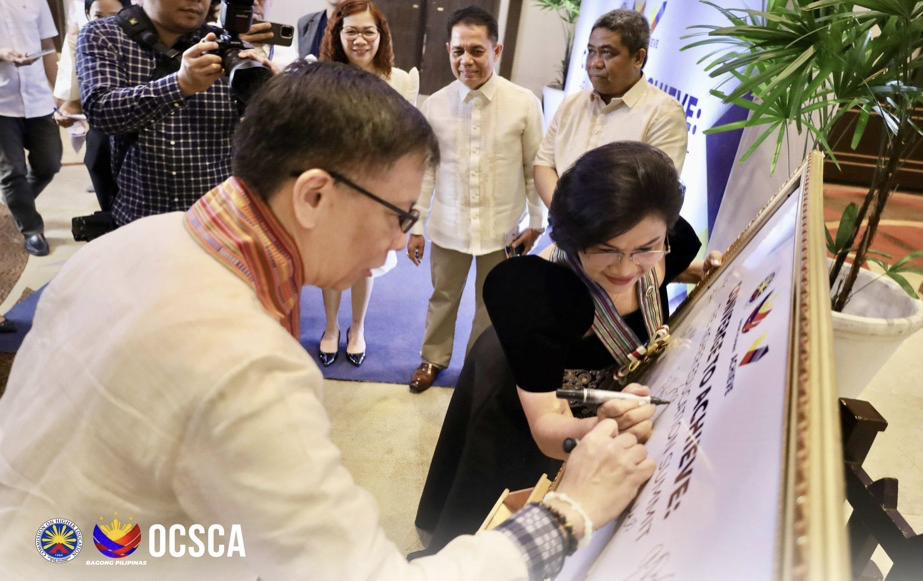
What made this summit different was its tangible emphasis on convergence. A symbolic “Wall of Convergence” stood at the center, where partner agencies signed their commitments to align programs and strategies with CHED’s vision. Beyond the symbolism, key partnerships were sealed through memoranda of agreement and joint circulars -- with TESDA, DOLE, the Department of Migrant Workers, the Commission on Human Rights, and Unilab Foundation.
CHED, TESDA, DMW, DOLE and CHR commit to action
TESDA Director General Jose Francisco “Kiko” Benitez stressed the importance of breaking down barriers between vocational training and higher education. “This partnership allows us to make technical-vocational training more dynamic and responsive to industry needs,” he said, highlighting the joint initiative to create the Board of Curriculum Standards and Discipline.
For the first time, CHED and TESDA are working under one framework to harmonize curricula in priority industries --- from advanced manufacturing and digital technology to healthcare, tourism, financial services, and the creative economy. This directly answers years of criticism that graduates -- though armed with diplomas -- often lack industry-ready competencies.
Equally significant was the voice of Department of Migrant Workers Secretary Hans Cacdac, who underscored the need to support overseas Filipino workers not only through protection and welfare services but also through education and career pathways.
By aligning CHED’s programs with the realities of global labor mobility, OFWs and their families are given the chance to transform migration into a platform for skills upgrading, reintegration, and national development.
The Department of Labor and Employment, represented by Secretary Bienvenido Laguesma, committed to strengthening the school-to-work transition through more robust use of labor market data. Agrupis herself pointed to the “oversubscribed or undersubscribed” courses as symptoms of a system that has long operated without comprehensive workforce analytics. “We need to do a gap analysis between demand and supply,” she explained, citing consultations with DOLE and migrant workers as part of the solution.
Also noteworthy was the integration of human rights education, championed through CHED’s partnership with the Commission on Human Rights. By building Centers for Human Rights Education and capacitating faculty and staff, CHED sends a strong message that education is not only about economic survival but also about civic responsibility, ethical leadership, and nation-building.
A whole-of-government and whole-of-society approach
For many years, education reform has been hobbled by what EDCOM 2 identified as the “trifocalization problem” — the fragmented responsibilities among DepEd, CHED, and TESDA. While this division allowed each agency to focus on its own level, it also bred duplication and weak coordination. The agreements signed at this summit suggest a turning point: a serious effort to weave these strands into a coherent fabric of human capital development.
In aligning ACHIEVE with the administration’s Bagong Pilipinas vision, CHED positions higher education not as an isolated pursuit but as the linchpin of national renewal. As Agrupis puts it: “Together, we will not only imagine a brighter future, but we will also build it –brick by brick, student by student, institution by institution. Bagong Pilipinas starts here, and it starts with us.”
Turning hope to ACHIEVEments
Optimism, of course, must be tempered with vigilance. Reforms as ambitious as ACHIEVE can stumble if they remain trapped in bureaucratic paperwork or change leadership hands without continuity. The real test will be in implementation: whether curricula are truly streamlined, whether students find better employment outcomes, whether internationalization yields measurable returns, and whether lifelong learning becomes accessible beyond the privileged few.
Still, it is difficult not to feel hopeful after seeing the convergence on display. The summit was more than an anniversary of a chairperson’s first 100 days; it was the beginning of a collective journey to bridge the divides that have plagued our education system for decades. For those of us who have long advocated for quality, equity, and relevance in Philippine higher education, the ACHIEVE framework is both a challenge and an opportunity, a call to sustain momentum and ensure that reform is not just imagined but realized.
If CHED and its partners succeed, the dividends will be profound: a generation of Filipinos better prepared for work, for global citizenship, and for the responsibilities of building our nation. The summit lit the spark. It is now up to all of us – educators, industry leaders, policymakers, and citizens — to carry the flame forward.
---
Follow our social media accounts @JingCastaneda on Instagram, Facebook, YouTube, Tiktok and Twitter/X. Share your stories or suggest topics at [email protected].


- Latest