Jose F. Lacaba and his romance with language
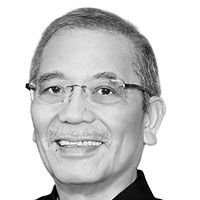
On Saturday, Oct. 10, friends of journalist, poet, screenwriter, translator, essayist, editor par excellence Pete Lacaba are putting together a tribute/benefit for him by having musicians sing his Salinawit music numbers. His body of works have become part and parcel of our cultural life.
Salinawit (a blend of salin for translation and awit for song), the art of translating classic English, standard, and pop songs into Filipino lyrics is associated with Lacaba who masterfully pioneered it.
His words have become part of movies we have enjoyed as Jaguar, Bayan Ko: Kapit sa Patalim, Sister Stella L., Orapronobis, Eskapo, and Rizal sa Dapitan.
His 1982 book “Days of Disquiet, Nights of Rage” is now considered mandatory martial law reading towards a better understanding of the student unrest and opposition to the dictatorship.
He is also well remembered for his Martial Law poem, “Prometheus Unbound,” written under the pseudonym Ruben Cuevas. The poem had the clever use of an acrostic for its hidden message, with the first letters of its lines spelling out an anti-Marcos statement.
Those who know Pete well are aware of his deep affinity with language. This is most evident in his translations of English standards that capture both the “elegance and wit, the bawdiness and romance” of Filipino. Endearing hit tunes that become even more so in our own language.
An example is “Iyun Lang,” a salin of “That’s All,” a jazz standard written by Alan Brandt and Bob Haymes in 1952.
It is Pete’s poetic genius that made this possible:
… Alay ko sa ‘yo’y pamamasyal sa araw
At kamay na kakapitan sa ulan
At mainit na dibdib sa gabi ng taglamig
‘Yun lang, ‘yun lang
Ang iba ay maraming pangako
At handang ibigay ang mundo
Tunay na pagsinta at pagsuyo
‘Yan lang ang maihahandog ko…
Lacaba’s wide repertoire of Salinawit songs will be sung by guest artists which include Nathan Abella, Rey Abella, Joey Ayala, Bayang Barrios, Ferdie Borja, Pat Castillo, Cooky Chua, Waki Ignacio, Leah Navarro, Chikoy Pura, Joel Saracho, and Mitch Valdes.
The Salinawit ni Pete: A Tribute will be at 5 p.m., Oct. 10 at My Brother’s Mustache Folk Bar/Hive Hotel, 68 Scout Tuason, QC. For more information, call My Brother’s Mustache on Facebook, or through 0905-021-4696.
Other facets of Pete Lacaba’s multifaceted, gifted self include having been executive editor of the now-defunct YES! magazine, the print counterpart of PEP.ph (Philippine Entertainment Portal), ensuring that every page had flawless copy for two decades.
Again manifesting his interest in the Filipino and English languages, he also wrote a column for The Manila Times titled “Carabeef Lengua,” where he viewed language through Pinoy pop culture.
His columns in the Times and the Manila Chronicle have been published in a book “Carabeef Lengua” by the University of the Philippines Press in 2024. In his introduction to his column, he says he is concerning himself with Filipino English, along with its cousins, Carabao English and Bamboo English.
Our difficulty with pronouns as Filipino does not distinguish gender is seen in his examples like “He raped her own daughter” and “For almost four years now, a mother in Sorsogon has been sending the monthly allowance of his son…”
He has no pretensions as an academic, just a keen observer of everyday life. That gives him the K to critique what it is that he sees, the way Filipinos invent and reinvent and bend English to suit their needs. He talks of a vendor who has put up this sign, “Free Gift Raping” and even the Ateneo Library of Women’s Writings posting a sign that says, “Watch out for the opening…” He points out that we watch out for something that is dangerous or threatening.
There is humor and noteworthy cultural insight in this book which challenges the notion that “correct” English must always conform to Western standards. It honors how Filipinos use language according to peculiar needs and situations. It is a fun, easy read.
An interesting chapter entitled “Shall we Ballroom?” talks of how nouns can be verbed, as in “mag ballroom tayo.” After all, from The Oxford Companion to the English Language (1992), it says that there is NO noun in the English language that can’t be verbed.” Therefore, bag a prize, author a book, soldier on regardless, malling, anchor a news program…”
The book is a playful collection of essays which explores language and Philippine culture – how language manifests the Filipino experience. There are no rigid rules, just the keen eyes of an amused observer at Philippine ingenuity. Take note of the telling book title. Lacaba uses the metaphor of “carabeef,” meat from a carabao, to describe our version of English. It is something akin to “beef” or standard English but different in “texture, taste, and cultural context.” As the author explains, this “lengua” or tongue is “recognizably English” but largely shaped by who we are, what we are.
Beyond the obvious humor, it shows how within historical and social contexts, our colonial history, globalization, and class have shaped our use of English. That we remain intelligible despite it all, makes for an interesting case.




- Latest
- Trending