Weaving her T’nalak into a white coat
This is the season when students nationwide wear their togas and sablay, and parents feel immensely proud as their children graduate and enter their professional lives.
During my travels across the country, I joined MSU General Santos City Chancellor Usman Aragasi and Dean Edwin Alconcel to meet with the MSRS scholars under the Doktor Para sa Bayan law (RA 11509). This landmark piece of social legislation, passed during the Duterte administration, aims to dramatically increase the number of doctors in geographically isolated and disadvantaged areas (GIDAs). A key component of this law is the CHED Medical Scholarship and Return Service (MSRS) program, which includes a return-service requirement after graduation.
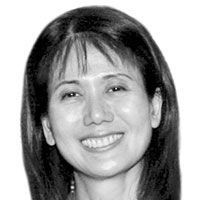
I met Hannah Joy Bento-Billones, a bright, articulate and self-effacing medical student. A T’boli from Lake Sebu, South Cotabato, she is the first in her community to study medicine and become a doctor. I told myself her story had to be told.
So I asked Hannah to narrate her journey toward becoming a doctor. Here is her story in her own words.
I was raised in a community where dreams often had to compete with survival. The options were a set of school supplies or a week’s worth of meals. This reflects the reality of many Indigenous communities, with limited access to health care, opportunities and resources. Yet it was in this environment that we first learned to endure, to give and to dream.
In the T’boli culture, the T’nalak is a sacred hand-woven cloth made from abaca fiber. Its patterns are believed to be revealed in dreams, making each piece not just art but a story. Every thread is woven with patience, discipline and vision. Looking back, I realize my life has been woven in much the same way – each struggle, sacrifice and small victory forming patterns I would only later begin to understand.
Like the T’nalak, medicine was once a distant, impossible dream. When I first told my family I wanted to pursue medicine, my father grew quiet. I sensed both fear and disappointment – not in me, but in himself, for not being able to support his daughter’s dream. His line was, “Kaya ng utak, pero hindi kaya ng bulsa.” It was beyond what we could afford. For a time, I convinced myself that maybe medicine was not meant for me – maybe it’s for my children to fulfill someday.
When MSU GenSan opened its College of Medicine, it gave me a chance to revisit a dream I had once buried. I carry the reality of being a first-generation doctor in the making – the first pure Lumad in our family to pursue this path. My education has always been supported by scholarships, from high school through college. Still, there were moments when even that was not enough. At one point, my family had to sell a portion of our land just to sustain my studies.
This reality began to change when I became a scholar in the CHED MSRS program. The MSRS did more than provide financial support. It gave me the opportunity to continue when stopping would have been the only option. It allowed me to focus on learning, stay in school despite financial hardship and believe that someone like me had a place in medicine. More importantly, it affirmed that students from underserved and Indigenous communities are not just beneficiaries of education but future providers of care.
I was not only supported, but also entrusted with a responsibility: to return and serve communities that need health care the most. This became my purpose. I am no longer studying medicine just for myself, but for the people I come from.
Life, however, unfolded in ways I did not expect. After years of marriage, I became a mother in my second year of medical school. Balancing marriage, motherhood and medical studies is never easy. It often feels like my sympathetic nervous system is on constant overdrive, like an unending epinephrine drip. But it redefined my understanding of strength and endurance. These became the very threads that strengthened the fabric of my journey.
I am also a product of a learning environment that prioritized inclusivity. At MSU-GSC COM, opportunities were never withheld because of ethnicity, social background or life circumstances. This support, together with the MSRS program, made it possible for me to continue even in seasons when continuing felt hardest. Tey bong slamat! Thank you very much!
Today, I am one step closer to becoming a physician. I will graduate this June. This milestone is not mine alone. It reflects the impact of programs like MSRS that invest in students who are willing to return and serve. It is shared with my tribe, the T’boli, and with every Indigenous community striving to be seen and heard.
Like the T’nalak, my journey is still being woven. I may soon wear a white coat, but I will always carry the colors of my people – and I dedicate my life to ensuring their stories are seen, heard and cared for.
There are many more Hannah Joy Bento-Billones waiting to begin their journey and end poverty in their generation if the Doktor Para sa Bayan law is fully funded.
But can our national leaders stop stealing public funds and direct them where they matter most?





- Latest
- Trending