Standing for children, standing for order
In times of war, the most vulnerable often become invisible. Among the gravest yet least visible consequences of the Russian war of aggression against Ukraine is the reported deportation and forced transfer of Ukrainian children – an issue that strikes at the very core of international law and human decency.
Long before the full-scale invasion, troubling patterns had already emerged. Today, hundreds of thousands of Ukrainian children are believed to be under Russian control. Many have had their identities altered, their documents replaced and, in some cases, have been placed with adoptive families. The absence of verifiable data – owing to Russia’s refusal to provide transparent information – only deepens the concern.
This is not merely collateral damage. It is a direct challenge to the rules-based international order, an order that countries like the Philippines have consistently defended.
The Philippines has long positioned itself as a principled advocate of international law. From its landmark 2016 arbitration victory to its sustained support for multilateralism through the United Nations, Manila has demonstrated that adherence to rules – not power – must govern international relations. This same principle extends to the protection of children in armed conflict.
As a state party to the United Nations Convention on the Rights of the Child, the Philippines has committed to safeguarding children from abuse, exploitation and displacement. It has also supported key global frameworks addressing children in conflict, reinforcing the idea that the rights of the young are non-negotiable – even in times of war.
It is within this context that the International Coalition for the Return of Ukrainian Children deserves broader global backing.
Co-chaired by Ukraine and Canada, the Coalition seeks to coordinate international efforts to locate, trace and safely return children who have been unlawfully deported or forcibly transferred. Its mission is clear and humanitarian: reunite families, restore identities and ensure proper reintegration for affected children.
As the Coalition prepares for its upcoming meeting in May, attention has turned to expanding its membership, particularly among countries in the Global South. This is where the Philippines, alongside its regional partners, can play a meaningful role.
Participation in the Coalition would be a natural extension of the Philippines’ long-standing diplomatic posture. It would reinforce Manila’s commitment to international law, demonstrate solidarity with global humanitarian efforts and send a clear signal that violations involving children cannot be ignored.
Importantly, joining the Coalition does not impose financial or legal obligations. It is a voluntary platform that allows states to contribute in ways aligned with their capabilities – whether through diplomatic engagement, advocacy or technical cooperation. For countries that may prefer a gradual approach, observer status offers a flexible pathway to participate without full commitment.
Critically, this initiative is not about geopolitics. It is about children. Framing it otherwise risks obscuring the human cost at its center.
The Philippines understands the value of collective action. Whether through ASEAN, the United Nations or broader multilateral engagements, it has consistently emphasized dialogue, cooperation and respect for international norms. Supporting the Coalition would align seamlessly with these principles.
Moreover, the issue resonates deeply with the Philippines’ own national priorities. Child protection remains a cornerstone of domestic policy, and Filipino diplomacy has often highlighted the importance of safeguarding vulnerable populations in crisis situations. Extending that concern beyond borders is both consistent and necessary in an increasingly interconnected world.
No single country can resolve the plight of these children alone. But a broader coalition – one that includes voices from the Global South – can strengthen the push for accountability and humanitarian action.
In the end, the question is not whether the international community can act, but whether it will act decisively enough.
For the Philippines, supporting the return of Ukrainian children is not simply a foreign policy option. It is a reaffirmation of a principle it has long upheld: that rules matter, rights matter and, above all, children matter.
* * *
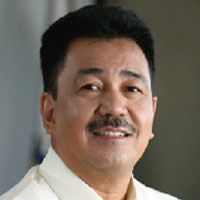
Yuliia Fediv is the Ambassador of Ukraine to the Philippines.



- Latest
- Trending