136 vs 911

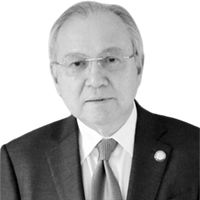
While he was the Philippine National Police (PNP) director-general, now Metro Manila Development Authority (MMDA) general manager Nicolas Torre III first imposed the five-minute rule to respond to emergency or calls for police assistance. As PNP chief then, Torre sought to strictly implement this five-minute response time in the police hotline 911 for emergency calls.
President Ferdinand “Bongbong” Marcos Jr. (PBBM) first appointed Torre as PNP chief on June 2, 2025 until he opted to retire early last Aug. 25, 2025. Torre decided to cut short his stint after heading the PNP for 85 days. PBBM, however, appointed him to the MMDA in late December of same year.
At the Kapihan sa Manila Bay news forum last Wednesday, Torre announced he is now able to implement this five-minute response time when he added it to the 136 public service hotline of the MMDA. Being another frontline agency of the government, Torre offered the five-minute response time as “service guarantee of the MMDA.”
Torre challenged us to test the MMDA hotline 136 using our mobile phones. One of the requirements is the phone call must be answered within five phone rings. True enough, in just one ring, the MMDA Command Center picked up, and with a female voice prompt, tells the caller: “If this is an emergency, Dial 1 now.” And: “Dial 2 for other concerns.”
Disclaimer: To avoid being tagged as a prank call, we declared outright it was a testing being done under the supervision of Torre to report a supposed traffic accident. All calls are recorded at the MMDA Command Center.
Tapping the MMDA closed circuit camera TV (CCTV), Torre narrated to us the time and motion simulation they did at the MMDA. After the exact location of the traffic accident is reported, it will be captured in screenshot photo/video and sent to the caller. Then, the screenshot/video will be sent via Viber upon request of the caller.
While all of these activities are taking place, the MMDA Command Center notifies and sends the traffic enforcer stationed in the area nearest to the accident site. When the MMDA enforcer arrives, it will be with ambulance or wrecker if needed. Armed already with the screenshot, the vehicles in the accident will be moved to the side of the road in order to restore traffic flow.
“In five rings, screenshot is sent, plus five minutes response time and resolve it, all in all done in 10 minutes,” Torre gloated.
Thus, Torre enthused the “poem” of this MMDA 136 program: “Pag may aberya sa daan, i-MMDA na yan, dial 136, limang-minuto, kami ay nan’dyan!”
Soon, Torre also announced, the MMDA 136 hotline will add “Dial 3” as the agency’s response to mental health issues in Metro Manila. Manned by professional psychologists, he added, it will provide counsel to people who feel “isolated” and are suffering mental health issues. He noted with concern there have been notable rise in suicide incidents in Metro Manila.
At the same time, Torre disclosed the MMDA is expanding the use of its CCTV system in the No Contact Apprehension Policy (NCAP). It will include catching people improperly disposing of trash in the Metro Manila barangays covered in their centralized traffic camera system.
The Supreme Court partially lifted in 2025 the temporary restraining order (TRO) on the MMDA’s implementation of its own NCAP. However, the TRO still stands against the NCAP implementation by certain local government units (LGUs) in Metro Manila using a privately-run CCTV system installed in specific major thoroughfares.
Torre likened the enforcement of the local waste ordinance in Metro Manila as a “cat-and-mouse” game. “When barangay officials are watching, no one dumps trash. But when they leave, residents start dumping again,” Torre pointed out.
Powered by artificial intelligence (AI), he cited, MMDA will start next week its use of 450 CCTV cameras across Metro Manila to monitor dumping sites. A typical policeman, Torre believes the expanded NCAP of the MMDA will capture violators who will be literally caught in the act.
Another pet MMDA project of Torre’s is the waste-to-coal program being implemented at the Vitas Pumping Station in Tondo. Funded by the World Bank, Torre is pushing its full operation that transforms into coal the water hyacinths that MMDA collects from the Pasig River and its tributaries. Under the same program, the MMDA produces stoves out of used asphalt mixed with cement. The coal and stove will be distributed free by the MMDA to disaster victims to enable them to cook their food.
Torre is more excited though about the improved 136 hotline of the MMDA.
It is already existing, although not fully functional and hardly operating before, Torre rued. He found the same thing before on PNP 911 when he first tried the five-minute rule.
Torre laughingly surmised the human-induced glitch at the relaunching of the police 911 hotline system early last year. With a naughty smile, Torre recalled the program when PBBM, Department of the Interior and Local Government (DILG) Secretary Jonvic Remulla led the relaunching of the PNP’s 911 hotline under the five-minute rule.
A former Cavite governor before PBBM appointed him as DILG secretary, Remulla suggested to Torre to test the PNP 911 hotline with one of the mayors in his province. Since the program was taking place early in the morning, according to Torre, he told Remulla that the mayor might not be at the town hall office yet. True enough, the town policemen responding to the test 911 call found the mayor still at his house, asleep.
In fairness, Remulla continued the DILG support to the PNP hotline 911 by pouring P1.5 billion to fully implement the program nationwide. Torre, however, was replaced by one of his former PNP deputies, Gen. Jose Melencio Nartatez Jr. Unfortunately, Nartatez has his own priority reforms at the PNP.
Apparently, the Police 911 police emergency response system is among the non-priority reforms of Torre’s successor.
When we dialed 911, it just kept ringing with no one answering it. Anyare?


- Latest
- Trending