Going local

Dealers of hybrid and fully electric vehicles reportedly can’t keep up with the orders these days. I’m guessing that dealers of e-bikes are seeing the same brisk business.
Exporters are worried about supply disruptions of their imported materials, although they are among those who welcome the weaker peso, which makes their products more competitive globally.
And of course the gas station owners and oil companies are making a killing as pump prices rise by leaps and bounds.
Some budget watchers think politicians are ecstatic about getting funding for their new pork barrel, the unprogrammed appropriations, from the massive windfall in excise tax and value-added tax on petroleum products.
The watchers note that the windfall is not factored into the funding sources for the 2026 General Appropriations Act. So the excess funds can finance the P150.9 billion in unprogrammed appropriations that the 20th Congress refused to eliminate from this year’s GAA, touted by the unrepentant thieves to be the cleanest ever. (Coming from such a low base, they could be right.)
I’m listing down the winners in the ongoing crisis – the exceptions to the majority who are losers – as I struggle to look on the bright side of what the Marcos 2.0 administration refuses to describe as a crisis, even as it creates a crisis committee to deal with the situation.
One winner, according to the head of the country’s largest business organization, are certain local suppliers.
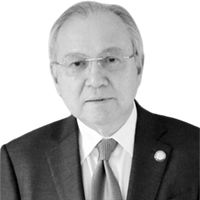
Ferdinand “Perry” Ferrer, president of the Philippine Chamber of Commerce and Industry (PCCI), says because of the logistics crunch, manufacturers are increasingly sourcing their materials locally.
Ferrer is chairman and CEO of EMS Group of Companies, engaged in the country’s largest export sector, semiconductors.
We asked him last week on “Storycon” on One News how businessmen were coping with the fuel crisis. One noteworthy response, he told us, was that businessmen were going local, sourcing supplies domestically where possible.
The Department of Trade and Industry should facilitate this shift to sustain it for the long term, by connecting PCCI members with reliable suppliers. The PCCI is composed mostly of micro, small and medium enterprises, reflecting the composition of the country’s business community, which is over 90 percent comprised of MSMEs.
* * *
One indelible lesson that must spring from this crisis is the importance of weaning our country from overreliance on imports.
OK, people have been talking about this for decades. But we seem to think importing is so much easier, so why bother? For a long time, “imported” was deemed superior to local in our country. Until three decades ago, even our national defense was “imported,” heavily dependent on the US security umbrella.
Societies that grasped early on the importance of developing self-reliance in as many areas as possible tend to have experienced war or other threats to their existence.
Even if importation may be easier and the imports more reliable in quality at affordable prices, these societies still develop their domestic capabilities to produce the items. And the government provides carrot-and-stick incentives to encourage the citizens to buy local.
South Korea, in the early stages of its industrialization that was fueled by its war with the North, encouraged its people to buy Korean – from cars to household appliances and food. Even if the products were inferior compared to the imports, the Koreans bought local. With the guaranteed demand, local production boomed. The Koreans invested heavily in research and development to improve quality, and in education to provide the skills needed for the various industries.
Like the Japanese at the start of their post-war industrialization, the Koreans mainly copied foreign technology and then began innovating and adapting the technology to their needs. Like early Japanese products, the Korean items were inferior in quality to the established Western brands. But like the Japanese, the Koreans rapidly became globally competitive in their products.
Today, many Japanese and Korean brands are global leaders. And so are Chinese products. “Made in China” used to be synonymous with cheap, tacky and low quality. But today, the China-made BYD electric and hybrid vehicles are market leaders even in the Philippines.
Incidentally, the Korean defense industry, among the world’s most advanced, and which put that country on the road to rapid industrialization, is one of the big winners in the Middle East conflict.
* * *
In our case, we import even zippers and studs for clothing. We are almost completely dependent on imports for our most basic food needs including salt and milk. We import rice heavily to stabilize supply and prices. We even import galunggong, no longer the poor Pinoy’s fish.
You can’t entirely blame entrepreneurs. Because of more efficient agricultural production in other countries, their exports to us come out cheaper. Cashew from Vietnam, for example, is cheaper than those produced domestically. Pandan rice from Thailand is cheaper than our local variety, and is often more aromatic.
Our cacao/chocolate industry has boomed in recent years. But probably because of economies of scale, they stick to artisanal production, and the prices can be steep compared to those of imported brands of similar quality.
Obviously, we can’t buy local when it comes to crude oil and refined petroleum products. But we can reduce our reliance on fossil fuels by aggressively developing renewable energy resources and use.
For example, we should be producing our own good quality solar panels to bring down prices to levels within the reach of ordinary households.
But there are also many products that are proudly made in the Philippines, and according to the PCCI’s Ferrer, the ongoing crisis is making manufacturers take notice.
What must be done is to ensure that buying local can be sustained beyond what the Marcos administration finally described yesterday as a “state of national energy emergency.” There can be a silver lining in this crisis.



- Latest
- Trending