Will anyone be jailed?

Politicians accused of receiving campaign contributions from public works contractors maintain that they have done nothing illegal.
Several of them have issued explanations similar to that of former Senate president Francis Escudero: the donations were made in a private capacity, and the declaration of the contributions in the candidate’s statement of contributions and expenditures reflected the belief that the donations were aboveboard.
Perhaps the candidates, who now face probes by the Commission on Elections (Comelec) and may be slapped with criminal cases for poll-related offenses, can be forgiven for believing that they did nothing wrong.
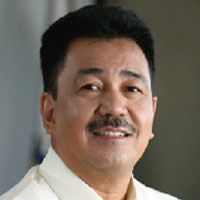
After all, as far as Comelec Chairman George Garcia can tell, no one has ever faced a complaint, much less gone to jail, for receiving campaign contributions from “natural and juridical persons” supplying goods or services to the government, or who have been awarded government franchises.
Politicians, among them Escudero, have said owners of contractor firms donated campaign funds in their personal or private capacity, being long-time friends or supporters of the candidates.
But Garcia has pointed out that the law prohibiting such contributions make no distinction between contractor companies and their owners and executives.
This belief of politicians regarding the nature of personal contributions could have been reinforced by the fact that no one has ever been indicted for it as an electoral offense, much less gone to prison for it.
Complaints for electoral violations are usually filed by rival candidates. I asked Garcia, a former election lawyer, why no one has ever filed such a complaint.
Maybe they were all doing it – “baka lahat sila guilty,” he told us, tongue in cheek, on One News’ “Storycon” last Monday. He did not take back or qualify his statement.
We have so many laws that have never been enforced, so this situation is hardly surprising.
In the ongoing landmark probe by the Comelec, how fast can a case be resolved, and what penalties await?
* * *
“Prohibited contributions” under Section 95 of the Omnibus Elections Code, Batas Pambansa 881, list campaign donations from “natural and juridical persons” who hold contracts or sub-contracts to supply the government with goods or services, or “to perform construction or other works, or who have been granted franchises, incentives, exemptions, allocations or similar privileges or concessions” from any government agency including government corporations.
The Marcos 1.0-era BP 881 makes no distinction between campaign donations of contractor firms and “private funds” contributed in a personal capacity by executives of the companies. No exemption is provided for the covered natural and juridical persons who contribute to the campaigns of their parents or children.
Also, the covered “goods and services” do not refer only to flood control projects.
If Section 95 would be strictly applied, the majority of elective officials could be found guilty.
Fortunately for a number of them, the statute of limitations for such offenses, according to Garcia, is only five years – the reason why the Comelec probe is giving priority to candidates in the 2022 general elections, although the probe has now expanded to the 2025 race.
There are two key concerns here: how long will it take before guilt is established, and more importantly, can punishment be carried out?
Garcia told Storycon that the Comelec can establish guilt in a matter of months, but ousting the violator from the elective post based on Comelec findings will be up to other agencies.
For ethical or administrative breaches, sanctions are imposed by the Department of the Interior and Local Government for local executives. For lawmakers, politics rather than laws or rules largely govern the actions of the ethics panels of the Senate and the House of Representatives.
In 2016, the Senate ignored an order from then ombudsman Conchita Carpio Morales to kick out Joel Villanueva and perpetually bar him from public office for misuse of his P10-million pork barrel in 2008 when he was a CIBAC party-list congressman. Villanueva still has pending graft cases.
Villanueva has again been implicated in the current flood control scandal, lampooned together with Senators Jinggoy Estrada and their former colleague Bong Revilla as the “Men of Steal.”
* * *
As tough as putting wealthy and influential thieves behind bars (the hampaslupa are tossed in jail simply for playing cara y cruz) is the enactment of campaign finance reforms.
BP 881 was passed way back in December 1985, when the elder Ferdinand Marcos was the president. Since then, additional election-related laws have been passed, such as those providing for poll automation and the bastardization of the party-list.
But to this day under Ferdinand Marcos Jr., there is still no law on campaign finance reforms, even with the Comelec itself pushing for the legislation. And even if proponents have tried to appeal to the self-interest of lawmakers, by arguing that the reforms are meant to make election campaigns much cheaper.
Considering the details emerging in the Comelec probe, which tend to confirm public perceptions about rotten election campaigns, such reforms could stunt wealth accumulation among political families.
Many corrupt deals and illegal wealth spring from election campaigns – one of the most efficient mega money laundering mechanisms in this country.
Now the Comelec is trying to shine the light into this dirty money black hole. Not all the violators can be covered; the Comelec will inevitably face accusations of being selective and politically motivated.
But change must start somewhere.
Garcia said the criminal aspects of the cases are up to the prosecution arms and the courts.
Maybe with a new ombudsman who knows the mandate of the office and is gung-ho about the anti-corruption campaign, the nation can look forward to seeing the big fish land behind bars. Sooner than later.



- Latest
- Trending