Joel Rocamora and the Philippine Left
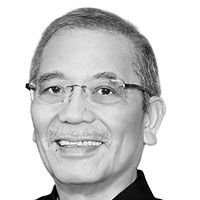
This column is about two books written by Joel Rocamora – “Impossible is Not So Easy: A Life in Politics” (Bughaw, 2019) and “Retrieving the Past: A Memoir” (Bughaw, 2024). Both are the stories of his life, especially his political life. At the same time, these are also the stories of the Philippine Left where Rocamora began as an active member of the National Democratic Front and later became a founding member of the Akbayan, the social democratic party which now counts Risa Hontiveros and Chel Diokno as its leaders. The author’s experience in civil society and governance with the National Anti Poverty Commission and the Center for Popular Democracy allows him to offer more than mere abstract theory.
“Impossible is Not So Easy: A Life in Politics” is divided into three parts. His reflections on former president Rodrigo Duterte’s populist governance; essays on the proposal for federalism in the country, questioning whether it truly represents meaningful reform or a mere rearrangement of old power structures; essays on Akbayan and the setbacks and advances of democratic movements.
Rocamora, a Cornell Ph.D. trained former academic turned activist is well-equipped for this dual role as critic and participant. His essays are concise, accessible and steeped in both personal experience and ideological intention.
The book’s intriguing title comes from what appears to be called a wry reflection and rallying cry: “…tilting against powerful political enemies, mobilizing people long mired in passivity… But hey, if it’s easy, it would be boring.”
This sentence acknowledges the spirit of Rocamora’s work, recognizing that the political struggle is far from easy, but a challenge that is always interesting and worth pursuing.
“Retrieving the Past: A Memoir” is a more compact book with just 103 pages, compared to the first book’s 294 pages. It is a personal narrative of his life spent in scholarship, activism and historical memory, resonant narrative of a life spent at the intersection of scholarship, activism and historical memory.
This memoir traces Rocamora’s journey from his humble beginnings in Larena, Siquijor, to his far-reaching activism during and beyond the era of martial law in the Philippines. It covers his academic contributions, his grassroots engagement for peace and democracy and his reflections on the COVID-19 pandemic and beyond.
Rocamora describes the memoir as “social history, using my life as illustration,” highlighting how an individual life can illuminate broader political struggles and societal shifts. The value of the memoir is seen as more than personal history as it is seen in the context of collective memory and complex historical currents.
A primary strength of “Retrieving the Past” lies in its capacity to humanize larger historical phenomena through a personal lens. Rocamora’s modest upbringing, migration and life under authoritarianism are not abstract case studies – they are lived experiences. He narrates the struggles of people who actively sought change during turbulent political periods.
The book also offers an intimate portrait of the aftermath of martial law. Rather than just recounting major events, Rocamora gives readers the emotional texture behind institutional upheavals – how authoritarianism still echoes in local communities and in memories passed down.
Another commendable quality is the memoir’s lyrical brevity. In just over a hundred pages, Rocamora travels decades but never sacrifices depth. Each memory, anecdote and reflection feels deliberate – there’s no fluff, but plenty of resonance.
Rocamora’s framing of his life as “social history” feels particularly significant. It reminds readers that personal stories are indispensable to historical understanding. By anchoring national and global phenomena in a life shaped by struggle, resilience and hope, Rocamora implicitly critiques the tendency to detach “history” from individuals. Instead, he emphasizes that real change always passes through real lives.
This dual focus – on the personal and the political – makes the memoir both moving and educating. It invites readers to consider how history is not only taught or archived, but remembered and carried forward by ordinary people.
His treatment of recent events such as the pandemic adds an important contemporary dimension. It roots the memoir in the present, reminding readers that the struggles of the past are still very much with us – and that memory continues to evolve alongside new challenges.
The book’s eight chapters also provide a glimpse of what’s in store for the reader, with the author’s wit and down to earth tone. The chapters are: Family as Foundation; At the Crossroads of Siquijor and the World; Exile; Crummy Crame: Mirror on Society; Activism: From Isabela to Utrecht; The Other Side; Pandemic and the Future; Epilogue.
“Retrieving the Past: A Memoir” offers an eloquent testament to the role of personal narrative in collective memory. Rocamora’s life – marked by activism, intellectual pursuit and a rooted sense of place – serves as a lens for understanding decades of Filipino history. The memoir has been described as modest in form, rich in meaning; brief in page-count, expansive in scope.
For readers interested in memoir also functioning as social history, or in stories grounded in Philippine activism, this is an engaging and worthwhile read. It reminds us that our personal histories are bridges to larger truths – and that remembering is itself an act of civic and moral importance. It presents the memoir in an inspiring and enlightening new light.
* * *
A reminder to all for Fridays: wear white and join the 6 p.m. noise barrage as we fight against corruption. This is gearing up to the Nov. 30 Trillion Peso March.






- Latest
- Trending