


EDITORIAL — Is disarmament an option?
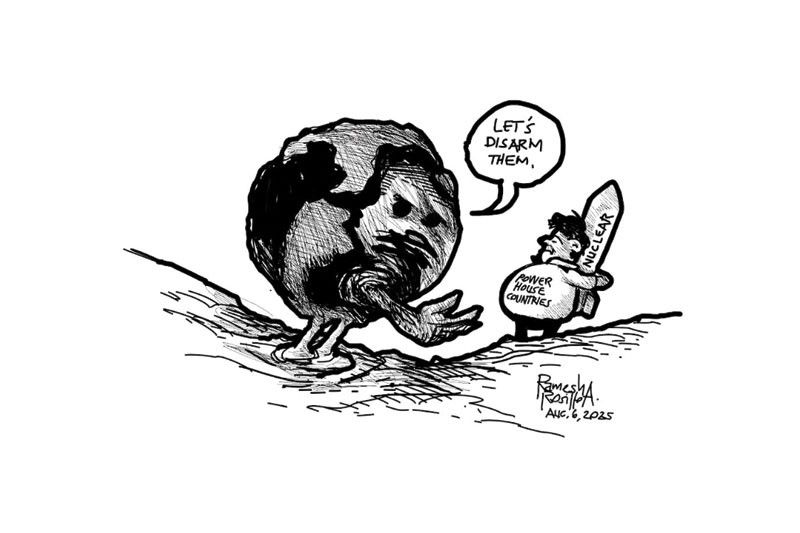
Today, 80 years ago, in the closing days of World War II, the world changed forever after being ushered into the Nuclear Age.
“Ushered” might be deceptive; the sound of an explosion and the sight of a huge mushroom cloud showed the world that things would never be the same again.
In August 6, 1945, the U.S. dropped a bomb in the Japanese city of Hiroshima. But it was no ordinary bomb, it was a nuclear weapon. The first ever used in history.
Hiroshima wouldn’t be the only city to be destroyed with a nuke. Nagasaki would follow three days later.
We understand the reasons why the U.S. resorted to using the nukes; the main reason being they wanted to shorten what they perceived would be a long-drawn war, to quickly force a surrender from Japanese who thought of surrender dishonorable and unthinkable.
In a flash, between 60,000 to 80,000 people were killed. In a few seconds an entire city was reduced to rubble. The lingering radiation would claim between 100,000 to 140,000 people later. Even those who survived the radiation suffered for generations to come.
Today it’s important to remember what happened in Hiroshima in light of what nuclear destruction can do to a city. Also in light of how many countries today have nuclear weapons, including those that really shouldn’t have them, or are working to have them.
Who should decide what countries can and cannot have nuclear weapons? Who is best to determine if a country only wants nuclear technology for electric power or to develop a weapon? Or just wants nuclear weapons to protect itself from other nations? Or wants it to be able to intimidate other nations? Or wants it to destroy other nations?
Today, only nine countries in the world have nukes. However, the combined nuclear stockpile of these countries can wipe out the population of the entire world many times over.
Is disarmament an option? Only if all the nuclear powers do it. But who is willing to make itself a target first?
One on hand we can say that nukes keep the peace, because mutually-assured destruction makes one country afraid of using its nukes on another since it might get a similar retaliation.
But on the other hand, having nukes always assures us that civilization is but a push of a button away from being blown back into the Stone Age.



- Latest





