How to assure enjoyment of the right to a clean, healthy and sustainable environment
On July 28, 2022, the UN General Assembly adopted, with 161 votes in favor and eight abstentions, a resolution declaring access to a clean, healthy and sustainable environment a universal human right. Less than a year earlier, a similar resolution was adopted by the UN Human Rights Council. Even before that, in 2012, the first Independent Expert on human rights and environment was appointed and, three years later, the mandate was upgraded to that of a Special Rapporteur on the right to clean, healthy and sustainable environment. The political recognition of this right is a crucial milestone that took over a decade to achieve. Slovenia, together with Morocco, the Maldives, Costa Rica and Switzerland, has been at the forefront of these efforts.
Since 2021, the UN system has also had a Special Rapporteur on human rights in the context of climate change, with the Philippines being part of the core group advancing this agenda. The two areas are closely interconnected. The negotiations under the UN Convention on Climate Change were the first to explicitly enshrine the right to a clean, healthy and sustainable environment in the unanimously adopted final documents. States and other stakeholders – from individuals to businesses – have a duty and responsibility to prevent activities that violate human rights and to ensure that fundamental human rights are respected and integrated into all actions.
The essence of the right to a clean, healthy and sustainable environment is human dignity. Every person has the right to clean air and clean drinking water, as well as to health, education, housing and other fundamental rights. Only in a clean, healthy and sustainable environment can other human rights be fully realized. This right also encompasses access to information, freedom of expression and protection of human rights defenders.
Today, more than 160 countries have incorporated the right to a clean environment into their national legislation. In Slovenia, it has been enshrined in our Constitution since 1974. Therefore, we already have national legal frameworks and global political will. However, a solid international legal framework is still evolving. International courts increasingly rely on case law. Notably, the International Tribunal for the Law of the Sea has issued a groundbreaking opinion stating that states bear responsibility for marine pollution resulting from climate change. The International Court of Justice is engaged in similar deliberations and is preparing a legally non-binding opinion on the responsibility of states in relation to climate change.
Slovenia is increasingly affected by climate change-related natural disasters. Two years ago, we experienced the worst floods in our history, which resulted in damage amounting to over 10 percent of our GDP. Despite this natural disaster, the Slovenian Government was among the first to pledge contributions to the newly established Loss and Damage Fund. The Philippines is significantly more affected by climate change, making it entirely fitting that the Loss and Damage fund has its headquarters in Manila.
The triple planetary crisis of climate change, biodiversity loss and pollution poses a serious threat to our civilization, and to the full realization of the right to a clean, healthy and sustainable environment. Addressing these challenges in cooperation with partners is a Slovenian foreign policy priority. We pursue this through both multilateral engagement and bilateral cooperation. Environmental and climate-related issues are thematic priorities in Slovenia’s development assistance programs. Equally important is awareness raising. On Slovenia’s initiative, the UN General Assembly declared May 20 as World Bee Day, sending an important message about the need to protect pollinators to preserve biodiversity and enhance food security. As a member of the UN Security Council, Slovenia places climate security at the forefront of our thematic engagement.
In the first six months of my mandate, I realized that climate change-related issues can become a priority for bilateral cooperation. As Ambassador, I aim to promote closer collaboration between Slovenia and the Philippines in environmental business, science and technology. Contacts have already been established in the field of satellite technologies for Earth observation to improve river management. Recently, a small business delegation from Slovenia, specializing in advanced water technologies based on AI and nano technology, visited the Philippines. Their technologies and products can reduce the use of pesticides and fertilizers while simultaneously increasing agricultural yields. There is also potential for closer cooperation in the defense sector, particularly in efforts towards decarbonization and energy efficiency.
The right to a clean, healthy and sustainable environment, recognized by the UN three years ago, can and must be advanced, both through advocacy and through concrete measures. The Embassy of Slovenia in Manila will continue to promote this right in the framework of the European Union and through bilateral cooperation with the Government of the Philippines and with the private and non-governmental sectors.
* * *
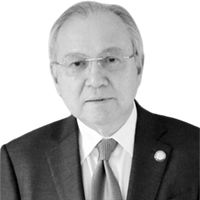
Smiljana Knez is the Ambassador of the Republic of Slovenia to the Philippines.








- Latest
- Trending