A Memoir of Walden Bello
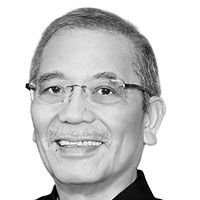
Walden Bello’s Global?Battlefields: My Close Encounters with Dictatorship, Capital, Empire and Love (Bughaw, Ateneo University Press, 2025) is a readable blend of personal memoir, political analysis and global activism. It covers six decades – from his student activism years at Princeton to Latin America, his resistance to the Marcos dictatorship in the Philippines, the battles against neoliberal global institutions and his tenure in Congress. There are recurring themes of resistance, critique, love, loss and moral clarity which stand out. Interwoven are reflections on strategy, ethics and love – including a moving tribute to his late wife, Ko Thongsila.
The early chapters narrate Bello’s ideological formation. Born into a privileged Filipino family, he studied at Princeton and was initially drawn to abstract academic pursuits. His political awakening came through contact with the turbulent politics of Latin America during the 1970s, especially the socialist experiment and subsequent military coup in Chile.
There are gripping episodes that make it read like a gripping thriller, like sneaking into the World Bank archives for damning documents linking the World Bank to the Marcos regime (“scholarly subversion,” it is termed), chain-sit protests in San Francisco, street confrontations in Santiago.
Bello writes about his clandestine involvement in the anti-Marcos movement. His decision to operate underground marks a point of no return, one where personal safety is willingly sacrificed for political conviction.
The chapters on EDSA and the derailed 1986 People Power Revolution argue that while the Marcos dictatorship was overthrown, the revolution was co-opted by liberal elites who reinstated old structures under new names. These chapters are honest, self-critical, poignant. Bello analyzes how popular uprisings often stall when they fail to move beyond elite negotiations – a theme relevant to post-revolutionary societies globally.
The disillusionment and the disappointment do not lead to cynicism, but as a pivot toward broader global engagement.
One reads about his reluctant entry into electoral politics. Elected as a member of the Philippine House of Representatives, he used his platform to advance progressive causes: reproductive rights, workers’ protections and critiques of militarism.
Here was a radical trying to legislate in a hostile, often corrupt system. There is the tension between compromise and principle. Bello eventually chooses resignation over political expediency, walking away from office rather than endorsing policies he sees as morally indefensible.
The author turns personal in the final chapters. Bello speaks candidly about his relationship with his late wife, Ko Thongsila, his confrontation with mortality and the emotional toll of decades of activism. Here is a man shaped by ideology, grief, intimacy.
The scope and coverage of the book has been described as linked by recurring core themes.
Struggle as Continuum: The idea that struggle is ongoing, imperfect and cumulative. Bello frequently returns to the phrase “a luta continua” – a Portuguese slogan meaning “the struggle continues.”
Activism Meets Scholarship: Bello embodies the activist-intellectual. His work is grounded in rigorous analysis but aimed at real-world change.
Ethical Engagement: From breaking into institutions to walking away from power, Bello’s life underscores a commitment to ethical decision-making, even when costly.
Love and Loss: Personal love is not separate from politics – it is its heartbeat. The death of his partner shapes his later reflections, adding depth and vulnerability to his political commitments.
Hope Through Adaptation: Despite numerous setbacks in his political and personal struggles, Bello remains committed to evolving his strategy and worldview. His concept of “deglobalization” is one such adaptation, proposing alternatives rooted in local agency. He contrasts capitalist centralization with democratic, localized economies.
As an activist and scholar, Bello exemplifies Marx’s dictum: “Philosophers interpret the world; the point is to change it.” He never stops questioning and demands the left remain rooted in both rigorous analysis and direct action.
“We, the revolutionary generation, are the generation that crashed,” is Bello’s candid reflection on the failures and disillusionments of his activist cohort. But there is no despairing. In an age of mounting global crises, Bello offers a model of persistent hope. He urges progressive movements to remain analytical, morally grounded and adaptable – qualities essential for sustaining struggle amid polycrisis. (A polycrisis is defined as referring to a situation where multiple, interconnected crises occur simultaneously or in close succession, and their combined effects are more severe than the sum of their individual impacts. One for which no single solution will suffice.)
This is a significant memoir documenting the life and times of Walden Bello, written with deep insights, thoughtful remembrances and well-founded scholarship. To be expected from one who is a retired professor of sociology at the University of the Philippines and the State University of New York at Binghamton. He is cofounder of Focus on the Global South, the leading progressive think tank in Southeast Asia, author of 26 books, including “Development Debacle: The World Bank in the Philippines” (1982), “Deglobalization: Ideas for a New World Economy” (2006), “The Food Wars” (2009) and “Counterrevolution: The Global Rise of the Far Right” (2009). He was a recipient of the Right Livelihood Award, also known as the Alternative Nobel Prize. He was also named Most Distinguished Human Rights Defender by Amnesty International Philippines.
This book is a recommended read to inspire activists seeking real-world lessons from global movements, scholars interested in leftist strategy and moral philosophy and readers looking for quality Philippine books.
* * *
Email: [email protected]





- Latest
- Trending