A fake Congress

You can always rely on my friend activist Ado Paglinawan to come up with funny terms that at the same time are the truest way to describe what is happening in the political scene today.
My favorite in this season is “a fake congress.†It will meet soon to pass bills and discuss issues whose members have not been elected. Let me qualify that. Until the Smartmatic PCOS and the Comelec have satisfactorily answered complaints now lodged with the Supreme Court and the Ombudsman, individuals sitting in Congress, both from the House and the Senate, were not elected.
Machines were pre-programmed to achieve desired results of 60-30-10. Some say it really is 12-0 if you count that the other 40 percent is a political accommodation between the Liberal and UNA. As they say in mystery crimes, the way to find out who the killer is to look for the motive.
What is the crime here? The crime here was to kill the people’s enfranchisement. Officials have not been elected by voters but by machines. So Ado is right. A fake Congress can only pass fake laws, collect pork barrel and get away with shenanigans while Filipinos struggle and starve.
Ergo, the people should not be expected to follow fake laws made by a fake congress.
* * *
As expected President Aquino has a ready answer to those promoting constitutional reform: No. But if he has a ready answer, he should not make fun of those who are pushing for it. He must remember that this is not a monarchy and he is not a king.
“My stand has been public for the longest time,†Aquino said. “I don’t think economic restrictions are a necessary detriment to getting foreign investors in this country,†the President replied in the face of a new push for constitutional reform by Speaker Feliciano Belmonte Jr., a close ally and Liberal Party stalwart.
With that answer, the question is can he just say no even if there is growing public support for it? Businessmen now accept that without Charter change we cannot expect more direct foreign investments. What is the redress against an executive who works against the common interest of the many?
More direct foreign investments are not just about more money. It is also about introducing modern technology and information into our industries. That is one of the reasons we are being left by other countries in the region. We just do not have the expertise necessary to bring us up-to-date for more efficient industries.
Only then can we hope to generate more jobs and more importantly train our local labor to take up available jobs. We may have the jobs but if we do not have qualified people to take up the jobs the unemployment grows.
It is shocking to hear the incoming Senate President Frank Drilon say, “at this time, a debate on Charter change will divert our attention,“ he said. “There were more pressing concerns to provide jobs to our people, improve our economy and expand our social services.†Exactly. I wonder how he thinks all this will be accomplished.
In any case, have no fear that investments will come pouring in because of Charter change. There are other reasons why foreign investors are not eager to do business in this country.
We have a capricious leadership and unpredictable policies. Why should foreign investments come to a country whose leaders are so mixed up they say that we need foreign investments at the same time that they refuse to change a Constitution that is hostile to it. Try to figure that out.
* * *
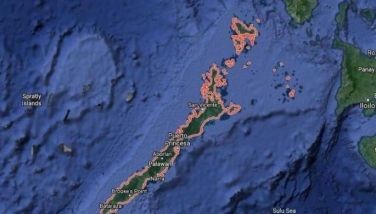
I was reminded by friends that there was a time when the Philippines and China agreed about joint development. That was the policy of Philippine administrations since 1986. It is only lately that circumstances have deteriorated making it seem such an impossible task.
We should retrace those footsteps when both governments were trying to find solutions. Indeed, there was a joint statement made in 1986 between Mr. Deng Xiaoping and Vice-President Salvador Laurel. Even then the Chinese leader spoke about putting the contentious issue of ownership of the South China Sea in the backburner.
His exact words to Laurel were “let us not let the issue of the South China Sea hinder the development of our relations†to which Vice President Laurel totally agreed.
The Chinese have been consistent about joint development. In November 1996, when Chinese president Jiang Zemin visited the Philippines he said the same thing to then President Fidel Ramos.
Ramos said “the two sides could set aside the disputes and work together to plan, explore and exploit the resources in this area.â€
Like previous Philippine leaders the policy of the government was to cooperate with the Chinese side to have “an arrangement beneficial to the peoples of both countries.â€
President Jiang said that was also the position of the Chinese government. They would go for peaceful consultations, put aside the disputes and go for joint development.
When Chinese President Hu Jintao, Chairman of National People’s Congress met with Philippine President Arroyo during President Hu’s state visit in 2005, both promised to pursue the policy for joint development. With the support of the governments of China and the Philippines, the petroleum companies of both countries reached a Joint Marine Seismic Undertaking Agreement. It was a historical breakthrough and regarded as an important step for the implementation of the DOC.
* * *
Meanwhile former Ambassador Alberto Encomienda who has made the study of the management of the sea his field of expertise, wrote this column that the first doable event in cooperative regional interaction would be fisheries.
He suggested that among the countries that could work together for cooperation would be China and Vietnam (both countries have signed a fisheries agreement recently). “The Philippines, Laos, Cambodia and Taiwan would be natural partners in such an effort because these countries border the South China Sea. “Taiwan inclusion will not violate the one-China policy as Taiwan is already a member in a number of regional fisheries agreements where China is also a member.
China has a fisheries regime in the South China Sea that can form a basis for development of a regional fisheries arrangement.





- Latest
- Trending