^

Opinion

Spare JPEPA from politics
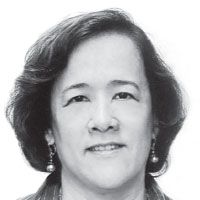
COMMONSENSE - Marichu A. Villanueva1 -

No matter how I try to look at the arguments forwarded by  opposing Senate views regarding the ratification of the Japan-Philippines Economic Partnership Agreement (JPEPA), especially on the provision on the deploymen of Filipino nurses and caregivers to Japan, their hard line views were apparently based on outright fallacies.

Some groups identified with the Philippine Nurses Association have gone to the extent of peddling obvious lies to nursing students, whom they have bussed to the Senate to provide warm bodies for the anti-JPEPA rallies during the ongoing Senate committee hearings on this bilateral pact. The nursing students were perhaps even coerced to attend the anti-JPEPA rallies at the Senate or else they get failing grades. This group has also raised the bogey that Japan does not need the services of Filipino nurses. This could be the position of the Japan Nurses Association but certainly not of the Japanese government.

The Japanese government officially acknowledges an acute shortage of nurses in their country and is feverishly taking up measures to handle its rapidly graying population. And the only recourse open for them is to hire Filipino nurses who are known throughout the world as competent and compassionate workers. No less than the Japan External Trade Organization (JETRO) director of research, Hiroshi Yoneyama admitted this dire need for nurses and caregivers that could otherwise come from a fellow Asian country like the Philippines.

Citing the latest figures from their Ministry of Health, Labor and Welfare, Yonehama says Japan requires an additional 400,000 to 600,000 caregivers by the year 2014 — a scant seven years hence. “Moreover, the steady growth trend of the Japanese economy entails the increase of job offers from industrial sectors. Therefore, most care facilities for the aged are facing the difficulty of hiring new employees,” says Yoneyama. The JETRO official revealed the Japanese government is planning to raise the salary of caregivers to reduce the high turnover ratio in those facilities.

However, he pointed out, “even if the working conditions will be improved, there might still be a shortage of caregivers to meet such a huge demand” in Japan. This alone, he stressed, “will serve as an opportunity for Filipino nurses and caregivers to be tapped in the Japanese market of its aging population.” Yoneyama highlighted the fact that JPEPA is the first bilateral economic partnership agreement that includes a provision of opening its labor market to foreign nurses and caregivers. “This is a symbolic and historic event between the two countries,” he says. So, I can’t see how the nascent treaty’s provision on nurses and caregivers can be any clearer than that.

 The PNA officials claimed the JPEPA will degrade Filipino nurses and caregivers and treat them as “commodities.” Duh? Could the PNA’s president, Dr. Leah Paquiz, run that for me one more time? The JPEPA is opening the door for Filipino nurses to work in Japan. They are being offered the same salaries and protection, as well as the same benefits enjoyed by Japanese nurses and other health workers.

As of May this year professional health workers, including nurses, get an average monthly salary of ¥306,700 or roughly $3,121. This is comparable to the starting salary of a Filipino nurse hired in the US after passing the Test of English as a Foreign Language (TOFEL) and the National Council Licensure Examinations (NCLEX) in the United States. This salary is $300 more than the starting salary in the United Kingdom and is definitely more than those offered in Middle Eastern countries.

I gathered there is no other country in the world except Japan that gives $400 allowance with free board and lodging to Filipino nurses. This will be given to them even if they are not actually doing nursing work yet but as full-time students in Nihongo, a requirement under the JPEPA before they can practice their profession in Japan. This means that while learning Nihongo for six months (which can be extended for another six months), our nurses can already send their allowance to their relatives in the Philippines. And once they start working, they will get the salary as stipulated in their contracts.

“Why should our nurses be required to learn Nihongo?” the anti-JPEPA groups ask. Commonsense dictates that foreign nurses like Filipinos will be working with Japanese doctors and surgeons, who will of course talk with them in their Japanese tongue and this would certainly be crucial in life-and-death situations at the hospital.

If these nurses who refuse to go through with this requirement, then by all means don’t. Nobody’s forcing them the way they are being coerced to demonstrate against JPEPA on pain of failing grades. They can always try their luck elsewhere. But this does not give the PNA the high moral grounds when they are in fact misleading the students with these falsehoods on JPEPA just to push their own agenda. Leave the politics to our politicians! We have an overload of that already!

Big business groups in the Philippines signed yesterday a joint manifesto urging the Senate to ratify the JPEPA. Sergio Ortiz-Luis, president of the Employers Confederation of the Philippines (ECOP) and Philippine Exporters Confederation, said the manifesto shows that JPEPA enjoys their support as the real players in the Philippine economy.

The business groups submitted their signed resolution to Senator Miriam Santiago, head of the Senate foreign relations committee that has been conducting the public hearings on the proposed JPEPA ratification. Through the joint manifesto, the groups cited they have weighed the pros and cons of the agreement with Japan, and are convinced that its ratification is in the best interest of the country.

“Clearly, the gains that the Philippines stands to get from the economic partnership far outweigh feared losses foisted by its critics,” the manifesto read. These industries alone, they estimated, can get additional investment of up to $444 million and generate some 150,000 new jobs for Filipinos. I don’t know where these figures come from but our Senators need to consider facts, not lies, to guide them whether or not to ratify JPEPA.

*  *  *

Write to [email protected]

COUNTRY

JAPAN

JPEPA

NIHONGO

NURSES

PLACE

REGION

  • Latest
  • Trending
Latest
Latest
abtest
Recommended
Are you sure you want to log out?
X
Login

Philstar.com is one of the most vibrant, opinionated, discerning communities of readers on cyberspace. With your meaningful insights, help shape the stories that can shape the country. Sign up now!

Get Updated:

Signup for the News Round now

FORGOT PASSWORD?
SIGN IN
or sign in with