Journalism and communication: The signal that cuts through in the age of noise

The first lesson I ever learned as a young reporter was this: a story doesn’t end when the broadcast fades to black; it begins with the conversations it sparks afterward. That truth feels even more urgent today, when news and commentary can ripple across millions of screens in seconds, morphing and multiplying in ways no newsroom can fully control.
We saw this clearly in the online storm a few months back involving Mayor Vico Sotto, Korina Sanchez, and Julius Babao. What began as an offhand moment instantly snowballed into a trending topic dissected by academics, practitioners, and everyday netizens alike. It was a reminder of how fragile context can be, and how quickly narratives can harden in the court of public opinion.
For centuries, the media has been called the Fourth Estate – the institution tasked to check power, uphold truth, and serve the public. But in today’s fast-changing environment, that responsibility has grown heavier and far more complex. Technology has opened uncharted territories in the way we communicate. It has empowered citizens, democratized voices, and challenged gatekeepers. But it has also opened a Pandora’s box, forcing us to ask hard questions: What is truth? What is fairness? Where do we draw the line between influence and manipulation? How do we uphold accountability in a space where everyone has a microphone?
These are questions I now grapple with not only as a journalist but also as a member of CHED’s Technical Panel for Broadcasting, Communication, and Journalism (TPBCJ). Our task is to develop roadmaps, policies, and standards for higher education programs in communication.
The challenges facing the next generation of communicators
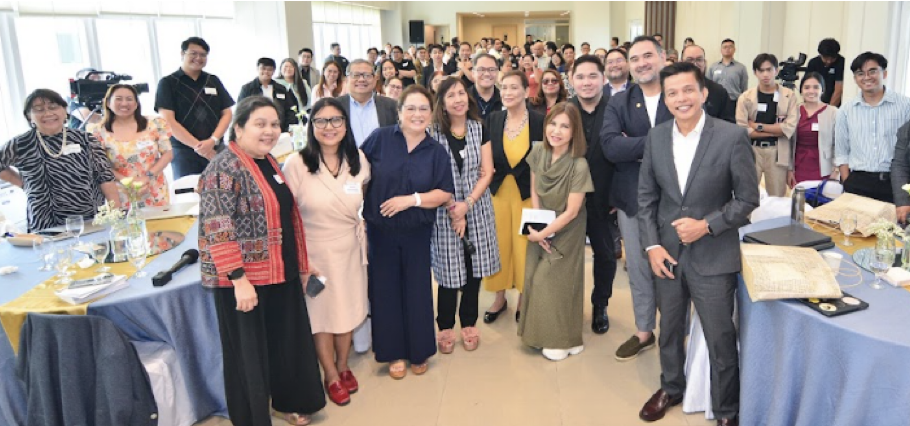
It may sound bureaucratic, but the work is crucial: aligning what we teach in classrooms with industry realities and technological shifts, while safeguarding timeless values like integrity, fairness and truth.
The challenge is daunting, and it cannot be done by one sector alone. Industry, academia, government and practitioners must work together.
Take for example the increasing demand for communication courses nationwide. In my visits to state universities and colleges -- from Ifugao State University to Central Luzon State University to General Santos in Mindanao – I’ve seen how eager students and administrators are to strengthen their communication programs.
The interest is heartening, driven in part by the visibility of social media. But this enthusiasm raises its own questions: Do we have enough qualified educators to guide them? Are we providing the training and equipment they need to thrive in a world of AI, data-driven newsrooms, and multiplatform storytelling?
For many schools, resources are scarce. Trainings are expensive. Not every aspiring journalist or communicator will have access to the facilities of a giant network like ABS-CBN, TV5 or GMA. This is where professional associations, industry partners, and summits like this come in. we can pool resources, design masterclasses, and co-create curricula so that no student is left behind.
Mastering new skills, keeping old principles

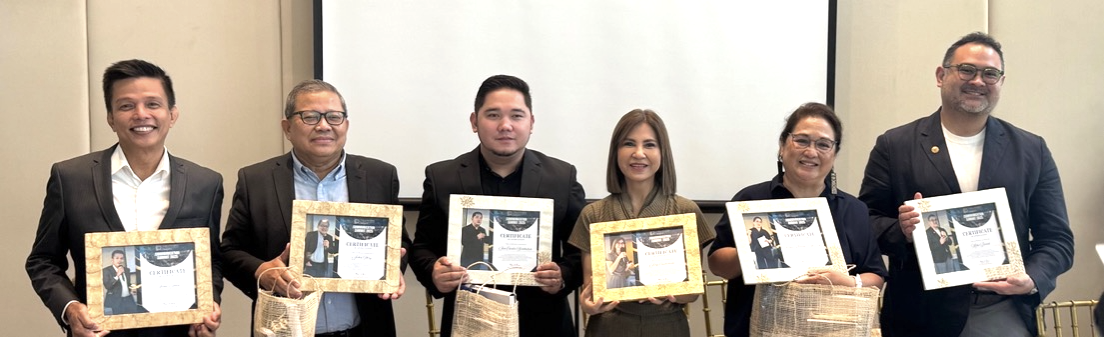
At the same time, we cannot ignore the “sunrise industries” reshaping our profession. OTT streaming platforms, eSports, content creation, immersive media like AR/VR, and expanding digital infrastructure. All of these are creating new opportunities, new audiences, and new challenges. They demand graduates who are not just versatile storytellers but also technically skilled, ethically grounded, and critically minded.
Because at the end of the day, our greatest asset is not speed, nor reach, nor even creativity. It is trust. And trust is built on credibility.
I always tell my students and mentees: it is no longer enough to be a good writer or a confident speaker. I talked about blogging/vlogging vs. journalism in our columns before, and here’s a small gist of it: today’s communicators must master research, multimedia production, analytics, and engagement.
They must know how to work across platforms – TV, radio, print, digital – seamlessly. But beyond all the technical skills, journalists are trusted to carry an ethical compass. Because without values, skills can be weaponized.
We’ve already seen how misinformation can easily erode public trust, deepen divides, and even threaten democracy itself. This is why collaboration between academia and industry is non-negotiable.

Imagine students doing not just 300 hours of internship but meaningful, integrated fieldwork. Imagine faculty and practitioners co-teaching, or fact-checking hubs sprouting in partnership with universities. Imagine media literacy programs embedded in communities so our KasamBuhays learn how to spot fake news before it spreads.
Shaping the future of communications
That is the kind of ecosystem we need. One where communication is not just about broadcasting information, but about building communities and empowering citizens.
So yes, communication trends are changing rapidly. Yes, the skills required are evolving faster than universities can sometimes keep up with. And yes, industries are being disrupted left and right. But in the midst of all this, one truth remains constant: communication is about service. It is about using our platforms, whether large or small, not just for visibility, but for meaning, connection, and impact.
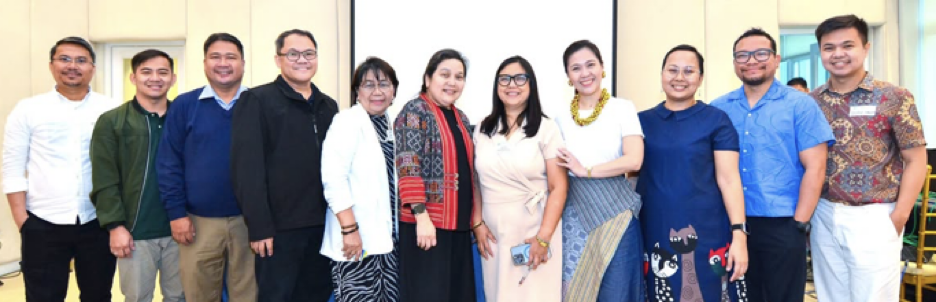
As I ended my remarks at the Summit, I left my colleagues with a challenge, and I leave it here again:
In this age of noise, let us be the signal. In this age of confusion, let us be the compass. And in this age of division, let us be the bridge.
Because if we, as communicators, educators, and practitioners, can lead with courage, integrity, and innovation, then we won’t just adapt to the future. We will shape it.
---
Follow our social media accounts @ JingCastaneda on Instagram, Facebook, YouTube, Tiktok and Twitter/X. Share your stories or suggest topics at [email protected].


- Latest