


Post-mortem exam of Marcos' SONA 2025: Why dearth of security issues?
On July 28, 2025, President Ferdinand Marcos Jr. delivered his fourth State of the Nation’s Address (SONA). The delivery of his recent SONA happened in the immediate aftermath of the May 12, 2025, mid-term election, which showed many opposition candidates to the Philippine Senate winning decisively against the administration’s slates.
Stung by the setback during the mid-term election, he delivered his speech in Filipino and intentionally avoided using economic, military and diplomatic jargon.
He also openly admitted growing public dissatisfaction over the runaway inflation, the deteriorating state of Philippine education, chronic power outages all over the country, slow construction of significant infrastructure projects, and the intensification of the political rivalry between the two most powerful political clans in Philippine politics, the Marcoses and the Dutertes.
His 2025 SONA took a populist spin as he delivered his speech in the native tongue and focused on familiar and popular bread-and-butter issues that appeal to ordinary Filipinos. He highlighted positive economic gains, such as decreased inflation rates, increased job opportunities for ordinary Filipinos and boosted investors’ confidence in the Philippine economy.
At the same time, he admitted that these rosy gains hardly matter to most Filipinos who are still struggling to keep ends meet. He also promised to generate more teaching positions, improve educational resources and decrease the workload of ordinary public-school teachers.
He promised that in the remaining years of his administration, priority would be given to the education sector through the introduction of the Academic Recovery and Accessible Learning (ARAL) Program, the allocation of billions of pesos to the establishment of 300 Barangay Child Development Centers all over the country.
He also announced that the P20 per kilo rice program is now accomplished by opening KADIWA stores and centers nationwide in several government locations.
In his recent SONA, President Marcos omitted any reference to his controversial decision to send former president Rodrigo Duterte to face trial for his alleged crimes against humanity at the International Criminal Court (ICC) in The Hague, the Netherlands and the impending impeachment case against his vice president, Sara Duterte.
He also gave scant references to geopolitical and national security issues, such as the increasing tension between China and the Philippines at the West Philippine Sea and the South China Sea, the growing security cooperation between the Philippines, the US, Japan and Australia, and his administration’s formulation of the Republic’s first grand strategy since it became independent in 1946, the Comprehensive Archipelagic Defense Concept (CADC).
What is the CADC?
Currently, the Philippines is confronted by two interrelated geopolitical threats emanating from China’s expansion into the first island chain, in the South China Sea and over Taiwan.
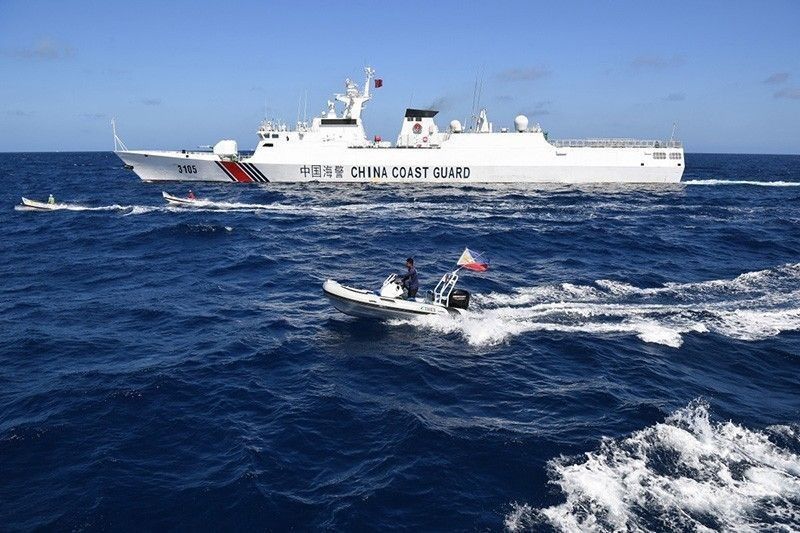
In the South China Sea, China’s Integrated Maritime Campaign, which involves deploying the People’s Liberation Army’s Navy (PLAN), the Chinese Coast Guard (CCG) and Maritime Militia to swarm, coerce and push the Philippine Navy (PN), the Philippine Coast Guard (PCG) and ordinary Filipino fishermen out of the West Philippines/South China Sea.
In Taiwan, Beijing is confronting Manila with its anticipated military conventional invasion of the island republic. If China succeeds in militarily annexing Taiwan, the Philippine archipelago will be surrounded by Chinese naval power from three flanks: the West Philippine Sea/South China Sea, the Luzon Straits and the Western Pacific.
The Philippines, under the Marcos Administration, faces this dire security environment. In January 2024, Secretary of National Defense Gilberto Teodoro announced the Philippines’ grand strategy called the “Comprehensive Archipelagic Defense Concept (CADC).”
Secretary Teodoro declared: “CADC will allow the Philippines to address its ongoing maritime security challenges and enable the AFP to address contemporary threats to Philippine territorial integrity and sovereign rights.”
He added: “…the CADC will not be a land-centric defensive concept; we must focus on deterrence to include areas in the EEZ. So that is a major change from internal security to territorial defense for the Armed Forces of the Philippines.”
This CADC stems from the Philippine military’s deep-seated assumption that the Philippines should shore up its strategic capabilities in addressing China’s maritime expansion in the South China Sea.
The Philippine military must develop and enhance its maritime domain awareness, connectivity, intelligence capabilities (C41STAR), and area denial and deterrence capabilities in marine and aerial domains.
Specifically, the CADC provides the following measures: a) transforming the country’s security paradigm; b) strengthening the AFP’s overall military capabilities; and c) leveraging its alliance with its ally, the US and like-minded security partners.
All these efforts aimed to enable the Philippines to secure its sea lanes of communication and maritime territories, including the country’s EEZ.
The CADC seeks to allow the AFP to project its capabilities into [maritime] areas of the Philippines that must be protected and preserved.
Its long-term goal is to ensure that the Filipino nation and all generations of Filipinos will freely reap and enjoy the bounties of the country’s natural resources rightfully within the Philippines (maritime) domain.
Ensuring the national survival
The Marcos administration's adoption of the CADC as the country’s first grand strategy directs the AFP to move away from the earlier defense concept of securing the Philippines’ long coastal areas.
This entailed the Philippine military anticipating a potential enemy coming near the country’s shoreline before mounting any combat operation against the incoming threat.
Instead, the AFP is moving toward a strategic new paradigm grounded on the need to bolster its anti-access and area denial capabilities, which are designed to prevent other militaries from operating or crossing the vast stretches of the Philippines’ enormous archipelagic territory.
Secretary Teodoro’s announcement of the CADC as the country’s first grand strategy—and the AFP’s decision to reconfigure Horizon Three of its modernization program around archipelagic defense—are the clearest signs yet of a more defiant and robust Philippine defense policy.
One that is focused on ensuring the nation’s survival and prosperity in a shifting and dangerous Indo-Pacific region.
--
Dr. Renato De Castro is a trustee, convenor and non-resident fellow of think tank Stratbase ADR Institute. He is also a distinguished full professor at the Department of International Studies at De La Salle University-Manila.



- Latest


