Infrastructure expenses decline anew in April
Amid weak DPWH spending
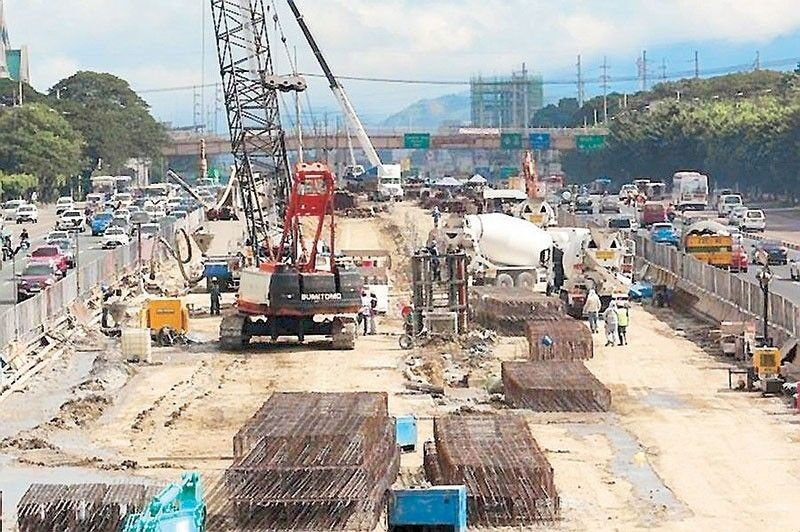
MANILA, Philippines — Government infrastructure spending plunged again in April, falling 51.7 percent year-on-year, as the Department of Public Works and Highways (DPWH) continues to face delayed budget execution, unfinished projects and stringent payment validations.
Data from the Department of Budget and Management (DBM) showed that disbursements for infrastructure and other capital outlays plummeted to P41.5 billion from P85.8 billion a year earlier.
The decline marked the fourth consecutive month of contraction, extending a slump that has hounded the Marcos administration since a flood-control corruption scandal erupted in the second half of 2025.
“The contraction was attributed to the weak spending performance of the DPWH as the implementation of its current year’s budget and completion of prior years’ projects are still ongoing, while the processing of payment claims undergoes stringent validation procedures,” it said.
The DBM added that P13.8 billion worth of outstanding checks recorded by the public works agency remained uncashed as of end-April, with suppliers and contractors yet to present them to banks for payment.
Despite this, spending for defense modernization projects and foreign assisted railways of the Department of Transportation helped boost overall infrastructure spending in April.
These railway projects include the North-South Commuter Railway Project, South Commuter Railway Project, Malolos-Clark Railway Project and Metro Manila Subway Project.
Meanwhile, cumulative infrastructure disbursements from January to April also dropped by 45.6 percent to P189.3 billion from P347.6 billion a year earlier.
This comes as progress billings remained thin as most projects were being completed, while the turnaround time for processing of payments was extended due to review procedures.
In the coming quarters, the DBM noted that upcoming allotment releases for DPWH projects should support recovery.
“Once contracts for various projects are awarded and subject to applicable procurement rules and regulations, contractors can usually request for mobilization fees or costs to jumpstart construction activities, such as the transport of equipment and setting up of machinery, among others, in relation to civil works,” it said.
Economic managers earlier lowered their projected infrastructure disbursements to P1.3 trillion or 4.3 percent of gross domestic product in 2026.
Meanwhile, overall national government disbursements reached nearly P2 trillion in the first four months of 2026, up by 5.1 percent from P1.9 trillion last year, DBM data showed.
The increase was fueled by larger National Tax Allotment shares, the Annual Block Grant to the Bangsamoro Autonomous Region and releases of local government units’ special shares in national taxes, such as tobacco excise and value-added tax proceeds, as well as allocations under the Local Government Support Fund.
Budgetary support to state run firms more than doubled and credited largely due to the government’s return of P60 billion in excess funds to the Philippine Health Insurance Corp., which lifted overall subsidy levels.


- Latest
- Trending