


A leadership lesson behind the fish and the crocodile

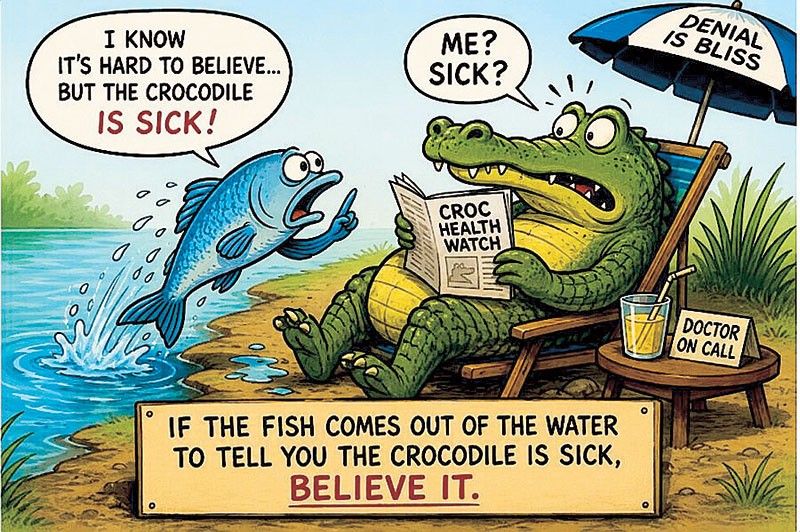
There’s an African proverb that says: “If the fish comes out of the water to tell you the crocodile is sick, believe it.” Instead of asking whether the story is believable, ask why the proverb has survived for generations. The fish leaves the safety of a river, not for a sightseeing adventure, but to deliver an urgent message.
At first glance, that sounds like fake news from the Animal Kingdom. After all, a fish doesn’t normally hold press conferences or issue medical bulletins.
The crocodile, the most feared predator in the river is sick. If you hear that, would you dismiss the fish because “it’s only a fish?” Many managers make the same mistake. Their workers hear strange noises from a machine.
They notice agitated customers against a slow process. They observe shortcuts that compromise health, quality and safety. They could sense employee morale deteriorating long before the next survey reveals the same problem.
And yet, many executives wait until a crisis reaches the executive board room. At times, when an employee reports an occasional product defect, management would reply: “It’s only a small percentage.”
When a technician warns that a piece of equipment is about to fail, his manager says: “Let’s wait until next month’s regular maintenance.” Then, several months later, quality deteriorates and customers walk away, the CEO would ask: “Why didn’t you tell me earlier?”
Ironically, he doesn’t realize the warnings were already given but simply died somewhere along the chain of command.
That’s the classic case of “shooting the messenger.”
Blaming the person who delivers bad news instead of fixing the actual problem is like ignoring a weather app because it predicted rain.
As expected, ignoring the bad news rarely improves the situation.
Toyota didn’t become a global benchmark for excellence by hiring executives with crystal balls. It succeeded because it built a system that encourages people closest to the work to proactively identify and report problems early instead of hiding them.
They created a dynamic work environment where people feel safe to reveal the problems they encounter. More importantly, Toyota’s managers don’t blame people. So, how do you ensure that management hears the right message? Here are the basic things to understand:
1. Recognize the workers’ proximity to the issues. Frontline employees work and live in the “river” every day. They’re the first to see and understand actual problems long before line supervisors can discover them.
2. Value the message, not the rank. Do not dismiss an urgent warning just because of an employee’s lower status or position. Consider the gravity of why an employee is stepping out of their comfort zone to bring a critical issue to your attention.
3. Stop ignoring early warning signs. When an employee reports an occasional product defect, do not brush it off by claiming “It’s only a small percentage.” Take immediate action. Do not delay fixing a problem, like waiting for next month’s regular maintenance.
4. Create a safe environment. Never shoot the messenger. Avoid blaming or punishing the person who delivers bad news, as ignoring the message and focusing on the messenger leaves the actual problem completely unresolved.
5. Encourage proactive problem-solving. Build a dynamic work culture where the people closest to the work feel safe to expose problems instead of hiding them. It’s even better to reward those who are constantly on the lookout for those issues.
6. Focus on the bad system. When a problem or error occurs, managers should completely avoid asking, “Who made the mistake?” That would put people on the defensive. Instead, develop a solution with their help under the spirit of co-ownership.
Ultimately, ignoring frontline workers means waiting for the crocodile to crawl into the boardroom. When leaders disregard early warnings, dismiss the messenger or blame people, they actively silence the vital eyes and ears of their organization.
Emulating a healthy system means shifting the focus from blame to mutual ownership, ensuring employees feel safe to highlight critical defects. Never wait until customer satisfaction collapses to value the message over rank.
When the “fish” risks everything to speak up, smart executives don’t just listen, they act before the entire river dries up.
Rey Elbo is a quality and productivity activist. Send your comment, question, or story to [email protected] or via Facebook, LinkedIn, X or https://reyelbo.com


- Latest
- Trending


