


A whole-of-society intervention in West Philippine Sea
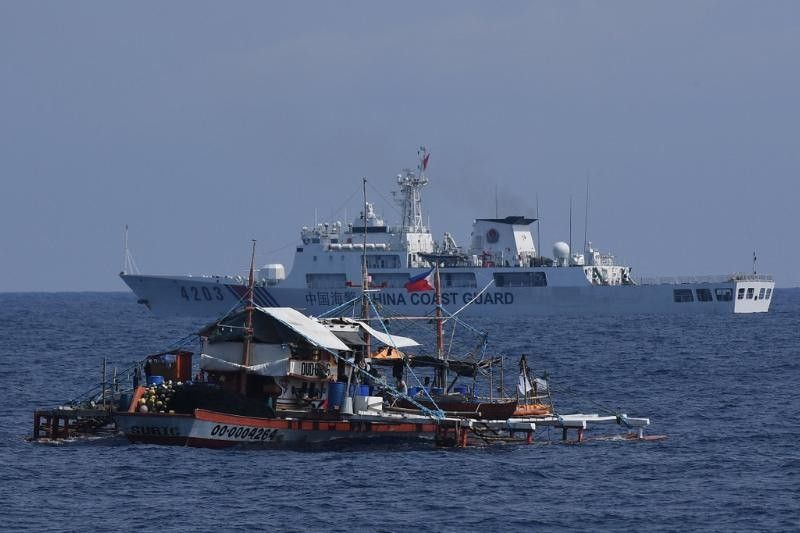
The West Philippine Sea is a vital maritime domain for the Philippines and the wider Indo-Pacific. It sustains livelihoods, facilitates commerce, and serves as a strategic artery of global trade. Yet today, it is also a contested space where China's actions challenge our sovereign rights, regional stability, and international law.
On July 12, 2016, the Permanent Court of Arbitration (PCA) ruled in favor of the Philippines, upholding its sovereign rights over its exclusive economic zone and debunking China's excessive maritime claims based on the nine-dash line.
But the wicked question was: who enforces the ruling? How will China be compelled to comply with a ruling it does not recognize? When Rodrigo Duterte assumed office as the ruling was announced, his response was the opposite: to appease China. Ten years on, it should be apparent that the Philippines must enforce the ruling, in cooperation with like-minded states in and out of the region.
In the policy paper "Filipino Theory of Victory" crafted by the Ateneo Policy Center, and in its abridged version published by the Stratbase Institute, I used Iceland's "Cod Wars" against the United Kingdom as an example of how "national will" can galvanize a small power to fight for its rights against a superior power and asymmetrically win. "National will" requires a whole-of-society approach, enabled by government's adept use of statecraft and the citizenry's active support.
The government's action is expressed through political will: upholding the rule of law, advancing our national interest, and aligning our collective security agenda across diplomatic, information, military, and economic domains.
The citizenry's action is expressed through the people's will: the advocacies of civil society organizations, the courage of fisherfolk going out to sea, the vigilance of our youth, and the involvement of local communities. Examples include the Atin Ito Coalition's four civilian missions in the WPS, youth-led advocacy groups asserting our sovereign rights in the EEZ, and public forums that broaden discourse on national security.
One of the strategies identified in the policy paper is denial. A denial strategy "seeks to prevent the adversary from achieving its objectives, thereby reducing the incentive for escalation." This can be achieved in four ways.
Prevent internal discord among fellow Filipinos. Public opinion and social media have become battlegrounds for competing narratives. The line between truth and lies is being blurred, with facts replaced by content generated by bots and trolls. This unfolds against an intense propaganda war with the Chinese Communist Party (CPP) and its embassy in Manila, compounded by domestic political infighting. We are losing the battle of narratives unless the government and the private sector develop collaborative mechanisms to expose disinformation and insulate society from its effects.
Avoid distrust among institutions of government. Our institutions operate in stovepipes. Bureaucratic politics, parochial interests, and policy disconnect weaken our response to national security concerns. This environment creates opportunities for espionage, cooptation of political and policy elites, and foreign interference. The government needs a robust counterintelligence mechanism and a dedicated agency to counter malign foreign influence.
Ensure that the government does not yield national interests under pressure. The Chinese Communist Party's gray-zone tactics in the WPS are designed to break our will to resist illegal encroachment into our EEZ. These are reinforced through diplomatic and economic pressure that creates vulnerabilities in critical sectors such as energy and food. Recent surveys show strong public support for protecting our interests in the WPS. But public support alone cannot blunt Beijing's escalation. A whole-of-society strategy, responsive institutions, policy alignment, and leadership from above remain essential.
Resist isolation from our allies and partners. The CCP's default strategy is to weaken existing alliances and prevent new ones from emerging. It has been largely successful in isolating the Philippines within ASEAN on the WPS issue. No ASEAN member has publicly supported the arbitral award. China is also working to prevent a stronger Philippine-Japan security partnership that could disrupt its strategic objectives in East Asia. Here, the arbitral award remains our strongest convening instrument for international support. The long-term objective should be an alternative regional security mechanism built around the Philippine-Japan partnership, capable of operating with limited or no US support in the near future.
In summary, a whole-of-society approach to protecting our sovereign rights in the WPS should rest on the following principles:
Defense is a shared responsibility. No single person or self-proclaimed messiah carries the burden of safeguarding our sovereign rights. It requires the collective action of government, private enterprise, academia, civil society, and citizens.
All instruments of national power must be harnessed. A whole-of-society approach integrates diplomatic, informational, military, economic, and societal tools. Diplomacy gains credibility when backed by deterrence; economic resilience reduces vulnerability to coercion; societal unity denies adversaries opportunities to exploit internal divisions.
Action must outweigh rhetoric. Diplomatic protests and strategic communications must be matched by a persistent presence in our EEZ, investments in maritime infrastructure, logistics, and alliances. Credibility rests on execution.
Strategy must be anchored on three forms of will. National Will, Political Will, and People's Will together form the bedrock of resilience and deterrence.
Resilience is grounded in values and faith. Beyond strategy, endurance is sustained by faith in God, love of country, and empathy with our people. This moral foundation strengthens our resolve in the face of prolonged challenge.
On July 10, 2026, the Stratbase Institute will host an event commemorating the 10th anniversary of the arbitral award. It is an opportunity to reflect on the developments of the past decade and chart the way forward as the nation prepares for the 2028 elections.
---
RADM Rommel Jude Ong is a non-resident fellow at the Stratbase Institute and professor of Praxis at the Ateneo School of Government. He retired in 2019 as vice commander of the Philippine Navy.


- Latest


