


A homecoming to look forward to
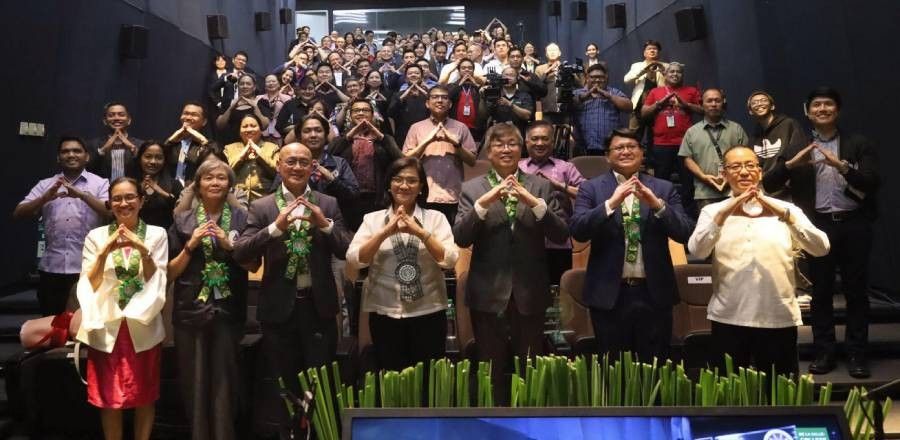
There was a time in my career when the stories came not from air-conditioned studios, but from cramped dormitories, construction sites and airport waiting areas filled with uncertainty.
When I anchored ABS-CBN The Filipino Channel’s Balitang Middle East, we told the stories of our overseas Filipino workers -- the bagong bayani we rightfully called them. We followed their journeys across continents, across time zones, across sacrifices that often went unseen.
And in those years, one truth became impossible to ignore, that Filipinos will hold on tightly to any opportunity that promises a better future for their families. We saw it in the caregiver who took double shifts just to send her nieces and nephews to school. In the welder who learned new skills on the job, without ever stepping into a classroom. In the domestic worker who became the quiet backbone of a household abroad, while dreaming of building one of her own back home.
But we also saw something else that is harder to accept. When they returned home, many of them came back to a system that did not fully recognize what they had become.
Our OFWs had experience, skills, and had proven themselves in some of the most demanding environments in the world. But without a diploma, too many doors remained closed.
When experience is not enough
This is why the recent move of the Commission on Higher Education (CHED) to expand and modernize the Expanded Tertiary Education Equivalency and Accreditation Program (ETEEAP), particularly through its new online enlistment system for OFWs, is not just timely, but necessary, humane, and long overdue.

At its core, ETEEAP tells our returning workers: ‘you do not have to start over.’ It recognizes that learning does not only happen in classrooms. That knowledge is not confined to textbooks, and that years of hard-earned experience -- whether in a hospital in Riyadh, a ship along Europe, or a household in Hong Kong -- carry value that deserves formal recognition.
As CHED Chairperson Dr. Shirley C. Agrupis put it, the goal is to “improve employment readiness, enable career mobility, and support the reintegration of OFWs into the local workforce through accessible and credible pathways to formal credentials.” In other words, this is not just about education, but reintegration with dignity.
A system catching up with reality
The timing could not be more critical. With ongoing instability in parts of the Middle East and other regions, many OFWs are being forced to return home. Not by choice, but by circumstance. The question we must ask ourselves as a nation is simple: what do we offer them when they come back? Do we ask them to start over? Or do we meet them where they are, and help them move forward?
President Ferdinand Marcos Jr. captured this reality when he said, “Marami tayong mga kababayan na hindi nakapagtapos ng kolehiyo dahil kinailangan nilang magtrabaho… Ngunit hindi nawala ang kanilang talino, ang kanilang diskarte, at determinasyon.”
That line resonates deeply with anyone who has spent time telling OFW stories. Because we have seen that intelligence, that determination, that diskarte.
With the launch of ETEAAP online enlistment platform, paired with on-ground kiosks, expanded institutional participation, and flexible learning modes, CHED is taking steps to make it more accessible than ever.

The numbers tell an encouraging story. Over a thousand OFWs are already enrolled, even while still abroad. Hundreds have graduated, many securing better jobs or promotions, and thousands more have expressed interest in alternative education pathways.
More than a diploma
For generations, we were taught that education followed a straight line: school first, work later. But life does not always follow that script; for many Filipinos -- especially our OFWs -- life demanded that they work first, sacrifice first, provide first.
Now, finally, the system is catching up. As the President himself noted, “Learning is not always linear, and intelligence takes on many forms.”
Interestingly, this shift is not limited to any one sector. Even in the world of entertainment, figures like Xian Lim have quietly pursued education through ETEEAP-- proving that the desire to learn, to formalize one’s knowledge, and to grow does not end with success.
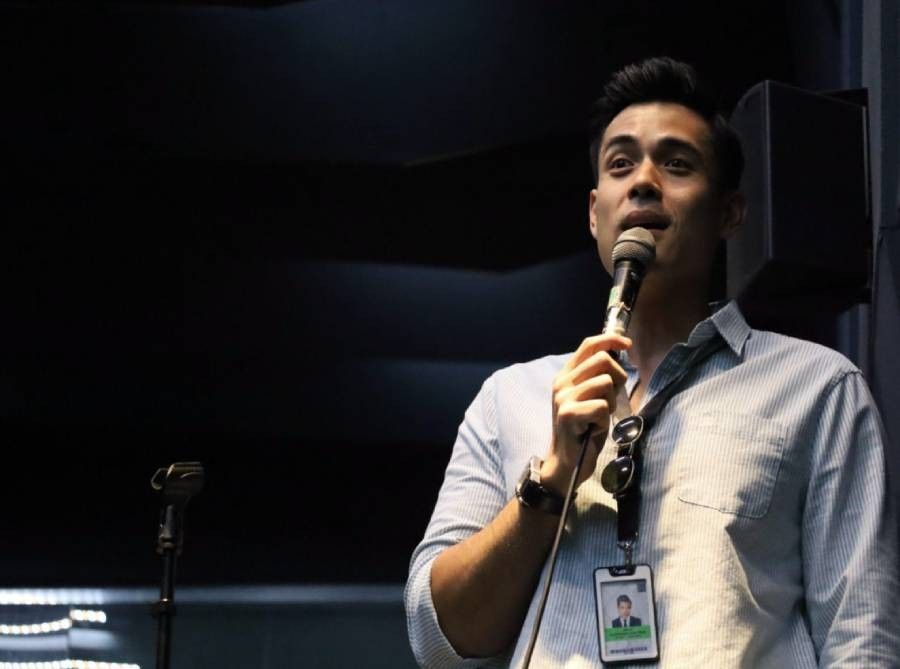
Because in the end, education is not just about credentials. But completion, recognition, and opening doors that were once closed.
But as with all good policies, the real test lies in execution. The President has already directed CHED to ensure that the law “benefits those it was created for.”
That means making the process truly accessible, ensuring quality and credibility, and reaching those in far-flung communities, and most importantly, keeping the system humane.
After years of covering our OFWs, from the Middle East to living rooms across the globe via The Filipino Channel, one thing remains clear to me: our kababayans and kasambuhays never lacked ability, resilience, or sacrifice, but recognition.
ETEEAP is beginning to change that, right in the time of global uncertainty when many of our kababayans are coming home not by choice but by necessity.
For our bagong bayani, that second chance may just be the beginning of something even greater.
----
Follow my social media accounts JingCastaneda: Instagram, Facebook, YouTube, Tiktok, and Twitter. Send your questions, suggestions and reactions to [email protected].





- Latest


