Who are they really fighting for?
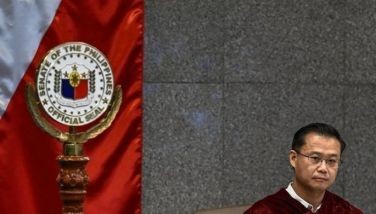
As the Senate impeachment court continues its long drawn-out proceedings against Vice President Sara Duterte, the daily spectacle of line-item audits and heated legal sparring has dimmed a simpler, darker reality. The trial of the second highest official in the land is not merely an inquiry into liquidations and operational receipts; it is the ultimate stress test for the country’s vulnerable democratic institutions. I admit I am trying my absolute best to understand what is happening to our country right now.
When I listen to the arguments against the Vice President, I want to be a responsible citizen who cares about accountability. The prosecutors say this is about protecting our hard-earned taxpayer money. They show us acknowledgment receipts for secret funds signed by strange names like “Mary Grace Piattos” or “Antonio Pagong” that don’t seem to belong to real, living people.
Her lawyers and allies argue that in security work, you have to use code names to protect the lives of informants. They say you can’t judge covert intelligence operations using the same rigid paperwork rules as buying office supplies. And when I look at how fast the House of Representatives pushed this impeachment through, while multibillion-peso flood control scandals and other issues seem to get swept under the rug, I can understand why her voters feel this way. Additionally, it’s hard not to wonder and ask – would the VP be on trial right now if her alliance with the current administration hadn’t collapsed?
I understand that good governance cannot exist in a vacuum where executive officials are allowed to write blank checks to fictitious payees. When audit trails lead to acknowledgment receipts signed by names that match no living citizens, the issue ceases to be about political rivalry. It becomes a constitutional imperative. Because allowing high-ranking leaders to hide behind operational cover names without maintaining a verifiable internal record sets a dangerous precedent.
I get that. It would also explain why the House of Representatives had a constitutional duty to ensure that the rule of law applies equally to power-holders in Manila and Davao alike.
But then I listen to the other side, and I try to understand their point, too. Millions of my fellow Filipinos voted for Sara Duterte, and her supporters believe she is being targeted simply because she stands in the way of Manila’s political establishment. Her defenders point out that using operational code names in confidential, security-related operations is standard practice designed to protect the lives of intelligence informants. I get that just the same.
But the real feeling on the ground is different. The deeper this trial goes, the harder it is to care about who wins the legal debate. Because while politicians battle over procedural rules and 2028 political positioning, life for the rest of us is getting harder. The profound and growing public fatigue cannot be ignored. We have been living through non-stop political drama for years now. Meanwhile, basic commodities remain expensive, public transport is a daily struggle and every heavy rain turns our streets into rivers.
Fortunately, I am very blessed to have a husband in Atty. Siegfred B. Mison who helps me understand the law better (more fortunate that he helps me understand The Word better) and, when I asked him his valuable opinion on the matter, he simply said impeachment is a proceeding with political implications to make certain public officers accountable but resolved using legal procedures, which may not necessarily be relevant. A vote of conviction or acquittal is primarily anchored on political affiliation and not on evidence.
I get it even more.
When the gavel falls and the noise settles, this costly trial won’t fix our flooded streets or lower the price of rice. It only proves that the nation’s precious time and resources will be exhausted while leaving ordinary Filipinos to sink or swim on their own.
In these moments of weariness where we are forced to confront the fundamental question – who are they really fighting for? – my husband and I take comfort knowing that, above the noise of human courtrooms, there is an ultimate, unshakeable justice – and a peace that passes human understanding. Our country may shake – all other nations too for that matter – but the One who holds the universe remains steadfast, and in that eternal truth, we can finally find our rest. Our elected leaders may forget us and we may never understand their political games, but we are never truly defenseless. Even when no human power stands for the ordinary worker, the flood-weary or the struggling parent, we do not have to live in despair or abandonment, knowing that God Himself fights for us.
Yet, as we anchor our hearts in faith, we must also issue a sobering reminder to those who govern. Accountability cannot be a selective weapon aimed at a single individual or a convenient target when political alliances sour. True constitutional justice demands that every single public servant – from the halls of Congress and the Supreme Court to the local government units and the Armed Forces – be held to the exact same unyielding standard. When a leader raises their right hand and swears an oath to uphold the Constitution, that oath is not a ticket to power or a shield for personal ambition; it is a sacred covenant made before God and the Filipino people to protect the vulnerable, defend against tyranny and shield the nation from the quiet oppression of systemic neglect.
Real accountability will never be measured by the fall of one single politician but by whether every leader who swore an oath finally answers to the people they left behind in the dark.






- Latest
- Trending